
Local service guide
Tree Cutting in Durham, NC: Hiring and Planning
Arrange Tree Cutting in Durham by identifying the trees and your goal for each, then compare written scopes covering assessment, cutting, equipment access, stump work and disposal. Check designated preservation areas before authorizing removal or machinery access. For work near overhead wires, have the contractor coordinate with the utility to establish voltage, clearance and crew qualifications before scheduling. [1] [2]
Define the job and check the crew
Start with the outcome you want. For a tree you hope to retain, seek an assessment and a pruning proposal. For removal, mark the tree on a photo or sketch and have the contractor explain the proposed method during a site visit. Avoid approving unspecified cutting across the yard.
Identify who will assess the tree and who will supervise the crew. Verify any claimed arborist certification, and obtain evidence of liability insurance and workers' compensation coverage applicable to the work. Ask the insurer to verify coverage for the proposed job.
Give bidders matching information: your goal, nearby structures, gate access and whether you want logs or chips left behind. Include photos taken from a safe position. Have each bidder describe equipment needs and the route through your property before you accept an offer.
Review protected areas before choosing an access route
Look for tree preservation and replacement areas on your plot plan, subdivision plat and approved development plans. Durham's online UDO Section 8.3 requires documentation of those areas and assigns owners responsibility for protecting them during and after development. Review those records before approving yard access for a truck, lift or grinder. [1]
For trees preserved under these development standards, the online ordinance specifies a protection-zone radius equal to the greater of six feet or one foot per inch of trunk diameter at breast height. It prohibits equipment parking, material storage, waste dumping and fill within that zone. Have the contractor compare the proposed equipment route and staging area with the designated areas. [1]
Ask Durham City-County Planning to establish which requirements apply to your lot and proposed disturbance. The electronic ordinance disclaims official status and warns that it may omit recent amendments. Confirm the official requirements before authorizing work in a designated area. [1]
Set utility arrangements before the work date
Point out overhead wires, including the service line between a pole and your house. Duke Energy warns that contact with service lines can cause injury or death. Its guidance allows only qualified line-clearance tree-trimming contractors to work closer than 10 feet from overhead power lines. [2]
Workers without line-clearance qualifications must keep themselves, tools, equipment and vehicles at least 10 feet from overhead lines carrying up to 50 kV. Higher voltages require greater distances. Duke Energy instructs crews to verify voltage and required clearance with the utility before work and arrange safety measures in advance when closer access is necessary. [2]
Assign utility coordination to a named person in the agreement. Have that person explain any arrangements that must happen before cutting starts, and make the work date conditional on completing them. Ask who will confirm that the crew can proceed.
If a limb or equipment contacts a line, stop work, keep people away and call 911 and the utility. Assume the line is energized and do not touch it or anything touching it. Resume work or approach the equipment only after utility personnel say it is safe. [2]
Specify disposal, stump work and price
Get a written total with separate descriptions for cutting, hauling and stump work. State whether the crew will remove logs, branches, chips and stump grindings, and whether it will add soil afterward. Include driveway and lawn protection, cleanup responsibilities, payment timing and the approval process for changes.
A contractor cannot use Durham County convenience sites for waste they receive payment to haul. The county classifies that load as commercial waste and rejects it. Ask the contractor to identify an acceptable disposal destination before you agree to the hauling scope. [3]
For your own residential debris, check county eligibility and preparation rules before loading. County guidance limits service to eligible unincorporated residents with the required decal and accepts limbs less than six feet long and six inches or less in diameter. The fetched guidance still names the 2025–2026 decal, so verify current eligibility with the county. [3]
Build your budget from site-specific written offers. Compare the same scope, including hauling and stump treatment, and have each bidder state which changes could affect the agreed total. Before accepting a price, ask the crew to describe what it will leave behind and who will restore disturbed ground.
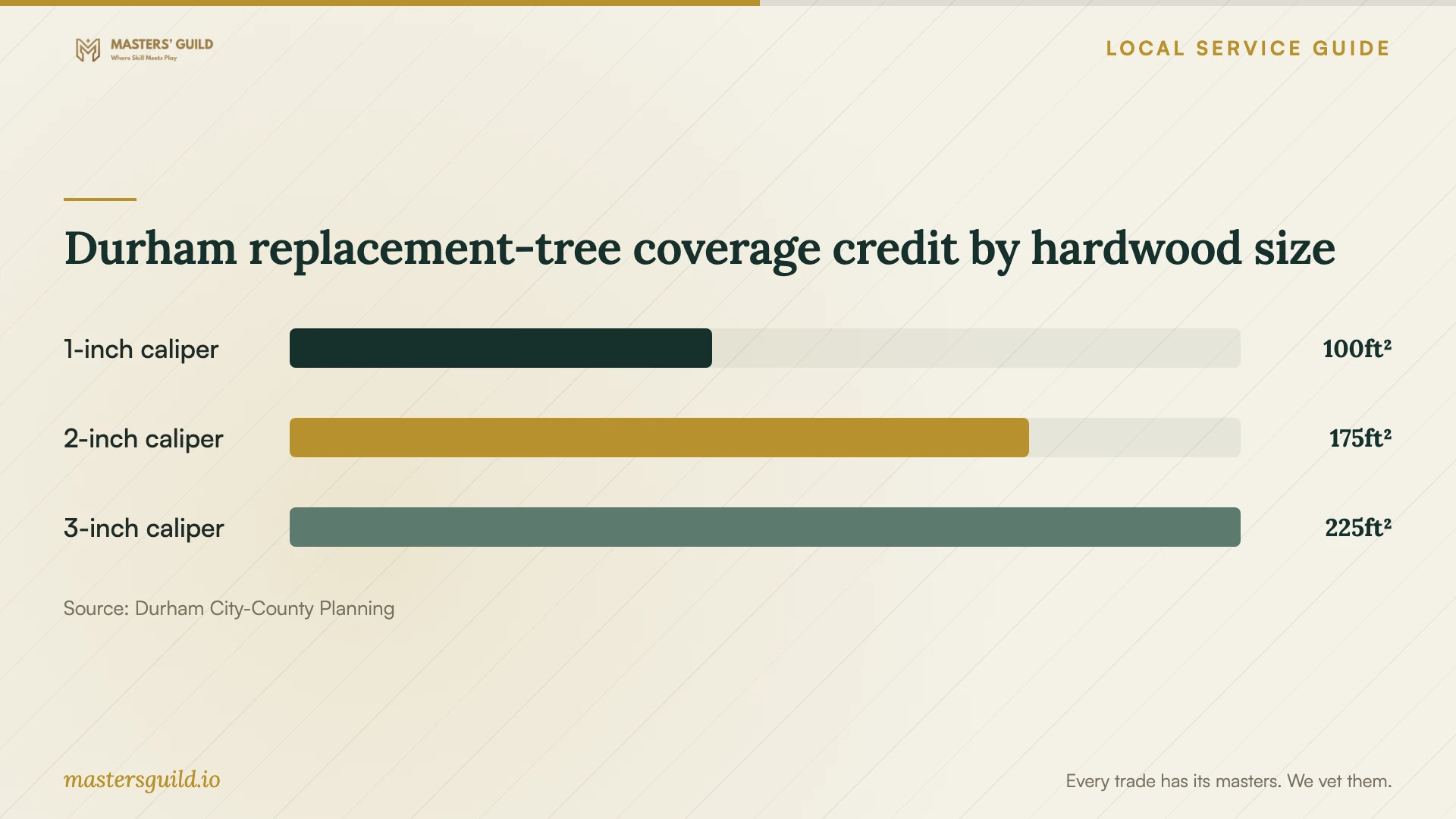
Durham replacement-tree coverage credit by hardwood size
Local details that affect your job
A preservation area can change machinery access
Before approving an equipment route, locate any designated preservation or replacement areas on your lot's plans. Durham's online ordinance assigns continuing protection duties to owners and prohibits equipment parking within applicable tree protection zones. Take the proposed route, staging area and cutting scope to Planning for verification against the official requirements. [1]
A resident decal does not authorize paid hauling
Durham County convenience sites reject waste someone receives payment to haul, even when the waste comes from a home. Decide whether you will retain debris or pay the contractor to dispose of it elsewhere, then include that choice in the quote. [3]
Verify Redwood access before a disposal trip
The county page fetched on October 14, 2026 lists Redwood at 100 Electra Road as closed for renovation beginning April 1, 2026 and directs residents to Northern Durham or Parkwood. The same page displays an older decal year. Verify current site access and decal requirements before loading your vehicle. [3]
Choose the next step for your tree work
| Situation | Next step | Resolve before scheduling |
|---|---|---|
| You want to retain the tree | Arrange an assessment and pruning proposal | Named tree, pruning goal and supervisor |
| Work would approach overhead wires | Coordinate with the utility | Voltage, required clearance and line-clearance qualifications where required |
| Plans designate a preservation area | Ask Planning to review the proposed disturbance | Current restrictions and any replacement obligation |
| A contractor will haul debris | Include disposal elsewhere in the agreement | County convenience sites reject paid hauling waste |
| You will haul residential limbs yourself | Verify county eligibility and current access | Limbs less than six feet long and six inches or less in diameter |
Your hiring checklist
- Mark each tree and describe whether you want assessment, pruning or removal.
- Locate plot plans and flag designated preservation or replacement areas.
- Verify claimed credentials and insurance coverage for the proposed work.
- Assign utility coordination when overhead wires affect the job.
- Agree on equipment access, staging and protection of retained trees.
- Specify what happens to logs, branches, chips and stump grindings.
- Record the total, exclusions, payment schedule and process for approving changes.
Frequently Asked Questions
How do I establish whether my removal needs approval?
Take your lot's plans and proposed work to Durham City-County Planning. Identify any designated tree preservation or replacement area. Section 8.3 addresses those areas, but the electronic ordinance warns that it may omit amendments, so ask Planning to verify the official requirements for your property. [1]
Can a regular tree crew work near power lines?
Duke Energy reserves work closer than 10 feet for qualified line-clearance contractors. Workers without those qualifications must keep themselves, tools, equipment and vehicles at least 10 feet away for lines up to 50 kV; higher voltages require greater distances. Have the crew verify voltage and clearance with the utility before work. [2]
Does tree removal include stump grinding and hauling?
Have the contractor state each item in writing. Specify whether you want the stump ground, grindings removed, soil added and logs or chips retained. Compare offers after you understand each crew's cleanup scope, and record any work you plan to handle yourself.
How should I plan a required replacement tree?
Ask Planning to establish the applicable species, size and planting-area requirements. The online Section 8.3 replacement-coverage standards specify North Carolina Piedmont-native species and size-based coverage credits. Confirm the required coverage and planting plan before buying a replacement tree. [1]
Sources and scope
This guide combines the sources below with practical planning guidance. Figures apply to the stated geography and period; request a written quote for your property.