
Local service guide
Lawn Mowing in Durham, NC: Scheduling and Quotes
Arrange Lawn Mowing in Durham by asking the provider to identify your grass, specify a cutting height, and quote the same tasks for each visit. Choose frequency around growth: NC State Extension advises removing no more than one-third of the grass height at a time. For tall fescue, that can mean mowing every five to seven days in late spring. Agree on rain delays, clipping handling, and charges for an overgrown first cut before booking. [1] [3]
Choose frequency after identifying the grass
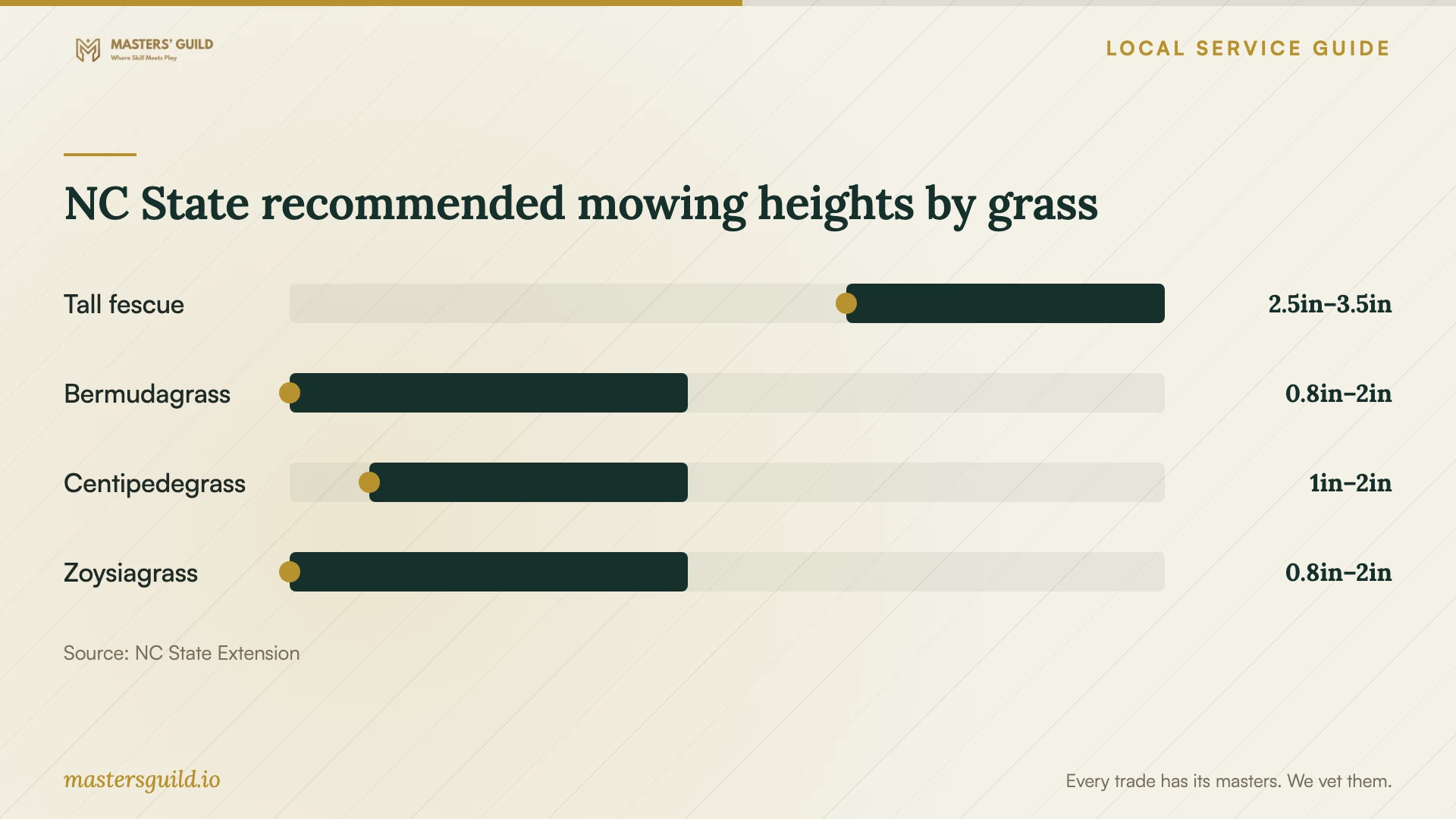
Ask the provider to identify the grass before recommending weekly or biweekly service. NC State's statewide mowing guide lists tall fescue at 2.5 to 3.5 inches, while bermudagrass and zoysiagrass each have a 0.75 to 2 inch range. Treat these as starting points for a property discussion, not instructions to use one setting across the yard. [2]
For tall fescue, the Extension calendar recommends mowing often enough to remove no more than one-third of the height. It notes that late-spring growth may require a five-to-seven-day interval. In summer, it recommends a 3.5 inch cutting height and mowing before the grass exceeds 5 inches. A biweekly agreement needs room for extra visits when growth exceeds that schedule. [1]
Ask how the provider will propose schedule changes and obtain your approval for extra charges. If you want occasional service, send current photographs and describe the last cut rather than requesting a recurring-service price for an unknown starting condition.
Get quotes for the same work
Give each provider the same description of the mowing area, access route, slopes, fences, and obstacles. Include photographs of the backyard and any narrow gate. Ask the provider to confirm equipment access before agreeing to the job.
Separate the first visit from ongoing maintenance in the quote. Request a price for the current condition and a price for later visits under the agreed schedule. Specify whether the provider will trim around obstacles, edge paved borders, clear hard surfaces, and collect or leave clippings.
Ask whether the provider charges per completed visit or under a fixed plan. Clarify skipped visits, weather postponements, cancellation notice, and who authorizes additional work. Request proof of insurance and ask how to report accidental damage. Keep aeration, seeding, fertilizer, and weed treatment as separate line items if you want to consider them.
Agree on rain delays and overgrown grass
Include permission to postpone a cut when the grass is excessively wet. NC State's professional guidance links mowing in those conditions with clipping clumps and soil compaction. Ask how the provider will notify you, reschedule, and handle access if you are away. [3]
After prolonged rain prevents regular mowing, Extension recommends raising the initial cutting height and returning to the proper height over multiple days to weeks. Do not ask the provider to recover the full missed interval in one low cut. Have the provider explain any staged cuts and their total cost before starting. [3]
For an overgrown first visit, request a recovery plan alongside the quote. Ask which areas the crew can mow on that visit, how it will handle excess clippings, and whether you need another appointment before the recurring schedule begins.
Specify clipping handling and the finished result
NC State recommends leaving grass clippings on the lawn to recycle nutrients. Its professional guidance also recommends composting clippings that cannot remain on the turf and keeping removed clippings out of water, ditches, and concrete areas where runoff is likely. Tell the provider where it may place collected material and whether removal belongs in the quote. [2] [3]
Ask the crew to clear clippings from the driveway and walkways without directing debris into a storm drain. Extension advises against blowing or sweeping soil and materials into storm drains. Walk the property after the first visit and check the agreed boundaries, gates, and cleanup before settling into repeat service. [2]
NC State recommended mowing heights by grass
Local details that affect your job
October planning for an identified tall-fescue lawn
For an October start, use NC State's September-through-November tall-fescue recommendation of 2.5 to 3 inches as the cutting-height discussion. Ask the provider to assess the existing height before choosing the first cut. This is North Carolina seasonal guidance applied to a Durham property with confirmed tall fescue, not a municipal requirement or evidence that every local lawn contains this grass. [1]
Fall aeration depends on soil and traffic
If your tall-fescue lawn has clay soil or heavy foot traffic, ask about a separate fall aeration assessment rather than adding aeration to routine mowing without discussion. NC State's calendar recommends fall aeration for those conditions and delaying tall-fescue aeration during spring and summer. This statewide recommendation applies here only after the provider confirms the grass and site conditions; it does not establish your property's soil type. [1]
Match the service plan to the lawn
| Situation | Planning choice | Question for the provider |
|---|---|---|
| Tall fescue growing in late spring | Allow five-to-seven-day mowing when growth requires it | Can you adjust visits to follow the one-third rule? |
| Tall fescue during summer | Discuss a 3.5 inch cutting height | Can you mow before it exceeds 5 inches? |
| Excessively wet grass | Postpone mowing | How will you communicate the replacement visit? |
| Overgrowth after prolonged rain | Raise the initial cut and return to the target over multiple cuts | What will the staged work cost? |
| Tall fescue on clay soil or under heavy traffic | Discuss a separate fall aeration assessment | Does this lawn meet the conditions for aeration? |
Your hiring checklist
- Send current photographs and identify the areas you want mowed.
- Measure the narrowest access gate and describe steps or slopes.
- Remove toys, hoses, pet waste, and movable obstacles before arrival.
- Mark sprinkler heads, exposed roots, and objects hidden by tall grass.
- Agree on cutting height, included tasks, and clipping handling.
- Confirm the first-visit price and approval process for additional work.
- Provide gate instructions, secure pets, and agree on a rain-delay contact method.
Frequently Asked Questions
Should I choose weekly or biweekly mowing?
Choose an interval that lets the provider remove no more than one-third of the grass height per cut. Tall fescue may need mowing every five to seven days in late spring. Ask for a flexible schedule instead of assuming biweekly visits will suit the entire growing season. [1] [3]
Should the provider bag the clippings?
Ask the provider to leave suitable clippings on the lawn. NC State recommends this nutrient-recycling practice. If clippings cannot remain on the turf, discuss collection and composting, including who will handle the material and whether the quote includes that work. [3]
How much should I budget?
Request property-specific quotes with the same scope. The supplied Extension guidance contains no Durham mowing prices. Ask for the first cut, recurring visits, clipping removal, and optional work as separate amounts so you can compare the proposed service.
Does mowing service include fertilizer or weed treatment?
Ask the provider to list the included tasks in writing. If you want lawn treatments, request a separate proposal that identifies the work and requires your approval before application. Avoid relying on a package name to describe the service.
Sources and scope
This guide combines the sources below with practical planning guidance. Figures apply to the stated geography and period; request a written quote for your property.