
Local service guide
Interior Design in Durham, NC: Hiring and Planning
Arrange Interior Design in Durham, NC by giving candidates the same room-by-room brief and requesting written deliverables, fees, and purchasing responsibilities. Verify any claimed North Carolina registered interior designer credential through the state board. For work affecting a locally designated historic property, confirm current approval requirements with Planning before committing to alterations or custom orders. [2] [3]
Define the work before comparing proposals
Write down the rooms, furniture you want to retain, and problems you want the designer to address. Describe how you use each space: reading, working, hosting, or moving around with mobility equipment. Set a total spending limit and identify whether it includes furnishings, delivery, installation, and construction.
Request concrete deliverables. For a consultation, agree on meeting length and written recommendations. For a room plan, specify layouts, product selections, and revision allowances. For purchasing help, assign responsibility for orders, delivery inspection, returns, and installation. Compare proposals against this shared brief.
Verify the designer and contracting business
The North Carolina Board of Architecture and Registered Interior Designers provides separate confirmation processes for individuals and firms. For an individual, its instructions tell you to enter the name or registration number, select the number, and create a certificate. Use that process to check a candidate’s claimed registration. [3]
The board’s listed business scenarios distinguish a registered interior designer practicing under their own name from an individual offering registered interior design services through a corporation or limited liability company. In the latter scenario, with all work on RID sheets, the board requires firm registration. Ask how your proposed agreement fits the listed arrangements and match the contracting business to the record you check. [3]
Review a sample deliverable and request a reference for comparable work. Establish who measures the home, prepares drawings, and coordinates construction professionals. Request insurance information relevant to your scope. Use the contract to record these responsibilities alongside the designer’s qualifications.
Build a budget you can approve
Separate design fees, purchasing charges, furnishings, freight, storage, installation, and applicable tax. Ask how the designer bills revisions and extra meetings, whether they charge a purchasing fee or markup, and who approves additional spending. Request a worked purchasing example before authorizing orders.
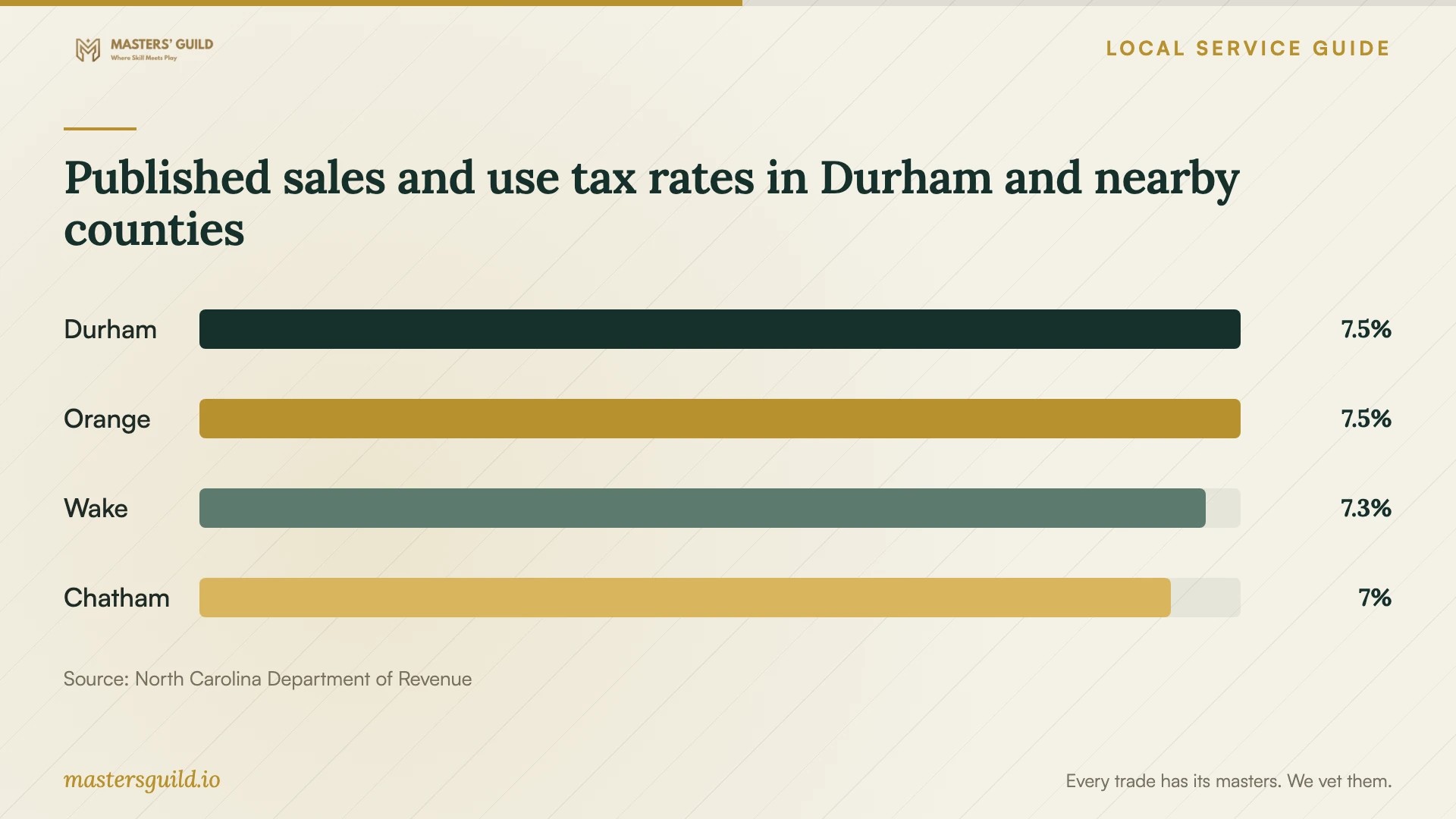
NCDOR’s current county table lists Durham and Orange at 7.5%, Wake at 7.25%, and Chatham at 7%. These totals combine the state rate with applicable local and transit rates. Use the comparison as regional tax context, then have the seller confirm the applicable rate and treatment for your transaction. [1]
Keep the furnishing allowance separate from the designer’s compensation. Agree on who receives refunds, who pays return freight, and how you will approve substitutions. Before paying a deposit, review cancellation terms and identify the purchases that you must authorize.
Confirm historic-property requirements before alterations
Durham’s electronic ordinance describes certificate of appropriateness, or COA, review for covered exterior alterations in designated historic districts and on historic landmarks. It includes windows, doors, and light fixtures among exterior features. The publisher identifies this electronic version as unofficial and warns that it may omit recent amendments. Treat it as a starting point for property-specific confirmation with Planning. [2]
The published text states that interior changes do not require a COA and preserves any required building permits for interior work. It also defines designated landmark portions to include interiors named in a designation ordinance. Ask Planning to confirm your property’s designation and the treatment of your proposed work, especially before altering a designated landmark interior. [2]
Have the designer identify exterior changes in the initial proposal. Assign someone to confirm approvals before you order replacement windows, doors, or exterior fixtures. Request a written record of the scope discussed with Planning and update the design agreement if that discussion changes the work.
Prepare for measurements, ordering, and installation
Bring room photos, rough dimensions, an inventory of retained furniture, and product details for pieces you are considering. Note stairs, narrow doorways, and delivery access. Explain your lighting, storage, cleaning, and accessibility priorities. Have the designer verify measurements before you approve fitted pieces or major purchases.
Agree on dates for layout review, product approval, ordering, and installation checks. Keep a shared list of approved items, prices, and responsibilities. Require approval for substitutions and additional charges. Before closing the project, walk through the space together and record who will address damage, missing parts, or unfinished tasks.
Published sales and use tax rates in Durham and nearby counties
Local details that affect your job
Historic review may affect orders and permits
Durham’s electronic ordinance states that covered work needs a COA regardless of whether another permit is required, and that covered construction permits depend on COA approval. Because the publisher labels this text unofficial and potentially incomplete, confirm current requirements with Planning before setting an alteration schedule or ordering custom exterior products. [2]
Budget with Durham County’s published tax context
NCDOR lists Durham County at 7.5%, including the transit component. Request a separate tax line for furnishing purchases and confirmation of the rate applicable to your transaction. The nearby county rates in the chart provide comparison context; they do not establish what a particular seller should charge. [1]
Check the registered-service business arrangement
North Carolina’s board provides separate individual and firm confirmation processes. Its listed corporation and LLC scenario requires firm registration when an individual offers registered interior design services with all work on RID sheets. Ask the candidate to explain that arrangement if your project involves those services, then check the individual and contracting firm. [3]
Choose the scope and checks for your project
| Your situation | Service to request | Before committing |
|---|---|---|
| You want advice and will shop yourself | Consultation with written recommendations | Agree on meeting scope, measurements, and follow-up |
| You need a coordinated room plan | Layout and product-selection deliverables | Define revisions and who verifies dimensions |
| You want ordering and installation help | Design with purchasing coordination | Assign approvals, delivery inspection, returns, and installation tasks |
| You propose exterior alterations on a locally designated historic property | Design with an early Planning discussion | Confirm current COA and permit coordination requirements; the electronic ordinance is unofficial |
| An individual offers registered interior design services through an LLC or corporation | Individual and firm-registration checks | Confirm the arrangement against the board’s listed scenario involving work on RID sheets |
Your hiring checklist
- Prepare a room-by-room brief, retained-furniture list, and total spending limit.
- Request the same deliverables and revision allowance from each candidate.
- Review a sample plan and a reference for comparable work.
- Verify claimed registration and clarify the contracting business arrangement.
- Assign responsibility for confirming historic review and other approvals.
- Separate fees, purchases, delivery, installation, and applicable tax.
- Agree on purchasing approvals, substitutions, returns, and damage claims.
Frequently Asked Questions
How should I set a design budget?
Request quotes for a written scope before choosing a fee allowance. Separate the designer’s compensation from furnishings, purchasing charges, delivery, installation, and applicable tax. Agree on a spending limit and the approval process for additional work.
How do I check a claimed registered interior designer credential?
Follow the North Carolina board’s individual confirmation instructions: search by name or registration number, select the number, and create a certificate. The board provides a separate firm check. For registered interior design services, clarify whether the proposed business arrangement matches a listed firm-registration scenario. [3]
Does a historic home’s interior project need a COA?
Durham’s electronic ordinance states an interior-change exemption while also defining designated landmark portions to include specified interiors. It preserves required building permits. Confirm your property and scope with Planning, since the publisher warns that this unofficial electronic text may omit amendments. Include related exterior changes in the discussion. [2]
Should I purchase furniture before the first meeting?
Bring dimensions, product specifications, and return terms for pieces you are considering. Have the designer review placement and delivery access before you commit. Agree on who verifies fit and approves orders.
Sources and scope
This guide combines the sources below with practical planning guidance. Figures apply to the stated geography and period; request a written quote for your property.