
Local service guide
Gardening in Durham: Hiring and Planning Guide
For Gardening in Durham, hire around a defined task: bed cleanup, planting or recurring maintenance. Request separate labor, materials and disposal charges, and agree on watering after planting. Before approving lime or fertilizer, arrange soil testing. If the gardener proposes pesticide treatment, request the applicator’s current North Carolina license and appropriate category. [1] [4]
Define the work before comparing quotes
Choose the result you want from the first visit. For an overgrown bed, specify weed removal, plants to retain, approved pruning and debris disposal. For planting, give bed dimensions and discuss who will buy the plants. For recurring care, agree on visit tasks and how you will approve extra work.
Send photos and describe access, water availability and areas the gardener should avoid. Mark valued plants before cleanup starts. Ask the gardener to identify unfamiliar plants with you before removing them. State whether you prefer hand weeding or want to consider a proposed chemical treatment.
Compare complete written estimates
Request an estimate that separates labor, plants, mulch, amendments, delivery and debris removal. For hourly work, ask whether the rate covers one worker or the crew, whether the gardener charges a minimum and what spending limit requires your approval. For a fixed quote, specify the included beds and tasks.
Compare offers against the same scope. Assign responsibility for collecting soil samples, submitting them, obtaining the report and discussing amendments. Ask the gardener to separate those charges from the laboratory fee. The published state testing fees cover sample analysis; they do not establish a gardener’s service price. [2]
Test soil before buying amendments
Durham County Extension recommends submitting samples several weeks before planting to allow time for results and amendments. Sample areas with different uses separately, such as a vegetable garden and flower bed. Collect a separate sample from a poorly growing area instead of mixing it into a healthy bed’s sample. [1]
The state laboratory measures soil pH, acidity and plant-available nutrients except nitrogen. It does not test for contaminants. Durham Extension says routine testing cannot diagnose drainage, compaction, diseases or herbicide residues. Ask Extension about those concerns before approving more fertilizer or replacement plants. [1] [2]
Tell the gardener whether the bed contains native soil or purchased growing media. The state laboratory directs potting soil and planting mixes containing less than 50 percent native soil to its separate soilless media analysis service. Confirm the submission type before someone collects samples from containers or raised beds. [2]
Set planting dates and a care handoff
NC State Extension identifies spring, summer and fall growing seasons for central North Carolina. Its vegetable, fruit and herb calendar gives suggested outdoor planting dates and advises adjustments for weather. Ask the gardener to name each crop, specify seeds or transplants and explain the planting date before you approve purchases. [3]
For home-grown transplants, NC State recommends starting seedlings six to eight weeks before outdoor transplanting and acclimating them to outdoor conditions before planting. Ask whether the gardener will supply prepared transplants or whether you must arrange that stage. Request a separate plan for ornamental planting and pruning. [3]
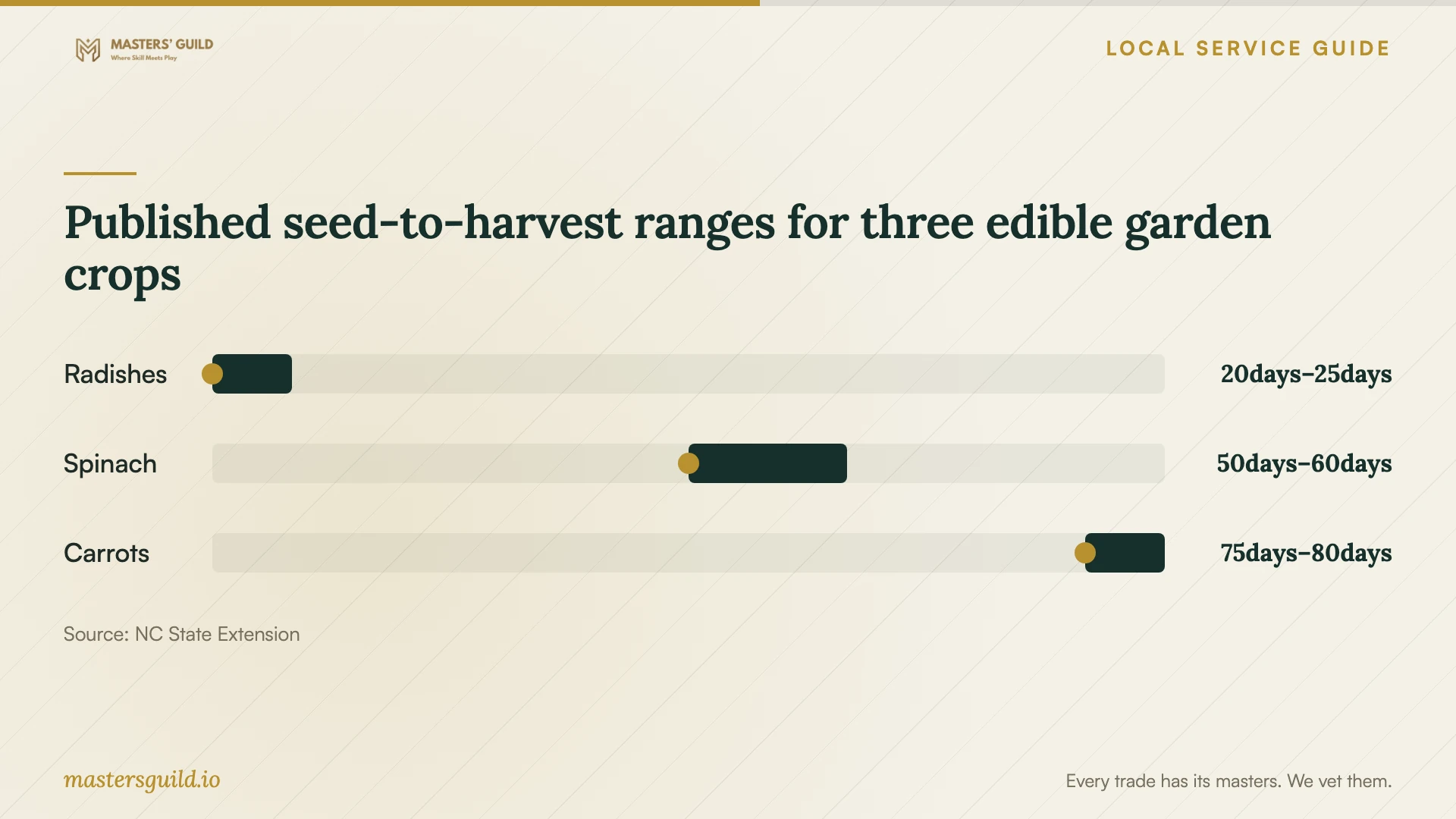
Use the harvest-time chart to discuss how long you want to maintain an edible bed before harvesting. NC State publishes these ranges from seed for the listed crops. Ask the gardener to account for the chosen variety and planting date rather than promising a harvest on a fixed day. [3]
Agree on who will water after planting and how you will report a struggling plant. Request plant names, placement notes and care instructions. Discuss whether the price includes follow-up visits or replacement plants, and set a process for approving substitutions when the chosen plants are unavailable.
Check credentials for pesticide work
North Carolina requires a pesticide license for commercial applicators applying any type of pesticide for compensation. The state lists the Commercial Ground Applicator license for paid non-aerial applications on someone else’s property. Its Ornamental & Turf category covers pesticide work involving ornamental plants, shade trees and turf. [4]
Ask who will perform the treatment and request that person’s current license and appropriate category. North Carolina requires annual pesticide license renewal. A pesticide consultant license authorizes paid advice but does not authorize applications, so check the license type as well as the name. [4]
Request the proposed product, target weed or pest and application area before approving treatment. Discuss hand removal if you prefer it. For the wider gardening job, request proof of liability insurance and agree on how to report accidental plant or property damage.
Published seed-to-harvest ranges for three edible garden crops
Local details that affect your job
Use Durham’s soil-sample cabinet
Durham County Extension provides sampling boxes and forms in the blue cabinet on the north side of its building at 721 Foster St. It accepts completed samples there from April 1 until early November. For an October project, confirm the remaining drop-off window before assigning submission to the gardener. Outside that window, Extension recommends returning samples to the state laboratory in Raleigh. [1]
Budget with the current state testing fee
The state laboratory’s 2026 page lists free testing from April 1 through November 30 and $5 per sample beginning December 1. Use that schedule instead of the $4 winter fee shown in Durham Extension’s article. The local cabinet’s acceptance window ends in early November, before the state’s free-testing period ends, so arrange another submission route for later November samples. [1] [2]
Specify planting material for edible beds
Use NC State’s central North Carolina calendar as regional guidance for a Durham vegetable or herb project. Its dates refer to planting outside, and it distinguishes seeds, transplants, bulbs, crowns and tubers. Ask the gardener to specify the planting material before agreeing on a date, especially for crops the calendar identifies for transplanting. [3]
Choose the scope that fits your garden
| Your situation | Work to request | Point to settle before hiring |
|---|---|---|
| Overgrown beds with plants to preserve | A defined cleanup with retained plants marked | Removal method, pruning approval and debris destination |
| Planting into native soil | Soil sampling and a planting plan | Who submits samples and reviews lime and nutrient recommendations |
| Potting mix or a bed with little native soil | Confirmation of the correct test service | The state directs mixes with less than 50 percent native soil to soilless media analysis |
| A vegetable or herb garden | Crop selection and an outdoor planting schedule | Seeds versus transplants and weather adjustments using regional guidance |
| A quote including pesticide application | The applicator’s license and treatment proposal | Current commercial authorization and a category matching the work |
Your hiring checklist
- Photograph the beds, measure the work area and mark plants to keep.
- List the first visit’s tasks and work that needs separate approval.
- Request separate labor, material, delivery and debris-removal charges.
- Assign soil sampling, submission and report review before approving amendments.
- Confirm plant names, purchase sizes, substitutions and planting dates.
- Request the applicator’s current license if the quote includes pesticide treatment.
- Agree on watering, follow-up care and how to report damage or plant problems.
Frequently Asked Questions
How much should I budget for a gardener?
Request written quotes for the same beds and tasks, with labor, materials and disposal separated. For hourly work, agree on crew size, any minimum charge and a spending limit before the visit. Ask the gardener to price the initial cleanup separately from proposed recurring care.
Can I arrange soil testing myself?
Yes. Durham Extension provides boxes and forms in the blue cabinet on the north side of 721 Foster St. It accepts completed samples there from April 1 until early November and recommends sending them to the Raleigh laboratory during the rest of the year. [1]
Will a soil test explain why my plants keep dying?
A routine test can help identify pH and nutrient issues. Durham Extension says it does not diagnose diseases, herbicide residues, poor drainage or compaction. Contact Extension about those concerns before paying for amendments or replacement planting. [1]
Does paid weed spraying require a license?
North Carolina requires commercial applicators to hold a pesticide license when applying any type of pesticide for compensation. Ask for the applicator’s current license and appropriate category. A pesticide consultant license authorizes advice but does not authorize applications. [4]
Sources and scope
This guide combines the sources below with practical planning guidance. Figures apply to the stated geography and period; request a written quote for your property.