
Local service guide
Furniture assembly in Durham, NC: Plan your job
Furniture assembly in Durham, NC starts with an item-specific written quote. Send the assembler your product links, quantities, room location, and access details. Confirm whether the total includes anchoring, applicable tax, packaging removal, and old-furniture disposal. Consider DIY if you can follow the manufacturer’s instructions and handle the pieces with the help available.
Define the job before comparing quotes
Send the product name, model number, manufacturer instructions, and a photograph of the boxes. Tell the assembler which items belong in each room and whether you want them to carry boxes from a porch, garage, or another floor. Ask them to confirm that their quote covers the exact model rather than a description such as a bed or desk.
Describe the finished result you expect: furniture in its final position, drawers and doors adjusted, and any anchoring required by the manufacturer completed. Ask who supplies additional hardware. For a rental, obtain permission for wall attachments before booking that work. Have the assembler explain any step they cannot complete before you accept the quote.
Compare the complete bill
Ask whether the assembler charges a fixed amount or by time. For an hourly quote, request the rate, minimum charge, expected work time, and process for approving extra time. Agree on how the assembler handles missing parts, damaged panels, or instructions that do not match the supplied pieces. Request a separate amount for any return visit.
The North Carolina Department of Revenue includes installing, connecting, adjusting, or setting tangible personal property into position within its installation-service guidance. It says retail repair, maintenance, and installation services are taxable unless exempt, and that installation charges remain subject to tax when a retailer lists them separately. Ask how the provider applies this guidance to your assembly job. [2]
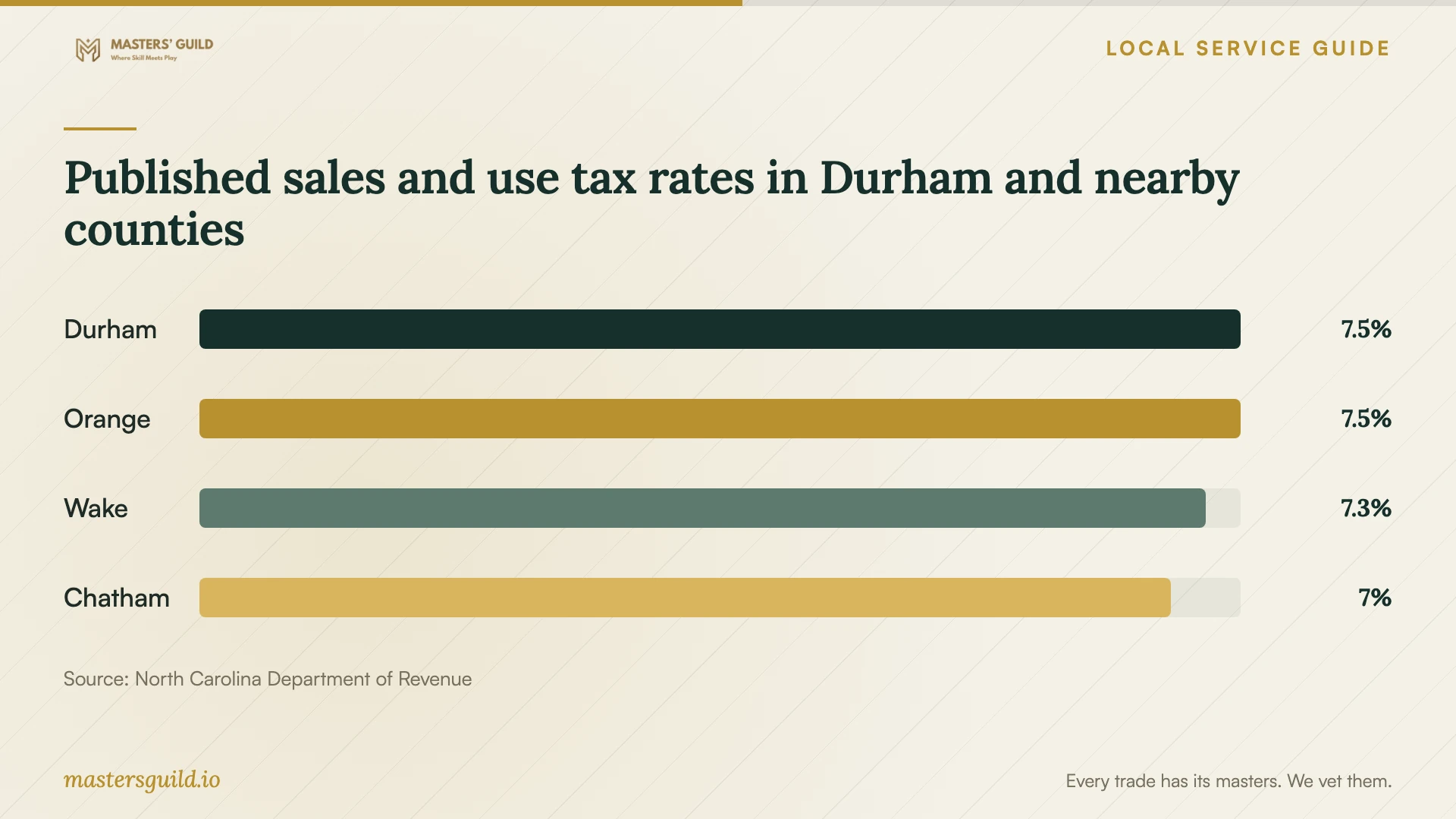
NCDOR’s county table lists Durham at 7.5%, including state, local, and transit sales and use taxes, as retrieved on October 14, 2026. Ask the provider to confirm the service address, taxable charges, and tax amount on the written quote. Use the regional tax chart to understand published rates when reviewing a taxable quote; confirm your contract’s tax treatment with the provider. [3] [2]
Choose who will handle furniture and packaging
Decide whether you want the assembler to stack empty packaging, take it away, or remove an existing piece of furniture. Name each task in the written agreement. If you want to keep an old item until you inspect the new one, tell the assembler and arrange removal after that check.
Durham County accepts cardboard and bulky furniture at its convenience sites, but it restricts access to eligible unincorporated county residents with the required decal. The county limits bulky-item disposal to one dump per week. Check your eligibility and planned load before relying on this option. [1]
The county classifies waste hauled for payment as commercial waste and refuses it at these sites. If you pay an assembler to remove boxes or old furniture, ask them to name another disposal destination and include the removal and disposal charges in the quote. [1]
Prepare the room and check the finished work
Clear the work area and the route from the boxes to the room. Measure the final furniture position against the manufacturer’s dimensions, including room for drawers and doors to open. Keep instructions, hardware packets, and purchase details together. Ask the assembler how much space they need before opening boxes containing large panels.
Agree that the assembler will pause and show you any damaged or missing component before proceeding. Before they leave, ask them to demonstrate drawers, doors, and moving mechanisms, and review the assembly against the manufacturer’s instructions. Confirm anchoring where your agreement requires it. Keep spare hardware and instructions, photograph the completed item, and record any unfinished work before settling the bill.
Published sales and use tax rates in Durham and nearby counties
Local details that affect your job
County drop-off access depends on residence and hauling arrangements
Durham County reserves its convenience sites for unincorporated county residents with a solid-waste decal. The county says city residents do not receive that decal because they do not pay its solid-waste fee. It also excludes waste hauled for payment. Confirm your eligibility if you will transport waste yourself, or ask your paid assembler to quote disposal at another facility. The page retrieved October 14, 2026 still names a 2025-2026 decal, so confirm the current decal requirement before loading your vehicle. [1]
Check the site and vehicle before planning a trip
The county page retrieved October 14, 2026 lists Redwood at 100 Electra Road as closed for renovation and directs residents to Northern Durham or Parkwood. Parkwood is at 5928 Highway 55; Northern Durham is at 11894 N. Roxboro Road in Rougemont. Confirm the closure status before traveling. The county prohibits box trucks, enclosed trailers, and commercial vehicles, so check your vehicle as well as your waste eligibility. [1]
Choose the scope that fits your job
| Your situation | Suggested arrangement | Confirm before booking |
|---|---|---|
| You can handle the pieces and follow the instructions | Consider DIY | Available help, required tools, and manufacturer assembly steps |
| You want help with assembly and wall attachments | Include anchoring in the written agreement | Hardware, wall conditions, and permission to drill |
| You will take waste to a county convenience site | Verify eligibility before planning the trip | Unincorporated residence, required decal, vehicle restrictions, and bulky-item limit |
| You want the assembler to haul waste for payment | Include another disposal destination in the quote | County convenience sites reject waste hauled for payment |
| You are comparing a subtotal with a tax-inclusive quote | Request complete totals for the same work | Applicable installation-service tax and the published Durham County rate of 7.5% |
Your hiring checklist
- Send product links, model numbers, quantities, and manufacturer instructions.
- Describe stairs, parking arrangements, box locations, and the final room.
- Confirm assembly, adjustments, anchoring, and additional hardware in writing.
- Request the final total, applicable tax, and terms for extra time or a return visit.
- Agree on whether the assembler stacks packaging or removes it.
- Choose a disposal route before adding removal to the job.
- Clear the workspace and agree on completion checks before work starts.
Frequently Asked Questions
How much should I budget for assembly?
Request an item-specific quote using the product model and your access details. Compare complete totals for the same work, including anchoring, removal, applicable tax, and any minimum charge. Ask each assembler to explain charges for interrupted work or a return visit before you choose.
Can my assembler take old furniture to a county convenience site?
The county prohibits waste hauled for payment at its convenience sites. Ask the assembler to identify another destination and state the removal and disposal charges before you agree to the work. [1]
Does a separate labor charge avoid sales tax?
NCDOR says installation charges remain subject to sales and use tax when a retailer states them separately. Its guidance includes statutory exemptions, so ask the provider to explain the tax treatment of your job and show the amount in the quote. [2]
How should I handle a missing part?
Ask the assembler to stop the affected work, identify the missing part against the instructions, and photograph what arrived. Agree on any charge for the interrupted visit before proceeding. Contact the seller for the replacement and confirm the terms for completing the assembly.
Sources and scope
This guide combines the sources below with practical planning guidance. Figures apply to the stated geography and period; request a written quote for your property.