
Local service guide
Flooring installation and repair in Durham, NC
For flooring installation and repair in Durham, hire after an installer has inspected your floor and provided a written scope covering preparation, installation, trim, and disposal. Arrange professional testing before demolition of suspect vinyl tile, sheet flooring, or adhesive: North Carolina health officials identify these as possible asbestos sources and recommend testing before renovation. Compare quotes after each bidder explains allowances, tax treatment, and the disposal destination. [1]
Define the repair before choosing new flooring
Show the installer the damaged area and explain whether you want to preserve the floor, replace one room, or continue new flooring through adjoining rooms. Ask for a description of the proposed repair and the replacement material. Settle how the installer will handle the boundary between old and new flooring, using a sample or an agreed description of the finished appearance.
For a squeak, soft spot, loose tile, or lifting plank, request an investigation before approving a surface repair. Ask whether the scope includes work beneath the flooring. Agree on how the contractor will photograph concealed damage, price additional work, and obtain your approval after removal.
Resolve suspect materials before demolition
North Carolina's Division of Public Health identifies vinyl floor tile, vinyl sheet flooring, and certain mastics or glues as materials that may contain asbestos. Officials recommend testing before planned renovation or demolition. If you suspect these materials, arrange an inspection by a North Carolina accredited asbestos inspector before authorizing disturbance. [1]
Discuss the removal method after receiving the test results. State guidance distinguishes asbestos-containing floor tile removed substantially intact, without small fragments or dust, from tile removal that makes the material regulated. Applicable quantity thresholds and project circumstances determine permitting or notification requirements for regulated removal. Other worker-safety and waste requirements may apply to non-regulated removal too. [2]
Have the inspector or removal contractor confirm the accreditation, permit, and notification requirements for your material, quantity, and proposed method. Ask who coordinates this work and what documentation you will receive before flooring installation begins. Keep the inspection report and removal records with your contract. [1] [2]
Build your budget from a written scope
Build your budget from a measured site assessment and a written scope. Give bidders the same room list, material choice, and furniture-moving expectations. Request itemized amounts for flooring, installation, removal, subfloor preparation, transitions, trim, stairs, hauling, and disposal. Ask bidders to identify exclusions and explain how they will charge for preparation beyond any allowance.
Ask each contractor to explain sales tax on the total. The North Carolina Department of Revenue lists complete and partial flooring replacement as taxable, even when you change the flooring material. It also lists repairs, carpet stretching, and refinishing as taxable. Exceptions can apply, including work performed as part of qualifying new construction, reconstruction, or remodeling; capital-improvement treatment requires substantiation. [5]
Compare the final totals after resolving tax treatment and exclusions. Request written approval before the contractor exceeds an allowance. Specify who purchases the flooring, who checks the delivered material, and how the contractor will handle damaged or missing pieces before starting.
Plan disposal and access before the crew arrives
Require a disposal destination before removal starts. Durham County limits convenience-site service to eligible unincorporated county residents and rejects construction and demolition debris. The county also rejects waste hauled for payment as commercial waste. County residential waste access therefore does not provide a disposal route for removed flooring. [3]
Durham County lists potential alternatives, including the City of Durham Waste Disposal and Recycling Center at 2115 E. Club Boulevard and Liberty Waste Solutions at 1017 S. Hoover Road. The county does not guarantee the list's accuracy or endorse the businesses. Have your hauler confirm acceptance of your material and ask about charges before loading. For asbestos-related waste, confirm disposal requirements before removal. [2] [4]
Agree on furniture storage, access to bathrooms and exits, appliance handling, and material staging. Ask the installer to follow the selected product's preparation and installation instructions. Request written guidance on walking on the floor, returning furniture, and cleaning. At the final walkthrough, check trim, transitions, door clearance, and the agreed repair appearance.
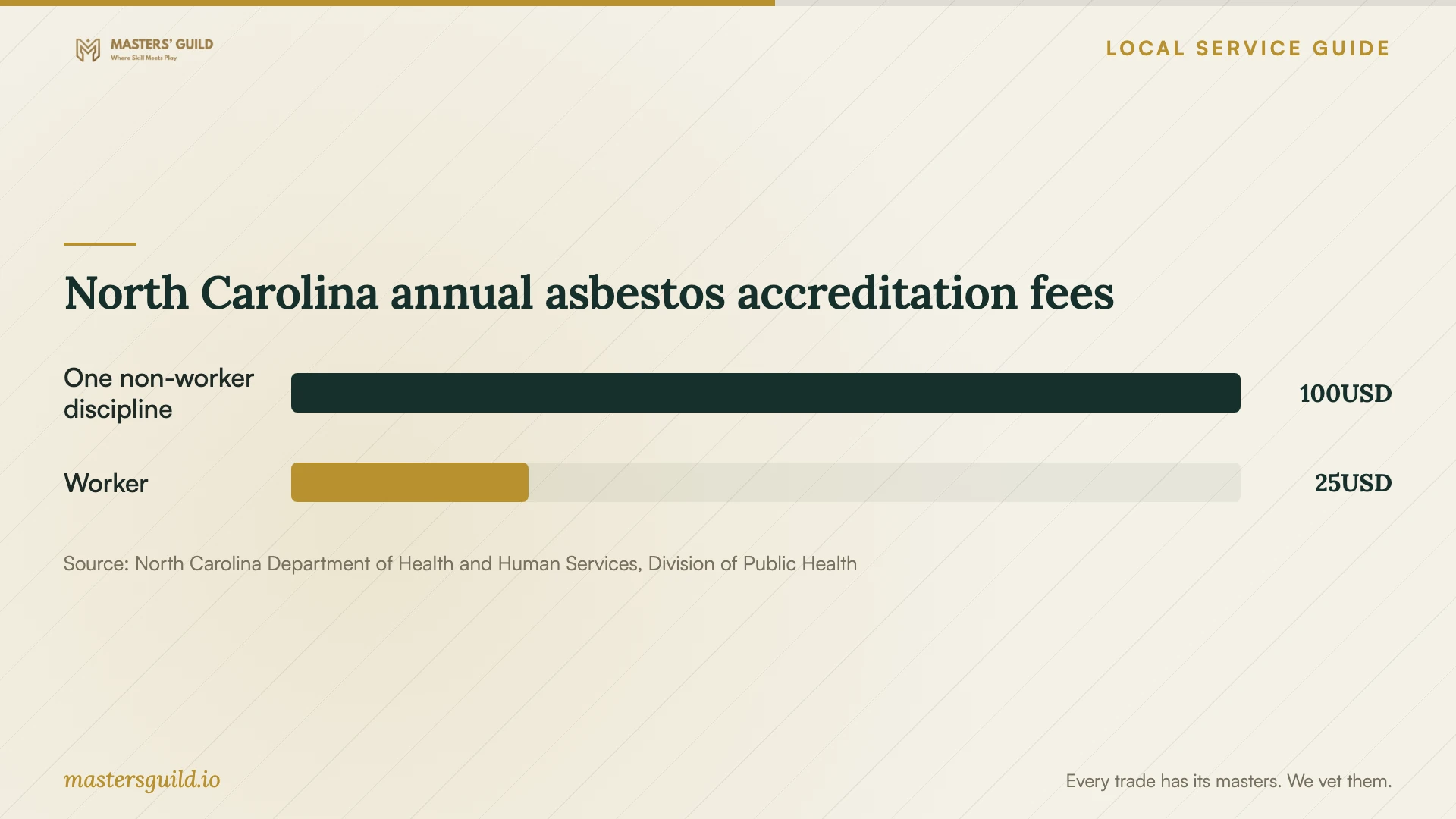
North Carolina annual asbestos accreditation fees
Local details that affect your job
County convenience sites exclude flooring debris
Durham County excludes renovation debris such as rolls of carpet, wood waste, and tiles from its convenience sites. It also rejects paid hauling as commercial waste. Include a confirmed disposal destination and hauling charge in your contract, even if you have county residential waste access. [3]
Call a potential Durham outlet before transport
The county's alternative-facility list includes the City of Durham center at 2115 E. Club Boulevard and Liberty Waste Solutions at 1017 S. Hoover Road. These are potential outlets, with acceptance still to confirm. The county instructs residents to call before arrival to determine whether they can use a facility. [4]
North Carolina asbestos rules affect whom you hire
State guidance applies to flooring work here: removal of asbestos tile substantially intact without fragments or dust differs from removal that makes the material regulated. Ask an accredited inspector to assess suspect flooring. Have the removal contractor confirm accreditation requirements and whether quantity thresholds and project circumstances require a permit or notification before scheduling demolition. [1] [2]
Choose your next step
| Situation | Next step | Settle before hiring |
|---|---|---|
| Localized surface damage | Request a repair assessment | Replacement material, finish match, and patch boundaries |
| Soft spot or recurring movement | Request investigation beneath the flooring | Inspection scope and approval process for additional work |
| Suspect vinyl tile or adhesive | Arrange an accredited asbestos inspection | Test results, removal method, and applicable requirements |
| Contractor will remove flooring | Require a confirmed disposal plan | County convenience sites reject renovation debris and paid hauling |
| Quotes show different tax treatment | Ask each contractor for an explanation | Flooring replacement and repair are listed as taxable, with applicable exceptions |
Your hiring checklist
- List the rooms, damaged areas, and existing finishes you want to preserve.
- Ask the installer to explain any proposed work beneath the flooring.
- Arrange an accredited asbestos inspection for suspect flooring or adhesive before disturbance.
- Compare itemized quotes using the same material and room scope.
- Request a total with tax treatment, allowances, and exclusions explained.
- Have the hauler confirm the disposal destination and material acceptance.
- Agree on room access, furniture moving, and approval of additional work.
- Collect care instructions, warranty terms, and repair documentation at the walkthrough.
Frequently Asked Questions
Can I identify asbestos flooring by looking at it?
North Carolina health officials say professional inspection and sample testing provide the only sure way to identify asbestos. They list vinyl tile, sheet flooring, and certain glues as possible sources. Arrange testing before planned disturbance of suspect material. [1]
Does asbestos tile removal require a permit?
The state distinguishes substantially intact removal without fragments or dust from removal that makes tile regulated material. Regulated status alone does not mean a permit is required at every quantity. Applicable quantity thresholds and project circumstances determine permitting or notification requirements. Have your inspector or removal contractor confirm the requirements for your scope. [2]
Can I take removed carpet or tile to a county convenience site?
Durham County convenience sites reject construction and demolition debris, including carpet and tiles, and waste hauled for payment. Consult the county's alternative-facility list and confirm acceptance with the destination before transporting debris. [3] [4]
Is replacing an entire floor a tax-free capital improvement?
North Carolina lists complete and partial flooring replacement as taxable. Exceptions depend on the transaction, and qualifying capital improvements require substantiation. Ask the contractor to explain the treatment on your written quote, including any exception they apply. [5]
Sources and scope
This guide combines the sources below with practical planning guidance. Figures apply to the stated geography and period; request a written quote for your property.