
Local service guide
Electrical Repairs in Durham, NC: Hiring and Planning
Arrange Electrical Repairs in Durham by checking the contractor’s current North Carolina license scope, agreeing on a diagnostic charge, and approving a written repair estimate. Request the total payable, including applicable tax and any permit or inspection charges. NCDOR lists electrical component repairs as generally taxable, subject to exceptions, and publishes a 7.5% combined rate for Durham County. [1] [3] [4]
Describe the fault before choosing a repair
Give the electrician a symptom list before approving replacement parts. Note affected outlets, lights, and rooms, what you were using when the problem started, and any recent electrical work or water exposure. Describe the problem without committing to a breaker replacement or whole-house rewiring.
Agree on the diagnostic charge, what it includes, and whether the contractor credits it toward the repair. Set a spending limit for investigation and provide a number where you can approve additional work. Confirm the charge if the electrician cannot reproduce the fault or you decline the proposed repair.
Prepare through observation and access. Leave panel covers in place and avoid exposing wiring for photographs. Tell the scheduler about burning smells, visible damage, or repeated trips when discussing urgency. For smoke or fire, leave the area and contact emergency services.
Match the contractor’s license to the scope
The North Carolina State Board of Examiners of Electrical Contractors defines work scopes or limitations for its license classifications. Its Special Restricted classifications cover limited phases of electrical contracting, including Residential Dwelling work. Obtain the licensed business name, number, classification, and expiration, then check the bidder through the Board’s license-search option. [1]
The Board says licenses expire one year after issuance. Check the current record before relying on an old certificate. If diagnosis expands the proposal into a larger wiring project, have the contractor explain how the classification covers the revised work. Contact the Board if the scope remains unclear. [1]
Request proof of insurance and identify who will perform the work. Record the repair scope, exclusions, warranty, and payment terms. Assign responsibility for confirming permit needs, obtaining any necessary permit, and arranging inspection. Keep those responsibilities in the agreement rather than leaving them for the day of the repair.
Compare estimates with tax and restoration included
NCDOR lists repairs and replacements of breakers, outlets, switches, and other electrical components in existing property as taxable repair, maintenance, and installation services. Exemptions and transaction circumstances can change that treatment. Have the contractor explain the tax applied to your scope and show the total payable. [3]
NCDOR places complete rewiring and qualifying permitted electrical-wiring changes in its capital-improvement category, subject to substantiation requirements. Its general permit-based exception excludes electrical component repairs and replacements. A permit therefore does not, by itself, establish capital-improvement treatment for a component repair. [3]
Compare estimates using the same scope: diagnosis, labor, parts, access work, disposal, surface restoration, and return visits. If one electrician excludes wall patching and painting, request a separate restoration estimate before comparing the total with an offer that includes that work. Require approval for changes beyond the agreed repair.
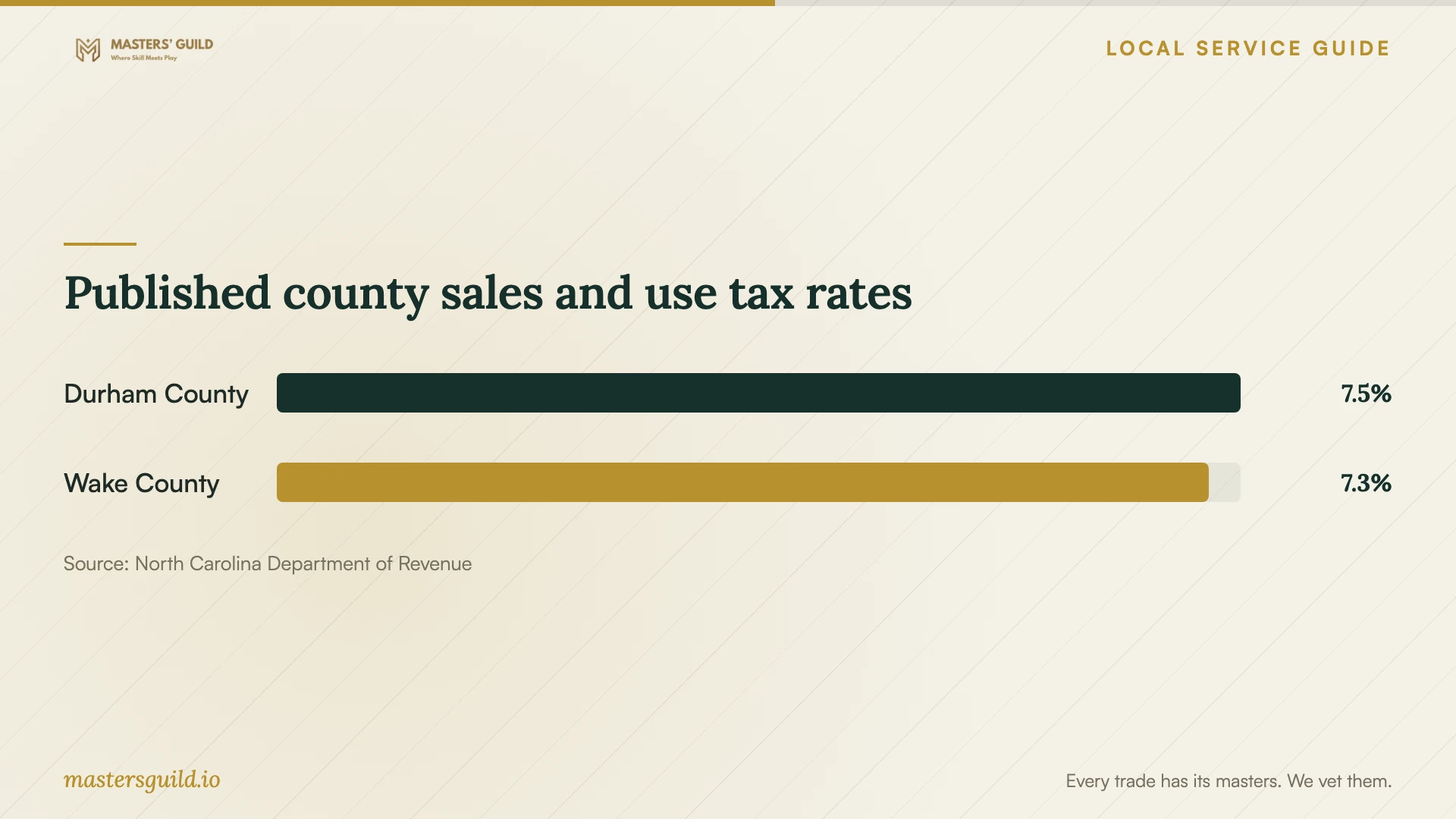
NCDOR publishes a 7.5% combined sales and use tax rate for Durham County. Confirm which rate the contractor proposes to apply to your transaction. The county comparison provides tax context for reviewing an estimate; it supplies no evidence of electrician prices or labor-cost differences. [4]
Coordinate meter-box work and close out the repair
Duke Energy’s March 11, 2014 Carolinas storm notice told homeowners to arrange an electrician when a meter box pulled away from the house, whether the home retained power or lost it. The notice also said an electrical inspection might precede reconnection. This historical guidance does not establish today’s Durham reconnection procedure. [2]
Confirm current responsibilities with the utility serving your address before scheduling meter-box work. Have the electrician identify who will coordinate any disconnection, inspection, and reconnection. Discuss the planned interruption and essential equipment needs. Do not attempt to reattach the meter box yourself.
Before closing the job, have the electrician explain the fault, the repair, and how they checked the result. Keep the itemized invoice, warranty, and any permit or inspection records. For additional recommendations, request a separate scope and an explanation of which items need prompt attention.
Published county sales and use tax rates
Local details that affect your job
Durham County tax planning
NCDOR lists Durham County’s combined sales and use tax rate as 7.5%. Its electrical guidance treats component repairs as generally taxable, subject to exemptions and transaction circumstances. Require each bidder to identify applicable tax and the total payable before comparing offers. [3] [4]
North Carolina classification check
The state Board lists seven Special Restricted electrical license classifications with limited work scopes. Verify how the bidder’s classification covers your home repair, especially if diagnosis leads to an expanded proposal. Check the current license record before approving that expansion. [1]
Historical utility guidance for meter damage
Duke Energy’s 2014 Carolinas notice directs homeowners with a meter box pulled away from the house to arrange an electrician and notes possible inspection before reconnection. If Duke serves your address, confirm its current requirements before agreeing to a repair schedule. [2]
Choose the next step before approving work
| Situation | Next step | Clarify before approval |
|---|---|---|
| Unexplained outlet or lighting fault | Arrange diagnosis and describe the symptoms | Diagnostic charge, spending limit, and charge if you decline repairs |
| Outlet, switch, or breaker repair | Request an estimate identifying applicable tax | NCDOR lists component work as generally taxable, subject to exceptions |
| Proposal expands to complete rewiring | Obtain a revised scope and tax explanation | License coverage and substantiation for capital-improvement treatment |
| Meter box pulled away from the house | Confirm the sequence with your utility and electrician | Current responsibilities and inspection needs; the cited notice dates to 2014 |
| Bidder holds a Special Restricted license | Verify that the classification covers the proposed work | Work limitations and current expiration |
Your hiring checklist
- Record affected rooms, devices, and circumstances without opening electrical equipment.
- Verify the contractor’s licensed business name, classification, and expiration through the state Board.
- Request proof of insurance and written warranty terms.
- Agree on the diagnostic charge, approval limit, and charge if you decline repairs.
- Compare written scopes covering parts, access, restoration, and exclusions.
- Confirm the total payable and the explanation of applicable tax.
- Assign responsibility for checking permit needs and coordinating utility work.
- Keep the invoice and any permit or inspection documentation.
Frequently Asked Questions
How much should I budget?
Repair costs depend on the diagnosed fault and agreed scope; request an itemized estimate. Agree on the diagnostic charge and spending limit before the visit. Include access work, restoration, applicable tax, and any permit or inspection charges when reviewing the repair total.
Does obtaining a permit make a repair tax-exempt?
A permit alone does not settle tax treatment. NCDOR excludes electrical component repairs and replacements from its general permit-based exception. Other exemptions and transaction circumstances can apply, and qualifying capital improvements require substantiation. Have the contractor explain the treatment of your scope. [3]
Which license details should I check?
Check the licensed business name, classification, and expiration through the state Board’s license-search option. The Board defines work scopes and says licenses expire one year after issuance. Have the contractor explain how the classification covers the proposed repair and any expanded work. [1]
Who should arrange a detached meter-box repair?
Duke Energy’s 2014 Carolinas notice directs homeowners to arrange an electrician and notes possible inspection before reconnection. Confirm current responsibilities with the utility serving your home. Agree on coordination before scheduling; the historical notice does not establish today’s procedure. [2]
Sources and scope
This guide combines the sources below with practical planning guidance. Figures apply to the stated geography and period; request a written quote for your property.