
Local service guide
Des Moines pest control: hiring and fall planning
Arrange pest control in Des Moines by asking the provider to identify the pest, explain the proposed treatment, and separate treatment from entry-point repairs in a written quote. Before authorizing pesticide work, check the company's Iowa license and the individual applicator's certification through the Iowa Department of Agriculture and Land Stewardship. For unidentified insects, consider Iowa State University's diagnostic clinic before committing to a treatment plan. [1] [3]
Identify the insect before choosing treatment
Send the provider clear photographs, the rooms where you found insects, and a description of where they gather. Ask the provider to name the pest and explain what evidence supports that identification. If the provider cannot identify it from photographs, ask whether an inspection or specimen would help before you approve pesticide application.
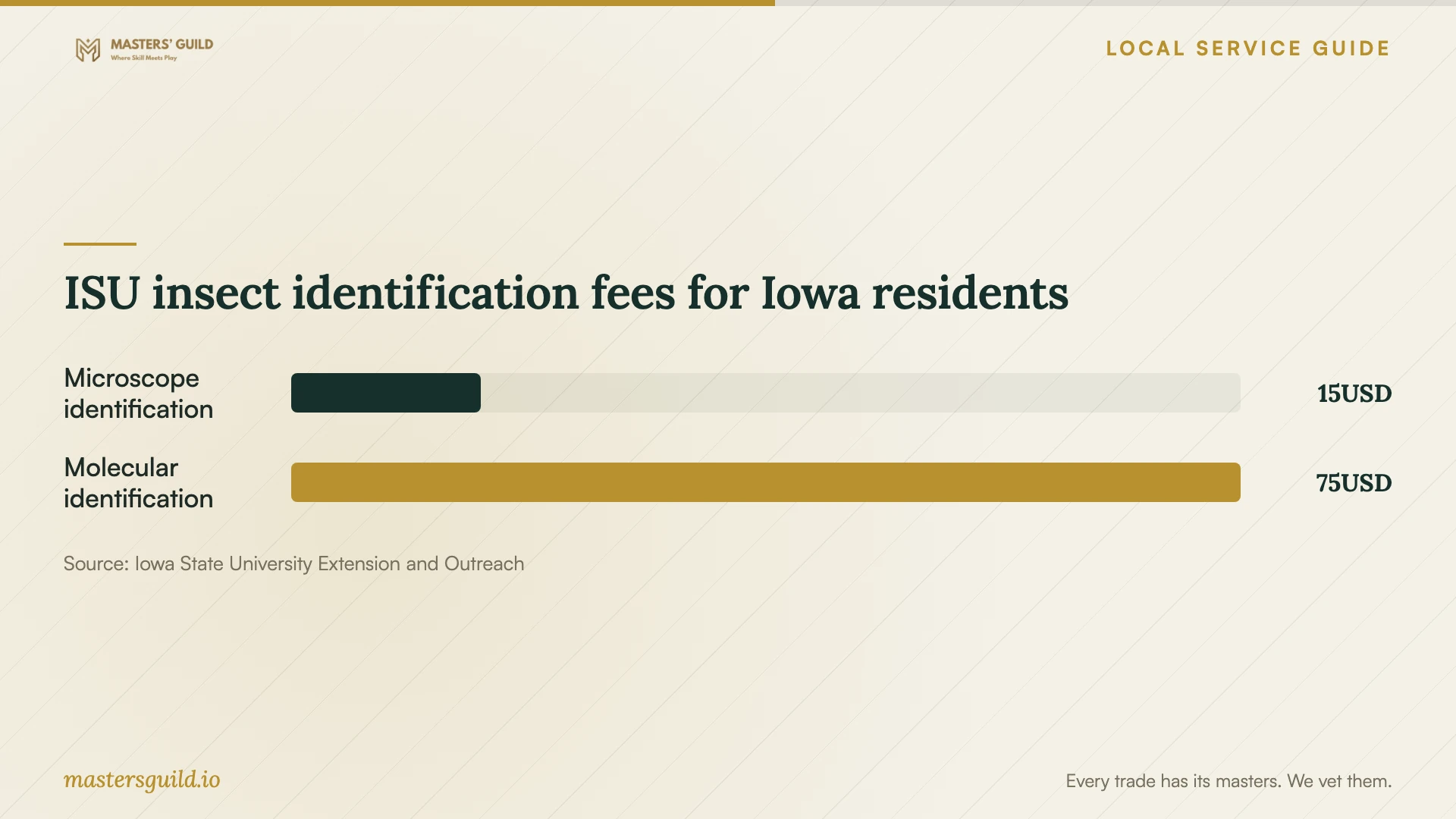
Iowa State University's Plant and Insect Diagnostic Clinic identifies insects from the field, garden, and home. Its published Iowa-resident fees distinguish microscope insect identification, which covers most samples, from molecular insect identification. Ask the clinic which service fits your sample rather than choosing a test based on price. [3]
Follow the clinic's sampling instructions and include its submission form when sending or dropping off a specimen. The clinic tells customers not to send payment with the sample; it sends a statement after completing the diagnosis. Contact the clinic before submission if you need help deciding how to collect or package the insect. [3]
Check the company and the person doing pesticide work
Iowa's Pesticide Bureau treats company licensing and individual certification as separate credentials. Its official licensing and certification page provides a route to information about Iowa pesticide applicators and companies. Ask for the company's name and license details, plus the name and certification details of the person who will apply pesticides. [1]
Use the state resource to check those details before approving the visit. Ask the provider to explain how the applicator's certification fits the proposed work. If you cannot resolve a credential question, contact the Pesticide Bureau before authorizing application. Request proof of liability insurance as a separate hiring check. [1]
Ask who will inspect, who will treat, and who will return if the problem continues. Put those responsibilities in the quote. If another worker arrives, confirm that person's role and credentials before treatment begins.
Plan fall treatment around entry points
Iowa State Extension's October 2019 guidance describes accidental invaders as insects that enter buildings from the surrounding landscape during late summer and fall. It discusses boxelder bugs, multicolored Asian lady beetles, and brown marmorated stink bugs. Use that guidance after identification rather than assuming an unfamiliar insect belongs to this group. [2]
For accidental invaders, Extension recommends tight-fitting door sweeps, sealing openings around pipes and wires, caulking construction joints, and maintaining siding, eaves, and soffits. Ask the provider to inspect those areas and identify the gaps it proposes to address. Clarify whether the pest-control quote includes sealing or whether you need to arrange repairs with another worker. [2]
The same guidance places preventive exterior insecticide application before entry, from September to mid-October, and notes that protection can require repeat application during a prolonged fall. For an October appointment, ask whether insects remain outside or have entered the home. Ask the provider to explain the purpose of any proposed exterior application and follow the current product label. [2]
Extension recommends a vacuum or dustpan for accidental invaders inside. It also explains that indoor aerosol sprays do not control concealed pests and do not provide a long-term solution. Its article dates from 2019, so ask the provider to assess your present conditions rather than treating its seasonal window as a fixed appointment deadline. [2]
Compare the full job before accepting a quote
Request a written scope that names the pest, affected rooms or exterior areas, inspection charge, treatment method, and any sealing work. Ask for the total charge, payment schedule, and separate prices for optional work. Compare those details before choosing between a single visit and a recurring plan.
Ask the provider for written preparation and re-entry instructions that address your household, pets, and the areas it will treat. Confirm whether you need to move furniture or clear access. Ask what you should record after treatment and how the provider will decide whether to return.
Agree on follow-up terms before the visit: who you contact, what the provider includes, what triggers another charge, and how you can cancel ongoing service. For a fall invader job, ask the provider to explain how removal, exclusion repairs, and any pesticide application each contribute to the proposed plan.
ISU insect identification fees for Iowa residents
Local details that affect your job
Use Iowa's two-part credential check
Des Moines homeowners can use the Iowa Pesticide Bureau's licensing and certification resource to investigate both the pesticide company and the individual applicator. The department distinguishes those credentials, so request both sets of details before authorizing pesticide work. [1]
Arrange identification through the clinic in Ames
Iowa State University's Plant and Insect Diagnostic Clinic in Ames accepts insect-identification submissions and publishes fees for Iowa residents. Include a submission form with a mailed or dropped-off sample. The clinic lists microscope identification at $15 for most samples and molecular identification at $75; ask which service applies before submitting. [3]
Choose the next step for your situation
| Situation | Next step | Ask before approving work |
|---|---|---|
| You cannot identify the insect | Consider ISU's home-insect identification service. | Does the clinic need a specimen, and which identification service fits? |
| A provider proposes pesticide application | Check the company license and applicator certification through Iowa's official resource. | Who will apply the pesticide, and what are that person's certification details? |
| Identified fall invaders gather outside | Request an entry-point inspection and discuss prevention before insects enter. | Which gaps need repair, and what would an exterior treatment accomplish? |
| Identified accidental invaders are inside | Use Extension's vacuum or dustpan guidance and arrange an exclusion assessment. | How will the provider address entry points and any concealed insects? |
Your hiring checklist
- Photograph the insect and note the affected rooms, entry points, and dates you observed it.
- Ask the provider to identify the pest and explain whether it needs a specimen or inspection.
- Check the company license and individual applicator certification through Iowa's official resource.
- Request a written scope separating inspection, treatment, sealing, and optional work.
- Confirm preparation, access, pet arrangements, and re-entry instructions before the appointment.
- Agree on follow-up charges, recurring-service terms, and cancellation conditions.
- For identified fall invaders, ask the provider to inspect door sweeps, utility openings, and exterior joints.
Frequently Asked Questions
How do I check a pest-control provider's Iowa credentials?
Use the Iowa Department of Agriculture and Land Stewardship's applicator licensing and certification resource. Ask for both the company's license details and the individual applicator's certification details. Iowa distinguishes a licensed company from a certified applicator. [1]
Can I get an insect identified before buying treatment?
Yes. Iowa State University's Plant and Insect Diagnostic Clinic identifies insects from homes. It lists a $15 microscope identification fee for most Iowa-resident samples and $75 for molecular identification. Contact the clinic about the appropriate service and follow its submission instructions. [3]
Should I request indoor spraying for fall invaders?
Start with identification. For accidental invaders, Iowa State Extension recommends prevention and vacuum or dustpan removal indoors. Its guidance says aerosol sprays do not control concealed pests or provide a long-term solution. Ask the provider to explain any proposed indoor treatment. [2]
What should I include when requesting quotes?
Share photographs, affected areas, observations, access limitations, and any treatment you have tried. Ask each provider to specify identification, treatment scope, preparation, repairs, total charges, and follow-up terms. Request a separate explanation for any recurring service.
Sources and scope
This guide combines the sources below with practical planning guidance. Figures apply to the stated geography and period; request a written quote for your property.