
Local service guide
Mold Removal in Des Moines, IA: Plan the Cleanup
Arrange Mold Removal in Des Moines by asking an experienced remediator to assess affected materials and identify the water problem before you approve the cleanup scope. EPA says homeowners can handle most patches smaller than about 10 square feet, but sewage-related damage calls for a professional with contaminated-water experience. Before authorizing eligible basement-protection plumbing, check the city's subsidy program and obtain its required pre-approval. [1] [4]
Decide who should handle the cleanup
Measure the visible patch and describe the water event when requesting an assessment. EPA says homeowners can handle mold covering less than about 10 square feet in most cases. Consider its separate cautions about extensive water damage, contaminated water, HVAC involvement and health concerns before choosing homeowner cleanup. [4]
For a small hard-surface patch, EPA recommends scrubbing with detergent and water, then drying completely. You may need to discard moldy porous materials such as carpet and ceiling tiles because mold can occupy spaces that cleanup cannot reach. Clean and dry surfaces before painting or caulking. [4]
Do not run the heating or cooling system if you know or suspect it contains mold; EPA warns that operation could spread mold throughout the building. Hire a professional experienced with contaminated-water buildings for sewage-related damage. Consult a health professional before cleanup if you have health concerns. [4]
Request a quote with clear boundaries
Give each bidder the same description: affected rooms, visible patch dimensions, damaged materials, the suspected water source and any previous cleanup. Ask the assessor to separate observed damage from areas that need investigation. Agree on permission and pricing before anyone opens a wall or removes finishes.
Request separate prices for assessment, cleanup, material removal, drying, moisture-source repairs and rebuilding. Ask who will protect adjacent rooms and handle debris. Put the procedure for approving additional work in writing, including how the contractor will document hidden damage and calculate the added charge.
EPA recommends checking references and asking a cleanup contractor to follow EPA, ACGIH, IICRC or other professional or government guidelines. Ask which guidance the contractor proposes for your job. Request references for work involving similar materials and a similar water problem. [4]
Before choosing an offer, ask each bidder to identify exclusions and assign responsibility for the water repair. Confirm who will coordinate separate trades and who will tell you when the area is ready for rebuilding. Compare these commitments alongside the quoted total.
Arrange the water repair and city approval
EPA advises fixing plumbing leaks and other water problems as soon as possible and drying items completely. Ask the cleanup and repair contractors to agree on their sequence before you replace finishes. Record who will perform the repair and how they will document drying. [4]
For basement water problems, ask a plumber whether the proposed repair falls within Des Moines' Private Property Protection Program. The city lists specified sump-pump installation or redirection, roof-leader disconnection from the sanitary sewer and new backwater-valve installation. Obtain approval before beginning qualifying work. [1]
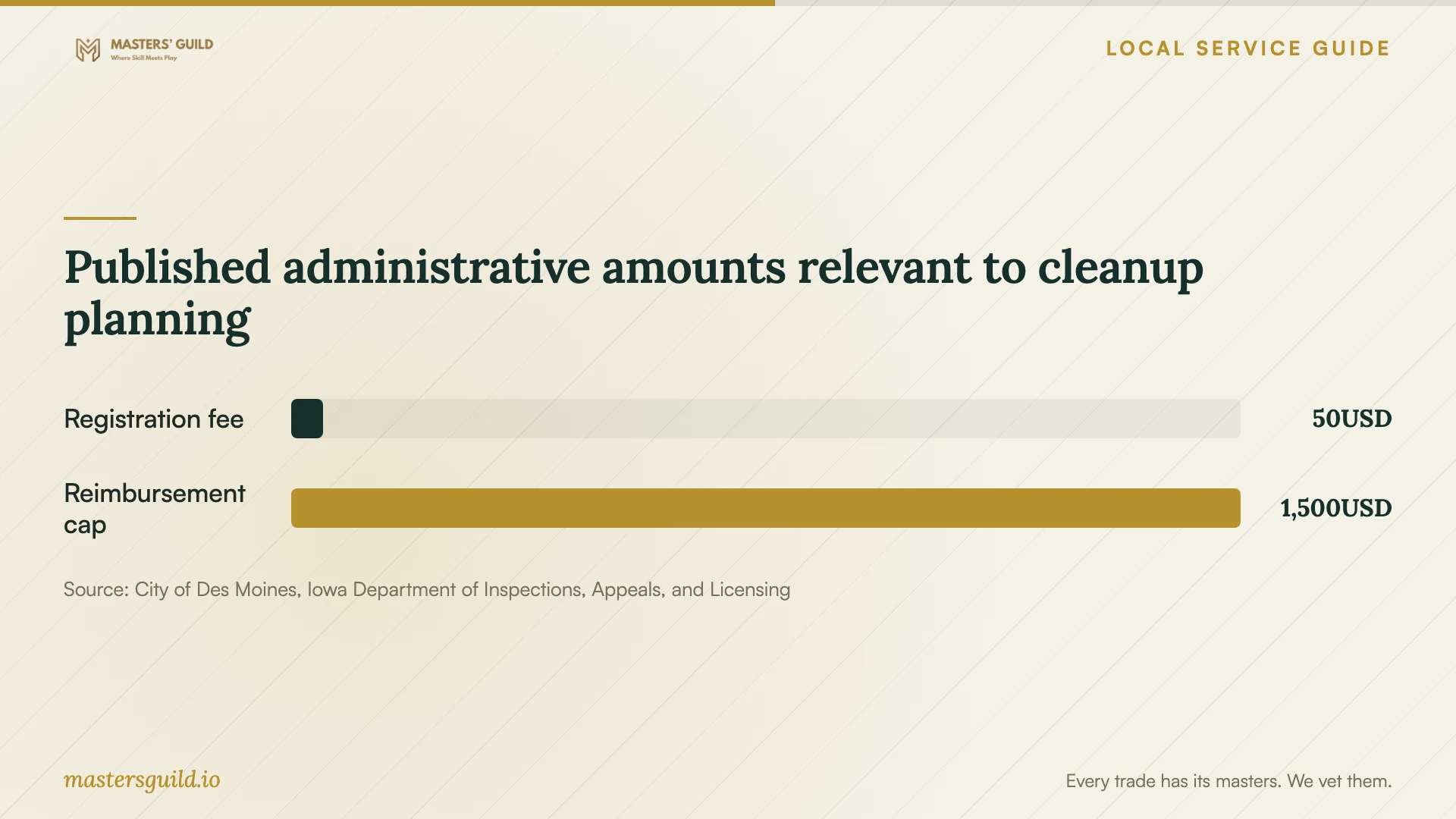
Use the monetary chart to distinguish a state registration expense from the city's reimbursement limit. DIAL lists a $50 contractor-registration application fee; Des Moines lists a $1,500 maximum reimbursement for qualifying protective plumbing. Neither amount establishes what a remediator should charge you. [1] [2]
Prepare for tear-out and agree on handover
Before the crew arrives, ask which rooms you can use, what belongings to move and where workers need access. Photograph conditions without disturbing damaged materials. Keep the scope, change approvals and repair records together so you can compare completed work with your agreement.
Before removing suspect materials, ask the contractor to determine whether Iowa asbestos requirements apply. Iowa DNR says renovation and demolition may require inspection, laboratory analysis, notification and proper removal or disposal. Resolve the requirements for your property and proposed work before disturbing those materials. [3]
Agree on handover documents before signing: completed-work photographs, a list of removed materials, the water-repair record and the contractor's basis for proceeding with rebuilding. Ask how to report returning dampness or odor and what follow-up the contract includes.
Published administrative amounts relevant to cleanup planning
Local details that affect your job
Des Moines plumbing subsidy requires approval first
The Private Property Protection Program applies to properties within Des Moines city limits. The city reimburses 100% of qualifying costs up to $1,500 for owners who meet its requirements. Submit an application with an itemized estimate and project description, then obtain a pre-approval letter before work begins. A licensed plumber must complete approved work with a plumbing permit before June 30, 2028. After completion, submit the itemized invoice, proof of payment, permit number and W-9. Ask the city about eligibility before committing to the plumbing contract; the program's listed work does not include mold cleanup. [1]
Iowa credentials depend on each contractor's scope
Iowa requires construction contractors earning at least $2,000 annually from construction to register with DIAL. Subcontractors need their own registration. Businesses providing plumbing or mechanical services need the applicable Plumbing and Mechanical Systems Board license. If the quote includes rebuilding or leak repairs, request the credentials of the business performing each part and check local requirements with the city or county. Assess mold-cleanup experience through references and proposed methods, as EPA recommends. [2] [4]
Resolve Iowa asbestos requirements before material removal
Ask about suspect materials before approving mold-related tear-out. Iowa DNR describes renovation and demolition as potentially subject to asbestos release-prevention requirements, including inspection and laboratory analysis, notification and proper removal or disposal. Anyone compensated to remove asbestos-containing materials must obtain a certified asbestos contractor permit from Iowa DIAL. Have the contractor determine applicability to your project and identify who will perform any required asbestos work. [3]
Choose the next step for your situation
| Situation | Next step | Scope to discuss |
|---|---|---|
| Hard-surface patch smaller than about 10 square feet | Consider homeowner cleanup under EPA guidance, taking its cautions into account. | Detergent-and-water cleaning, complete drying and water repairs. |
| Extensive water damage or mold covering more than 10 square feet | Consult EPA's broader remediation guidance and seek an experienced assessment. | Affected materials, removal needs and moisture-source repair. |
| Sewage or contaminated-water damage | Hire a professional experienced with contaminated-water buildings. | Cleanup and repairs appropriate to the water event. |
| Suspected HVAC mold contamination | Do not run the system; consult EPA guidance before further action. | Assessment of system involvement. |
| Qualifying protective plumbing within Des Moines | Apply for city pre-approval before work begins. | Licensed plumber, plumbing permit and reimbursement documents. |
Your hiring checklist
- Record affected rooms, visible patch dimensions and the history of water entry without disturbing materials.
- Ask the assessor to distinguish observed damage from areas that need investigation.
- Request cleanup references and the guidance the contractor proposes to follow.
- Get separate prices for cleanup, drying, water repairs and rebuilding.
- Request the credentials of each business performing construction or trade work.
- Check city subsidy eligibility and obtain any required approval before protective plumbing begins.
- Resolve questions about suspect materials before approving tear-out.
- Agree on change approvals, completion documents and follow-up terms.
Frequently Asked Questions
Can I clean a small patch myself?
EPA says homeowners can handle most patches smaller than about 10 square feet. Consider its cautions about extensive water damage, contaminated water, HVAC involvement and health concerns. Clean hard surfaces with detergent and water and dry completely; moldy porous materials may need disposal. [4]
Does the city reimburse mold cleanup?
The Private Property Protection Program lists specified protective plumbing work rather than mold cleanup. Eligible owners can receive reimbursement for approved work up to $1,500. Obtain pre-approval before work begins and retain the required payment and permit documents. [1]
Which credentials should I request?
Request construction registration where Iowa's registration requirement applies, plus applicable plumbing or mechanical credentials for those repairs. Ask who will perform each part of the scope. For mold-cleanup capability, EPA recommends checking experience and references and discussing the cleanup guidance the contractor follows. [2] [4]
What should happen before replacing finishes?
Fix the water problem, complete cleanup and dry affected items. EPA advises cleaning and drying before painting or caulking. Ask the contractor to document the repair and explain the basis for rebuilding. Resolve applicable asbestos requirements before removing suspect materials. [3] [4]
Sources and scope
This guide combines the sources below with practical planning guidance. Figures apply to the stated geography and period; request a written quote for your property.