
Local service guide
Gardening in Des Moines: Hiring and Seasonal Planning
Arrange Gardening in Des Moines by defining the beds, plants and tasks you want handled, then request a written quote that separates labor, materials and cleanup. For planting, use Polk County freeze dates as planning references and check the forecast before the visit. If the gardener proposes pesticide treatment, ask for the company's license and the applicator's certification. [1] [2]
Define the gardening job before requesting a quote
Walk through the garden and divide the work into named areas: the front flower bed, vegetable plot, containers or shrub border. Photograph each area and mark plants you want the gardener to preserve. Describe the result you expect, such as removing weeds around established perennials, planting supplied flowers or clearing a vegetable bed after harvest.
Separate the first cleanup from ongoing care. Ask the gardener to quote each scope and describe what they will do on a return visit. For an hourly offer, agree on a spending limit and require approval before additional work. For a fixed quote, list the included beds and tasks so you can compare offers on the same basis.
Include access and handling details: gate width, steps, water access, parking and where the gardener may place materials. Agree on who buys plants, whether you approve substitutions and whether the gardener removes debris. Before work begins, walk through any unmarked plants together rather than leaving removal decisions to guesswork.
Schedule planting around Polk County freeze risk
ISU Extension reports an average last spring freeze of April 22 for Polk County and a late reference date of May 4. Its average first fall freeze is October 10, with early and late reference dates of September 26 and October 26. These are county-level 32°F freeze statistics based on weather observations from 1950 through 2021. [2]
Use those dates to discuss the sequence of work, then check current conditions before committing to tender planting. Ask the gardener which plants can go in during the planned visit and which need a later appointment. Keep bed preparation and planting as separate line items if you want the option to postpone planting.
For an October appointment, decide which crops you want to keep harvesting before authorizing clearance. ISU identifies kale and Brussels sprouts as hardy vegetables that tolerate temperatures in the mid to lower 20s°F. Ask the gardener to identify remaining crops and agree on protection or removal plant by plant. [3]
Check pesticide credentials before agreeing to treatment
The Iowa Department of Agriculture and Land Stewardship states that the pesticide applicator is certified and the pesticide company is licensed. Its licensing page provides access to information about Iowa pesticide applicators and companies. Treat those as separate checks when a gardening proposal includes pesticide treatment. [1]
Ask who will perform the application and request the company's license details and that person's certification details. Describe whether you want hand weeding or are willing to consider a treatment proposal. Ask the provider to name the product, target problem and instructions you will need to follow, then give approval before application.
For routine bed care, ask for examples of comparable work and evidence of liability insurance. Discuss plant identification, removal boundaries and how the gardener will handle a plant they cannot identify. Keep pesticide treatment separate in the quote so you can assess the proposed work before accepting it.
Plan fall vegetables before the cleanup visit
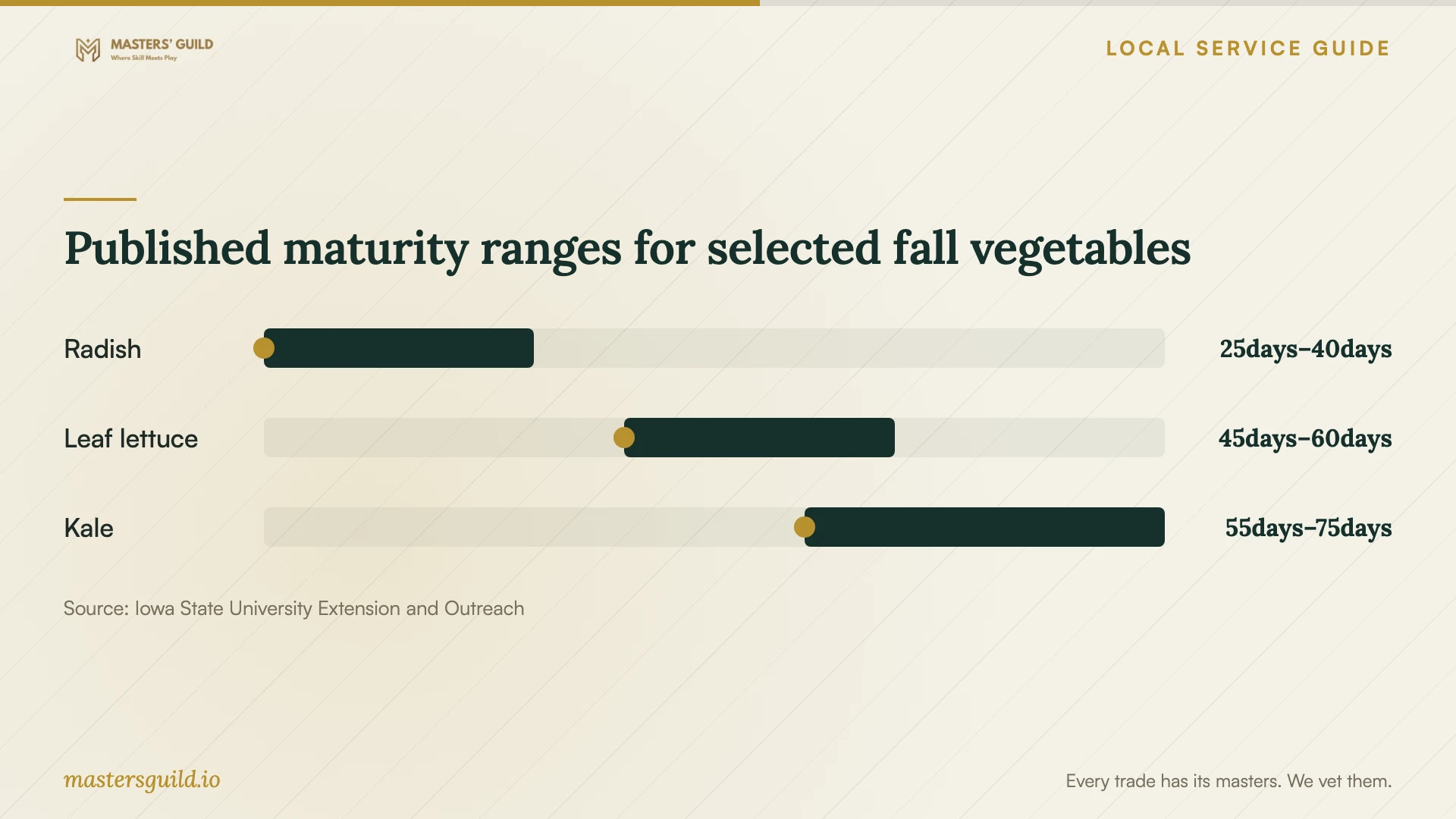
ISU advises gardeners to work backward from the average first frost using time to maturity, time for harvest and allowances for slower growth in cool weather. Its Iowa guidance lists leaf lettuce at 45 to 60 days to maturity with an early August to early September planting window, and radish at 25 to 40 days with a mid-August to mid-September window. [3]
If you want a fall vegetable garden, ask for a crop plan before ordering plants or seeds. Have the gardener distinguish direct sowing from transplanting and record the intended planting and harvest windows. For the following season, include summer planting appointments in the maintenance scope rather than waiting until the autumn cleanup.
ISU recommends supporting blankets or sheets over crops to avoid physical damage and removing protection when temperatures rise above 32°F. If you arrange frost protection, agree on who installs and removes the covers. A gardener's scheduled visit and your forecast response need separate arrangements. [3]
Published maturity ranges for selected fall vegetables
Local details that affect your job
Use the Polk County freeze table for scheduling
For this page's local planning reference, use ISU's Polk County table. Its late spring 32°F freeze reference is May 4; only 10% of freeze dates occurred after the late reference date in the historical dataset. Ask for a postponement option when booking tender planting near that date, and check the forecast before work starts. [2]
Verify two Iowa pesticide credentials
Iowa's Pesticide Bureau distinguishes company licensing from individual applicator certification and provides applicator and company information through its licensing page. Before accepting a treatment proposal, obtain both identities and check the corresponding records. A company name alone does not identify the person who will apply the treatment. [1]
Match the appointment to the work
| Your need | Scope to request | Point to settle before booking |
|---|---|---|
| Overgrown flower beds | An initial cleanup with marked preservation areas | Which plants stay and whether debris removal is included |
| Regular garden care | A written recurring task list | Visit frequency, spending limit and approval for extra work |
| Tender spring planting | Preparation plus a weather-dependent planting visit | Polk County's late spring freeze reference is May 4 |
| Fall vegetables | A crop plan with summer planting appointments | ISU lists leaf lettuce planting from early August to early September |
| Proposed pesticide treatment | A separate treatment proposal | Check the company's license and the applicator's certification |
Your hiring checklist
- Photograph each work area and mark plants you want to preserve.
- List weeding, planting, pruning and cleanup as separate tasks.
- Request separate amounts for labor, plants, mulch and debris removal.
- Agree on substitutions and approval for additional spending.
- Identify gate access, water access and a materials staging area.
- Set a weather contingency and assign watering and cover responsibilities.
- Ask who will apply any proposed pesticide and obtain both credential details.
Frequently Asked Questions
How should I compare gardening quotes?
Give each gardener the same photos, bed boundaries and task list. Ask each to identify labor, materials and debris removal, plus any exclusions. For hourly work, set an approval limit. For a fixed price, agree on the finished scope and how you will approve changes.
Does April 22 mean tender plants are safe to plant?
April 22 is Polk County's historical average last spring 32°F freeze date, not a forecast for your garden. ISU also reports a late reference date of May 4 using 1950 through 2021 observations. Check the forecast and discuss postponement or protection before planting. [2]
Can I start a fall vegetable garden during an October cleanup?
For the crops listed in ISU's fall planting guide, plan earlier. It gives radish a mid-August to mid-September planting window and kale a mid-July to early August window. Ask the gardener to assess existing crops during cleanup and plan next season's planting visits. [3]
What should I check if a gardener offers pesticide treatment?
Ask for the pesticide company's license details and the individual applicator's certification details. Iowa's Pesticide Bureau distinguishes those credentials and provides applicator and company information. Also request the proposed product and application instructions before approving the treatment. [1]
Sources and scope
This guide combines the sources below with practical planning guidance. Figures apply to the stated geography and period; request a written quote for your property.