
Local service guide
duct cleaning in Des Moines: Scope and Hiring
Arrange duct cleaning in Des Moines by asking providers to show the contamination and comparing written scopes and total prices. EPA advises considering cleaning for substantial visible mold on hard duct surfaces or HVAC components, vermin infestation, or excessive debris clogging ducts or particles escaping supply registers. Check Iowa credentials before approving covered mechanical repairs, and ask the provider to explain tax treatment. [1] [2] [3]
Decide whether your ducts need cleaning
Ask the inspector to show you the affected areas. EPA identifies substantial visible mold on hard duct surfaces or HVAC components, vermin infestation, and excessive dust or debris clogging ducts or particles escaping supply registers as reasons to consider cleaning. You can vacuum or remove and clean a dusty return register without committing to whole-system work. [1]
For suspected mold, request photographs and an explanation of the moisture source. EPA cautions that appearance alone cannot confirm mold; an expert may need laboratory analysis. Correct the underlying cause before cleaning. If duct insulation is wet or moldy, ask a qualified HVAC contractor about replacement because EPA says that material cannot be cleaned effectively. [1]
Question promises that cleaning will prevent illness or produce a specific energy saving. EPA reports no demonstrated prevention of health problems and little evidence that cleaning ducts alone improves system efficiency. Discuss unexplained symptoms with your doctor rather than relying on a cleaning salesperson’s diagnosis. [1]
Compare the same scope in each estimate
Get written estimates from at least three providers, as EPA recommends. Ask each to identify supply and return ducts, registers, the blower, coils, drain pans and air-handler housing within the proposed work. EPA warns that an uncleaned contaminated component can contaminate the system again. Have the provider name exclusions and any work that requires another specialist. [1]
Ask how the crew will loosen debris and capture it. EPA calls for vacuum equipment that exhausts outside or HEPA vacuum equipment when exhausting indoors, protection for furnishings, and cleaning methods suited to the duct material. Ask how the crew will seal and re-insulate access holes. EPA specifies soft-bristled brushes for fiberglass duct board and fiberglass-lined metal ducts. [1]
Request separate prices for dryer-vent work, repairs and chemical treatments so you can approve each item. Describe your heating and cooling systems, their locations and access obstacles. Ask for the appointment length, expected heating or cooling interruption, and the price consequence if the crew discovers inaccessible sections. Agree that the provider must obtain your approval before adding work.
Set limits on repairs and chemical treatments
If the crew proposes repair or replacement during cleaning, pause the additional work until you have a written description and price. Iowa requires contractors performing covered mechanical services to hold board licensure and DIAL registration. Verify the license through the public portal identified by DIAL. Ask DIAL which credentials the proposed cleaning scope requires, particularly when the provider combines cleaning with HVAC work. [2]
Before approving a biocide, ask for the product name, label, duct material and reason physical cleaning plus moisture control will not address the problem. EPA advises understanding the risks and benefits before permitting chemical treatment. Its guidance states that no biocides are registered for fiberglass duct board or fiberglass-lined ducts. Ask the provider to verify the current product registration and label authorization for the exact material and application before use. [1]
EPA identifies the underlying duct-cleaning publication as October 1997 and lists a February 19, 2026 page update. Treat its registration statements as guidance to investigate the proposed product, rather than a current inventory of registered products. Require a specific explanation before approving an interior coating or sanitizing add-on. [1]
Prepare access and inspect the result
Clear space around registers and the air handler, arrange access to locked rooms, and discuss pets and furniture protection. Tell the provider about past water damage and suspected asbestos-containing insulation. EPA says providers should inspect for asbestos-containing materials before cleaning and that only specially trained and equipped contractors should disturb those materials. [1]
Agree on the completion check before work begins. EPA recommends a visual inspection and asking the provider to show each component after cleaning. Request photographs of inaccessible sections, inspect several supply and return locations, and have the crew demonstrate system operation. Check that the crew has secured registers and sealed access openings. [1]
Follow the HVAC manufacturer’s filter recommendation and prevent air from bypassing the filter. EPA recommends correcting leaks and checking condensate drainage. During dusty construction or renovation, seal supply and return registers and keep the HVAC system off until after you clean up the dust. Ask the crew to document unresolved damage or moisture problems so you can arrange repairs. [1]
Iowa tax components to clarify on a taxable quote
Local details that affect your job
Iowa credentials when cleaning expands into HVAC work
For a proposal here that adds covered HVAC repair or replacement, request the company’s Iowa mechanical contractor license and DIAL registration, then verify the license through DIAL’s public portal. Iowa treats registration and board licensure as separate requirements. Ask for current insurance documentation: DIAL requires mechanical contractor applicants to provide evidence of at least $500,000 in public liability coverage. Ask DIAL which credentials your cleaning and repair scope requires. Use the contractor-requirements guidance for these checks; its older fee tables and renewal examples should not guide current fee or renewal decisions. [2]
Iowa’s occupant-payment condition changes tax questions
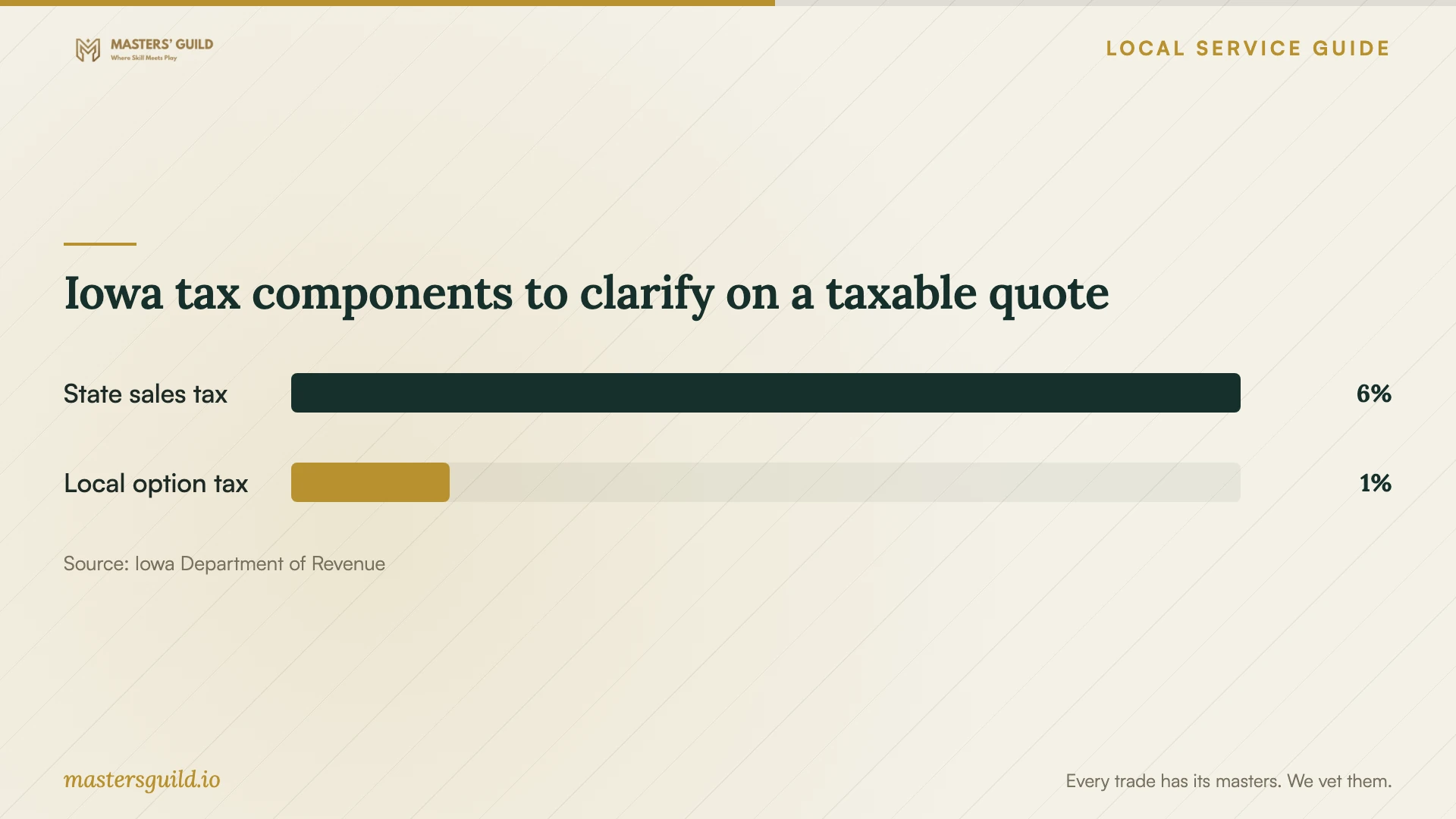
Iowa’s tax guide exempts cleaning services performed in a private residence when an occupant pays. Ask whether the provider classifies your duct-cleaning scope under that exemption and request separate descriptions for repairs or additions. If a landlord pays, the stated occupant-payment condition does not fit, so ask the provider to explain the tax treatment. Iowa lists a 6% state sales tax and a 1% local option tax where applicable. Confirm the applicable local rate for your address before accepting a taxable total. [3]
Choose a next step from the observed condition
| Observed condition | Next step | Question to ask |
|---|---|---|
| Dust on return grille only | Clean the grille and inspect before buying whole-system work. | Can you show contamination beyond this register? |
| Excessive debris clogging ducts or particles escaping supply registers | Consider cleaning after inspection and correction of underlying causes. | Which components need cleaning, and what caused the buildup? |
| Suspected substantial mold on hard duct surfaces | Ask for confirmation and correct moisture before cleaning. | Can you show the affected area and explain the moisture source? |
| Wet or moldy duct insulation | Discuss replacement with a qualified HVAC contractor. | Which material needs replacement and which credentials cover the work? |
| Covered mechanical repair added to cleaning | Verify applicable Iowa mechanical licensure and DIAL registration. | Can you itemize the repair and provide your license details? |
Your hiring checklist
- Describe the problem and request photographs of the affected areas.
- List each HVAC system and explain access obstacles before requesting quotes.
- Compare itemized scopes, exclusions and total prices.
- Ask how the crew will capture dust and protect duct materials.
- Require separate approval for repairs, dryer-vent work and chemical treatments.
- Ask DIAL about credentials for the proposed scope and verify covered mechanical contractors.
- Ask the provider to explain tax treatment on the estimate.
- Agree on photographs, access-hole closure and an operating check at completion.
Frequently Asked Questions
How often should I schedule duct cleaning?
EPA recommends cleaning as needed rather than on a routine schedule. Ask the provider to show contamination and explain how it meets EPA’s condition-specific guidance. Continue filter changes and heating-equipment inspections as separate maintenance tasks. [1]
Does EPA certification prove the cleaner is qualified?
EPA does not certify, endorse or approve duct-cleaning companies. Ask about experience with your duct materials, cleaning procedures and references. Ask DIAL about credentials for your scope and verify applicable Iowa credentials for covered mechanical work. [1] [2]
Should my homeowner cleaning quote include sales tax?
Ask the provider to explain its classification. Iowa exempts cleaning performed in a private residence when an occupant pays. Have the provider itemize repairs and additions and explain their tax treatment before you compare final totals. [3]
Sources and scope
This guide combines the sources below with practical planning guidance. Figures apply to the stated geography and period; request a written quote for your property.