
Local service guide
Basement Remodeling in Des Moines, IA
For Basement Remodeling in Des Moines, define your intended rooms, investigate water concerns, and compare written scopes before hiring. Check Iowa construction registration and the licenses of plumbing or mechanical contractors. If you want city reimbursement for qualifying water-protection work, obtain the city's pre-approval before the licensed plumber starts. [1] [2] [3]
Define the layout using general planning guidance
Treat these layout suggestions as general planning advice. List your intended uses, such as recreation space, an office, a bathroom, or sleeping accommodation. Give each bidder the same sketch and finish list. Ask them to identify unresolved questions about your proposed use before you approve the layout.
For project-specific requirements, DIAL directs contractors to contact the city or county government. Have your remodeler confirm the authority responsible for your address and discuss the proposed rooms with that office. Ask for an explanation of required approvals before accepting a final scope, particularly if you want a bedroom or separate dwelling. [2]
Walk through the stairs, storage areas, utility equipment, drains, and windows during the site visit. Have the bidder mark maintenance access on the sketch. Measure the furniture you intend to use and discuss its placement before approving partitions. Include demolition, debris removal, and cleanup in the scope.
Address water concerns before approving finishes
Show the contractor water stains, damp areas, previous backup locations, and records of earlier repairs. Request an assessment of the suspected cause and a separate repair proposal. Ask what the contractor needs to inspect or test before recommending that you proceed with interior finishes.
The city's protection program covers three categories: new installation or redirection of a sump pump carrying foundation-drain and area-drain flows to a non-sanitary sewer outlet; disconnection of roof leaders from the sanitary sewer service; and new installation of a backwater valve. Ask the plumber to identify the qualifying category in the estimate. [1]
For qualifying sump-pump work, the city gives a rain garden, storm sewer, or ground surface as examples of discharge destinations. Have the plumber describe which drains feed the pump and where it will discharge. Keep this description with the subsidy application and the remodeling scope. [1]
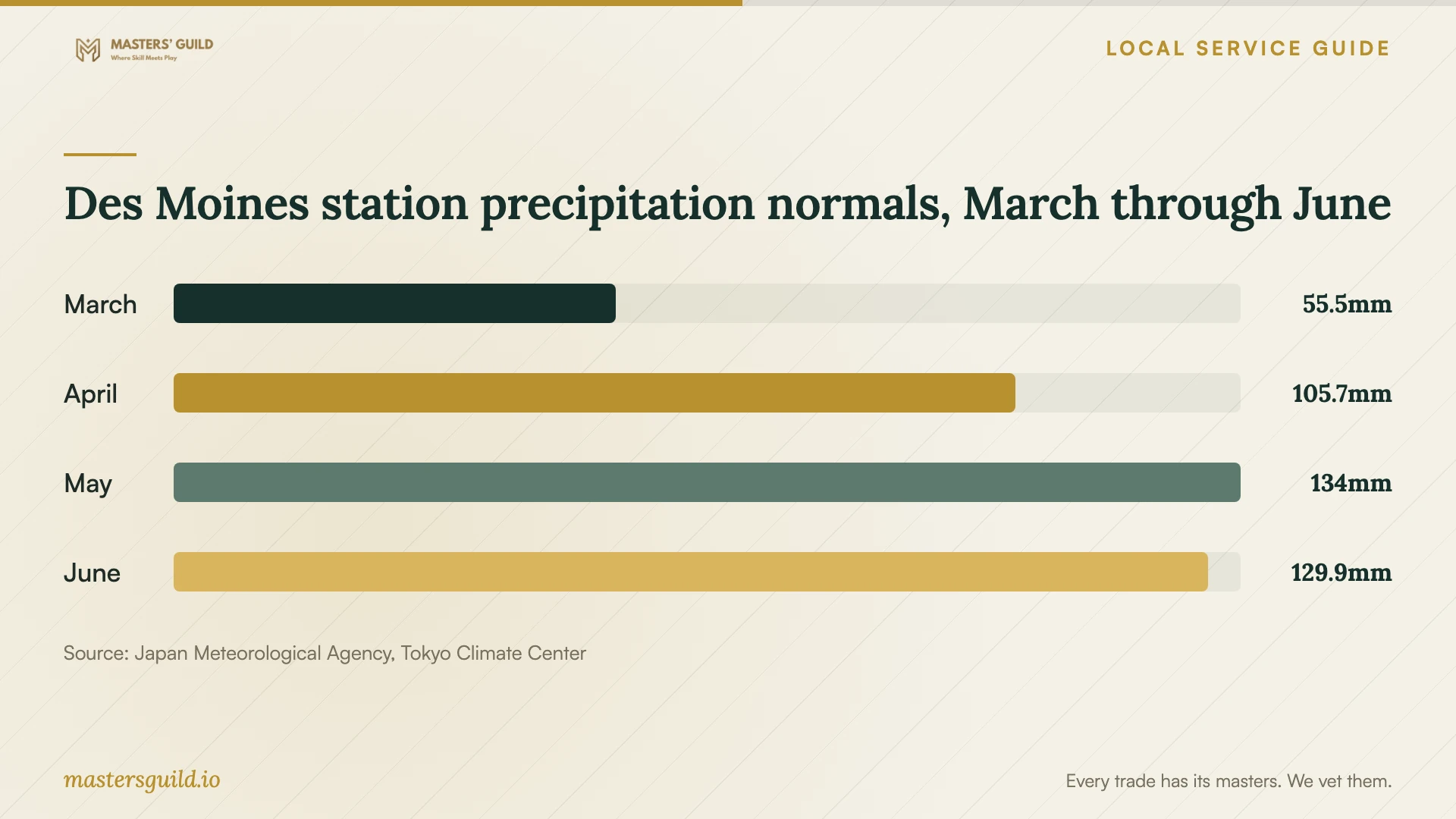
Use the station precipitation chart as seasonal context for your drainage discussion. Photograph what you observe after rain and share those observations with the contractor. For exterior work, agree on protection for open excavations and how the team will handle weather delays. [4]
Follow the city subsidy process in order
1. Confirm eligibility before authorizing work. The property must lie within the City of Des Moines, and the proposed work must fit a qualifying protection category. Contact the Clean Water Program Office at 515-323-8165 if you need clarification. [1]
2. Submit the subsidy application with an itemized estimate and a description of the project. Wait for the city's pre-approval letter before the plumber begins. [1]
3. Have a licensed plumber complete the approved work with a plumbing permit. The city requires completion before June 30, 2028. Confirm that your plumber's schedule meets that deadline before committing to the work. [1]
4. Submit the itemized invoice, proof of payment, plumbing permit number, and W-9 federal tax form after completion. The city may need access to review the application and inspect the completed project. [1]
Verify the remodeler and specialist firms
Iowa requires individual and business construction contractors earning at least $2,000 annually from construction to register with DIAL. Subcontractors do not share the general contractor's registration. Collect each firm's business name and registration number, then use the contractor-check option on DIAL's registration page. [2]
Iowa requires plumbing and mechanical contractors to hold a board license and DIAL registration. The covered services include plumbing, mechanical, HVAC, refrigeration, sheet metal, and hydronic systems. Use the public verification portal available through the state's contractor-license page to check the firm assigned to your bathroom or mechanical work. [3]
Ask who will coordinate the trades and inspections. Request current insurance documentation and references for comparable projects. Discuss dust control, protection for the rest of the house, and access to equipment. Put responsibility for correcting rejected work or arranging repeat inspections in the agreement.
Compare scope, budget, and completion milestones
Request itemized quotes based on the same site conditions and layout. Separate water protection, demolition, framing, trade work, and finishes. Have bidders identify exclusions and allowances, including fixtures or materials you must choose. Request revisions when a quote omits part of your planned work.
Agree on who will confirm approvals, submit applications, pay fees, and arrange inspections. Ask each bidder to identify decisions that could delay the work, such as an unresolved layout or unselected fixtures. Use those answers to compare proposed schedules instead of accepting a completion date without its assumptions.
Tie payment milestones to agreed work stages. Require written approval of changes before extra work starts. At handover, walk through remaining defects with the contractor and collect applicable permit records, warranties, product information, and photographs of concealed work.
Des Moines station precipitation normals, March through June
Local details that affect your job
City funding changes when you authorize plumbing work
For eligible properties within city limits, Des Moines pays the property owner directly for 100% of qualifying protection costs, capped at $1,500. Obtain pre-approval before work begins and keep the eligible plumbing scope separate from interior remodeling. The city processes reimbursement after receiving the required completion documentation, so plan how you will pay the plumber before receiving the subsidy. [1]
Iowa specialist credentials require a separate check
Statewide Iowa requirements apply to plumbing and mechanical contractors working here. Beyond DIAL registration, the board requires contractor licensing, at least $500,000 in public liability insurance, and a minimum $5,000 surety bond. Ask the specialist firm for its license number and current insurance documentation. Verify its credentials alongside those of the general remodeler. [2] [3]
Choose your next planning step
| Your situation | Next step | Hiring or planning implication |
|---|---|---|
| You have unresolved water concerns | Request an assessment and separate repair proposal. | Review the proposed cause and remedy before approving interior finishes. |
| You plan a new backwater valve within city limits | Submit the subsidy application, itemized estimate, and project description. | Wait for city pre-approval; use a licensed plumber with a plumbing permit. |
| You want a bathroom or mechanical changes | Verify the specialist firm's board license and DIAL registration. | Check the company performing the trade work alongside the remodeler. |
| Your bidder will use subcontractors | Request each subcontractor's registration details. | Iowa does not cover subcontractors under the general contractor's registration. |
| You want sleeping accommodation or a separate dwelling | Have the contractor discuss the intended use with the applicable local authority. | Resolve approval questions before agreeing on the final layout. |
Your hiring checklist
- Prepare one room sketch, intended-use list, and finish list for all bidders.
- Photograph water concerns and gather records of past repairs or backups.
- Request a separate assessment and estimate for proposed water-protection work.
- Collect business names and credential numbers for the remodeler and subcontractors.
- Assign responsibility for confirming approvals, applications, fees, and inspections.
- Compare exclusions, allowances, material selections, and cleanup duties.
- Agree on payment milestones, written changes, and handover documents.
Frequently Asked Questions
Can the city subsidy cover the whole basement remodel?
The city lists qualifying sump-pump installation or redirection, roof-leader disconnection from the sanitary sewer, and new backwater-valve installation. It reimburses 100% of qualifying costs up to $1,500 under its requirements. Ask for a separate estimate for eligible protection work when comparing remodeling quotes. [1]
Can I seek pre-approval after plumbing work starts?
The city requires its pre-approval letter before work begins. Submit the application, itemized estimate, and project description first. Wait for the letter before authorizing the licensed plumber to start qualifying work. [1]
Does construction registration cover plumbing or HVAC licensing?
Iowa treats DIAL registration and plumbing or mechanical contractor licensing as separate requirements. Verify both for the specialist firm. The state's contractor-license page provides access to the public license verification portal. [3]
How should I set a budget and completion date?
Use itemized quotes based on a site visit and an agreed scope. Separate water repairs and trade changes from finishes. Ask bidders to identify unresolved approvals, material choices, and site questions, then agree on a schedule and a written process for changes.
Sources and scope
This guide combines the sources below with practical planning guidance. Figures apply to the stated geography and period; request a written quote for your property.