
Local service guide
Smart Appliance Setup in Denver: Plan Your Visit
For Smart Appliance Setup in Denver, request a technician who can configure your installed appliance, connect your account, and demonstrate the controls you want. Identify unfinished wiring, water, drain, or gas connections before arranging the visit. Denver lists electrical appliance work and dishwasher and washer plumbing work among its quick-permit categories, with eligibility that depends on the work and building classification. Ask Denver about physical connection work before agreeing on the installation plan. [1]
Compare quotes around the result you want
Give each provider the appliance brand and model number, its installation status, and your desired result. A useful request might cover pairing an installed dishwasher, enabling a supported cycle notification, and demonstrating delayed start. Include the phone you plan to use and any failed setup attempts.
Ask for a written price that identifies app setup, network troubleshooting, and physical installation as separate tasks. Discuss travel charges, equipment purchases, return visits, and follow-up support. Set a spending limit for troubleshooting and require your approval before the provider expands the work. Compare quotes against these deliverables rather than an appointment label such as complete setup.
Confirm the permit route for physical installation
Denver issues quick permits for specific eligible trade work without plan review. For single-family and duplex structures and garages, its electrical list includes appliances, GFCI outlets, and interior or exterior wiring, subject to single-phase utility service rated 400 amps or less. The city also lists dishwashers and washers under plumbing quick-permit work. Ask which requirements apply to the connections you propose. [1]
Use the rules for the confirmed building classification. Denver provides separate electrical eligibility lists for single-family and duplex structures and for multifamily and commercial structures; it also distinguishes IRC and IBC townhomes in parts of its guidance. Ask Denver to resolve an uncertain classification rather than choosing a list from the ownership description alone. For multifamily and commercial structures, the city excludes electrical appliance installations that do not appear on its allowed quick-permit list. [1]
Before arranging connection work, identify who will confirm the permit route, apply, and coordinate any required inspection. If another contractor must finish the installation, agree on the order of visits so the setup technician can work with the appliance in its intended location.
Prepare your phone and retain account control
Have your phone, appliance instructions, Wi-Fi details, and access to account verification messages ready. Describe the point where pairing fails and any settings you have changed. Ask the technician to consult the model’s connection instructions before changing router settings, and agree on which network changes you authorize.
Sign into the appliance account yourself and enter your own passwords. Keep control of the recovery email. For a used appliance, ask the technician to consult the manufacturer’s ownership-transfer instructions. Decide which household members should receive access and ask for an explanation of the permissions you choose.
Choose schedules and standby settings with care
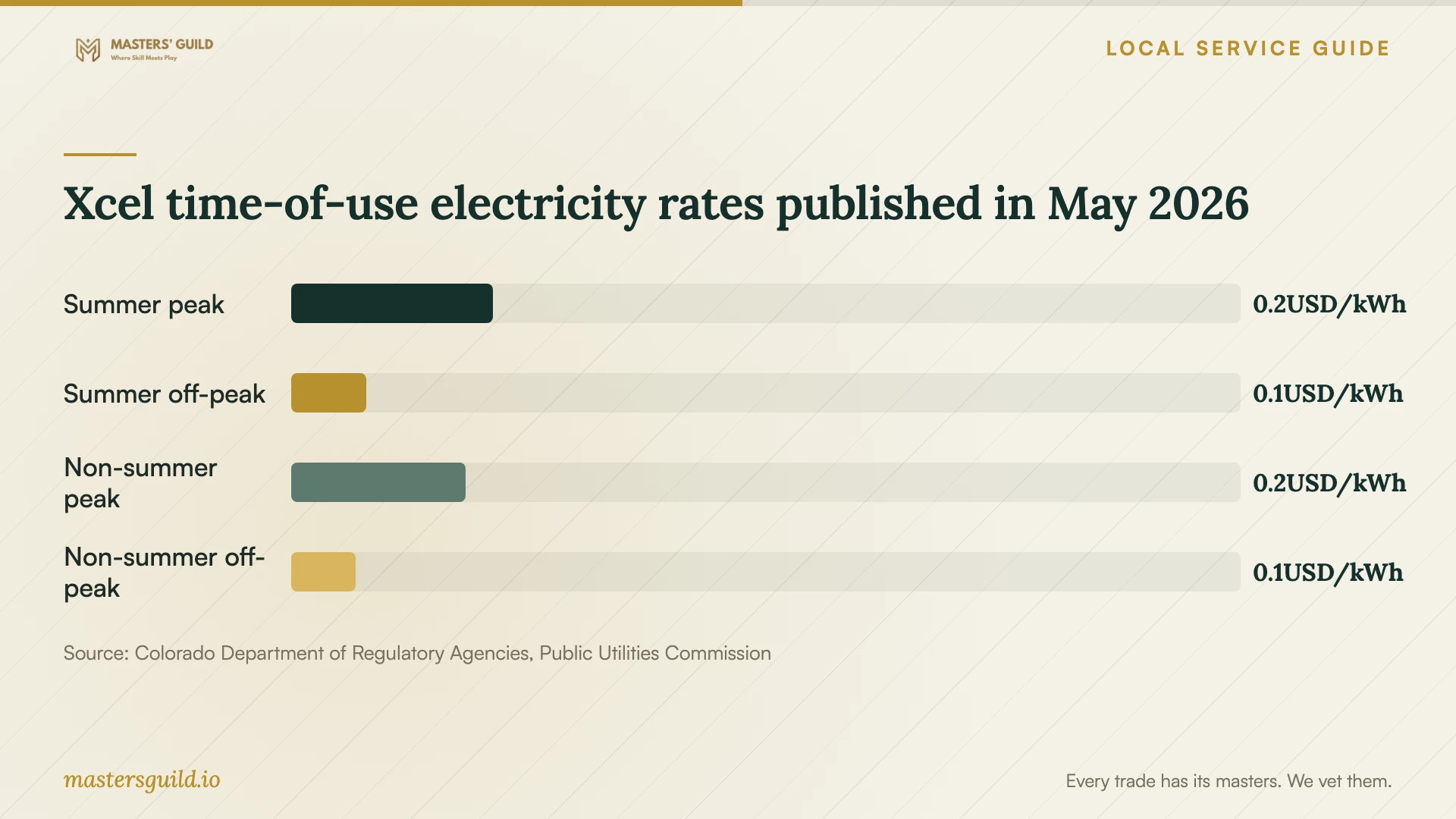
The Colorado PUC’s May 2026 newsletter identifies Xcel’s on-peak window as 5 p.m. to 9 p.m. and publishes separate summer and non-summer rates. Check your current electricity plan before using that schedule to guide appliance operation. The chart presents the May figures as historical reference values, not current October prices. [2]
If your model supports delayed start, ask the technician to demonstrate selecting, changing, and canceling it. Choose an operating time that fits the manufacturer’s instructions and your household. Confirm whether you are setting a start time or a completion time before relying on the result.
Berkeley Lab notes that products with electronics may consume standby power. Review the appliance’s standby and connectivity settings with the technician. Ask for model-specific measurements before accepting a promised standby saving, and consider which connected functions you want to keep available. [3]
Test the agreed setup before handover
Operate the appliance from your phone and check the features named in the quote. Ask the technician to explain, using the model’s instructions, which functions depend on an internet connection. Practice the local controls and record how to reconnect after a network change.
Keep a short record of the app name, account email, selected settings, and follow-up terms. Remove temporary technician access. If the provider cannot complete a requested feature, document the unresolved step, the reason, and any proposed return visit before closing the appointment.
Xcel time-of-use electricity rates published in May 2026
Local details that affect your job
Resolve building classification with Denver
Denver’s electrical quick-permit eligibility depends on building classification and the proposed work. Its single-family and duplex appliance category requires single-phase utility service rated 400 amps or less. Tell the city your address and connection scope, and ask it to confirm the applicable classification if you are uncertain, including for a townhome. Denver lists 720-865-2720 for general permitting questions. [1]
Use your Xcel plan to choose a demonstration
For Colorado Xcel time-of-use customers, the PUC’s May 2026 newsletter identifies 5 p.m. to 9 p.m. as on-peak and June 1 through September 30 as the summer-rate period. Bring your current bill and request a supported scheduling demonstration that fits your tariff. Do not treat the May rates as confirmation of your current charge. [2]
Match the appointment to your situation
| Your situation | Scope to request | Resolve before the visit |
|---|---|---|
| Installed appliance awaiting pairing | Account and connection setup | Model details and desired controls |
| Previous pairing attempt failed | Setup with a defined troubleshooting allowance | Authorized router changes and extra-work price |
| Washer or dishwasher needs plumbing work | Physical installation assessment followed by setup | Ask Denver about the listed plumbing quick-permit category |
| Appliance needs electrical work | Electrical installation assessment | Confirm building classification with Denver before selecting its permit rules |
| You want timed operation | Demonstration of supported scheduling controls | Current electricity plan and model instructions |
Your hiring checklist
- Send the model number, installation status, and requested features with your quote request.
- Identify who will resolve physical connection and permit questions.
- Keep your phone, instructions, Wi-Fi details, and recovery access available.
- Approve the written scope, troubleshooting limit, and extra-work process.
- Bring your electricity bill if you want help choosing a schedule.
- Reserve time at the end to test the agreed features and record unresolved work.
Frequently Asked Questions
How should I describe an app-only appointment?
State that the appliance is installed and identify the pairing or control task you want completed. Disclose any unfinished physical connections. Ask Denver about proposed wiring, plumbing, or gas work before adding installation to the appointment.
Does condo ownership determine which permit rules apply?
Confirm the structure’s permit classification with Denver. The city separates electrical eligibility by building category and distinguishes IRC and IBC townhomes in its guidance. Ask the city which rules apply to your address and proposed work. [1]
Can a technician promise savings from appliance schedules?
Ask the technician to demonstrate the controls and explain the chosen schedule. The PUC’s May 2026 figures show different Xcel peak and off-peak rates, but they do not establish your current tariff or a savings amount for your appliance. Check your plan before making a cost assumption. [2]
Sources and scope
This guide combines the sources below with practical planning guidance. Figures apply to the stated geography and period; request a written quote for your property.