
Local service guide
Denver pressure washing: Rules and Hiring Guide
Before arranging pressure washing in Denver, identify your water supplier and resolve whether your proposed job qualifies under its drought rules. As of October 14, 2026, Denver Water restricts individual power washing to immediate health or safety reasons, except as permitted by an approved water budget or variance. Its customer guidance prohibits routine or cosmetic washing after September 30. The resolution includes a conditional commercial provision; clarify your contractor’s scope with the utility before booking cosmetic work. Do not assume you can obtain a variance. [1] [2]
Resolve water-use eligibility before scheduling
Describe the reason for cleaning: appearance, maintenance or an immediate health or safety problem. Denver Water’s customer guidance prohibits routine or cosmetic power washing after September 30. The amended board restrictions took effect October 1, 2026, and continue until further board action, subject to the resolution’s approved water-budget or variance qualification. Do not plan around an assumed reopening date. [1] [2]
The resolution distinguishes individual washing from commercial enterprises for which cleaning with water is essential. Those enterprises may power wash only as necessary and must clean without water first, use high-efficiency equipment and prevent water waste. Because the customer guidance states a broader cosmetic-washing restriction, contact Denver Water Customer Care at 303-893-2444 about your contractor’s proposed job. Hiring a cleaner does not establish eligibility. [1] [2]
Give the utility and contractor the same photographs and description. Identify the affected area, the hazard or contamination, and the result you need. Have the contractor record the proposed scope and any utility clarification in the estimate before you commit to a date.
Choose a cleaning method for each surface
Have the cleaner identify the material and finish of each driveway, patio, fence, deck or siding area before proposing pressure, detergent or a lower-pressure treatment. Include a test area in the scope. Point out cracks, loose coatings, damaged joints and leaks during the inspection.
For roofs and upper-level work, discuss how the crew will reach the surface and protect nearby property. Require a method consistent with the material manufacturer’s care instructions. Have the contractor explain the proposed treatment for each material rather than accepting one pressure setting for the whole property.
List stains separately from general dirt. Agree on which marks the price covers, whether repeat treatments require approval, and what result the cleaner will commit to in writing. Include protection for plants, outlets, doors and windows, plus a plan for wash water and removed debris.
Settle the water source and hydrant arrangements
Tell the contractor whether you can provide an outdoor hose connection. Denver Water lists pressure washing among eligible hydrant-permit uses but warns that it may restrict permits during droughts. Keep hydrant authorization and washing eligibility as separate questions when discussing the job with the utility. [2] [3]
Denver Water requires hydrant applicants to bring their meter and a valid backflow test report to its Meter Shop at 1600 W. 12th Ave., Building F. Allow up to three business days for calibration testing and permit approval. The contractor must keep the permit on site while using the meter and supply the required equipment; Denver Water does not provide or rent it. [3]
The estimate should identify who pays for obtaining water, permits, equipment and consumption. For a tank supply, have the contractor name the filling location and water supplier. Resolve any unspecified water-source allowance before accepting the price.
Compare itemized estimates for your property
Request itemized estimates for your property. Give each bidder the same photographs, surface measurements, access details and stain list. Compare the cleaning scope and promised results alongside the total.
Have bidders separate base cleaning, stain treatment, difficult access, water supply and cleanup. Review exclusions, payment terms and the process for approving additional work. Obtain liability insurance documentation and identify who will perform the work and handle a damage complaint.
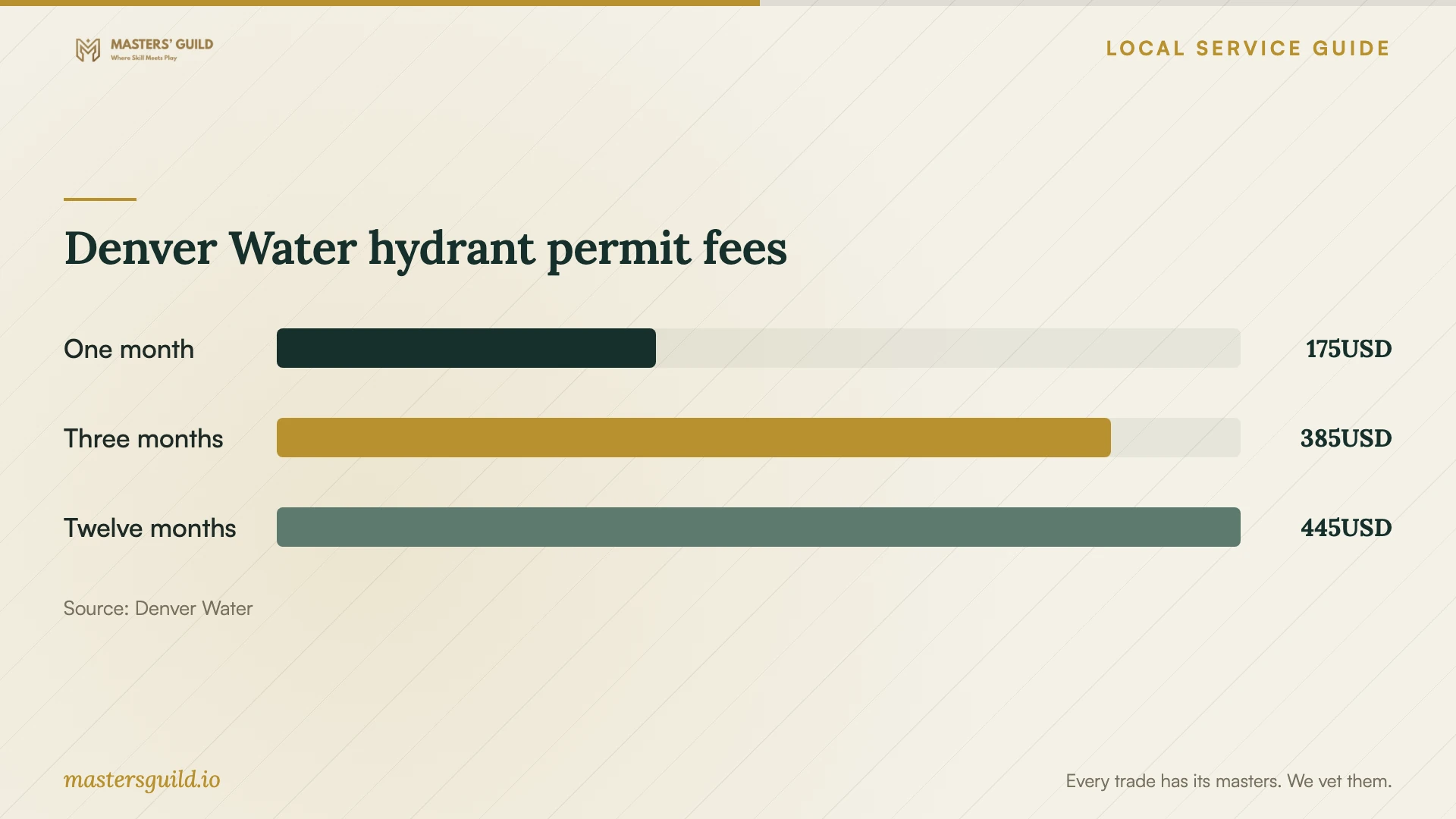
Agree on postponement terms for unresolved water-use eligibility or unsuitable weather. Before paying a deposit, establish whether the contractor will retain or return it if the agreed job cannot proceed. Treat the hydrant permit fees shown below as utility charges, not homeowner cleaning prices. [3]
Prepare the property and inspect completion
Agree on who moves furniture, vehicles and planters. Identify gates, shared access routes and areas you need to keep usable. Photograph existing damage with the contractor and mark surfaces excluded from cleaning.
For an eligible job near freezing conditions, discuss drying time and safe walking routes. Denver Water prohibits hydrant operation below 32 degrees Fahrenheit except in emergencies, when only fire department personnel may operate hydrants. This restriction concerns hydrant operation; it does not establish a safe washing temperature for other water sources. [3]
Inspect the agreed areas with the cleaner before payment. Compare the result with the written stain-treatment expectations, check debris removal and identify missed work within the original scope.
Denver Water hydrant permit fees
Local details that affect your job
Check the supplier, not just the address
Denver Water’s resolution applies to recipients of its water inside and outside Denver and the Combined Service Area. Identify your supplier before deciding which restrictions apply. For individual washing, the resolution includes an approved water-budget or variance exception to its immediate health or safety limitation; do not assume that an exception applies to your property or will be granted. [2]
Allow time for Meter Shop approval
Denver Water’s Meter Shop operates Monday through Friday, 7 a.m. to 3 p.m. The utility asks applicants to allow up to three business days for testing and approval. A contractor proposing hydrant water should account for that process in the start date and identify the permit and required equipment before arrival. [3]
Identify the district controlling the hydrant
For a hydrant in a Master Meter district, Denver Water requires that district to issue the hydrant permit before connection. Have the contractor identify the district and its authorization. A Denver Water permit alone does not satisfy this district-specific requirement. [3]
Choose the next step for your proposed job
| Situation | Next step | Condition to resolve |
|---|---|---|
| DIY cosmetic washing using Denver Water | Postpone unless an approved water budget or variance permits the work | Individual washing otherwise requires an immediate health or safety reason; do not assume an exception is available |
| Immediate health or safety concern | Describe the hazard and agree on a focused scope | Tie the proposed washing to the immediate concern and resolve water-source arrangements |
| Contractor proposes cosmetic cleaning | Seek Denver Water clarification before booking | Resolve how customer guidance and the conditional commercial provision apply to this job |
| Contractor proposes hydrant water | Verify permit, meter and backflow arrangements | Drought restrictions may affect hydrant permits |
| Hydrant lies in a Master Meter district | Verify authorization with that district | The district must issue the hydrant permit before connection |
Your hiring checklist
- Identify your water supplier and resolve the proposed job’s eligibility, including any claimed exception.
- Send each bidder the same photographs, measurements and reason for cleaning.
- Include surface-specific methods, a test area and stain-treatment expectations in the scope.
- Identify the water source and responsibility for hydrant arrangements.
- Obtain insurance documentation and identify the crew performing the work.
- Agree on plant protection, wash-water handling, access and cleanup.
- Record postponement, deposit and additional-work terms before booking.
- Photograph existing damage and inspect the completed scope before payment.
Frequently Asked Questions
Can I pressure wash my driveway for appearance now?
Denver Water’s customer guidance prohibits routine or cosmetic washing after September 30. Its resolution limits individual washing to immediate health or safety reasons, except as permitted by an approved water budget or variance. Do not assume you qualify for an exception or can obtain one. The amended restrictions continue until further board action. [1] [2]
Does hiring a contractor make the work permissible?
Resolve the proposed job with Denver Water before booking. The resolution allows commercial enterprises for which water cleaning is essential to power wash only as necessary, with dry cleaning first, high-efficiency equipment and no water waste. The customer guidance also prohibits cosmetic washing. A contractor booking does not establish approval. [1] [2]
Can the cleaner use a nearby fire hydrant?
Denver Water requires a hydrant permit and specified metering and backflow equipment, and it may restrict permits during droughts. For a hydrant in a Master Meter district, the contractor must obtain that district’s permit before connecting. Have the cleaner document the proposed source and authorization in the estimate. [3]
How should I compare cleaning prices?
Give bidders the same scope and compare itemized cleaning, stain treatment, access, water supply and cleanup. Review exclusions and promised results alongside the total. Denver Water’s published hydrant permit fees cover permits; they do not establish your cleaning bill. [3]
Sources and scope
This guide combines the sources below with practical planning guidance. Figures apply to the stated geography and period; request a written quote for your property.