
Local service guide
Plumbing Services in Denver, CO: Hiring and Planning
Arrange Plumbing Services in Denver by describing the problem, asking for a written scope, and confirming who will handle permits, inspections, and repairs to opened walls or floors. For water-heater installation or replacement, Colorado’s State Plumbing Board requires a licensed plumber working for a registered plumbing contractor, plus permits and inspections. Before hiring someone to replace a suspected lead service line, check Denver Water’s replacement schedule and reimbursement eligibility. [4] [2] [3]
Describe the problem before booking
Tell the plumber which fixture or pipe needs attention, when you noticed the problem, and whether it affects one fixture or several. Send photos of the leak, the surrounding area, and any equipment label. For a drain problem, explain what you have tried and whether you used a drain chemical. Ask what the initial visit includes and whether you must approve a separate repair price after diagnosis.
For an active leak, close the fixture’s supply valve or the home’s main water shutoff if you can reach and operate it safely. Avoid wet areas near electrical equipment. Explain the urgency when arranging service, and ask for the arrival window, dispatch charge, and any charge for work outside regular hours.
Compare quotes with the same scope
Ask each contractor to separate diagnosis, labor, equipment, materials, disposal, and permit costs. Specify whether you will supply a replacement fixture. For pipe work, ask who will open and restore walls, flooring, or landscaping. Agree on how the contractor will seek approval for extra work before you accept the quote.
For a recurring drain problem, ask the plumber to explain the diagnosis and the reason for any proposed camera inspection or pipe replacement. Request the findings and available images before approving excavation. For a water heater, ask the contractor to identify the proposed model, capacity, fuel type, connection work, and any electrical work in the written scope.
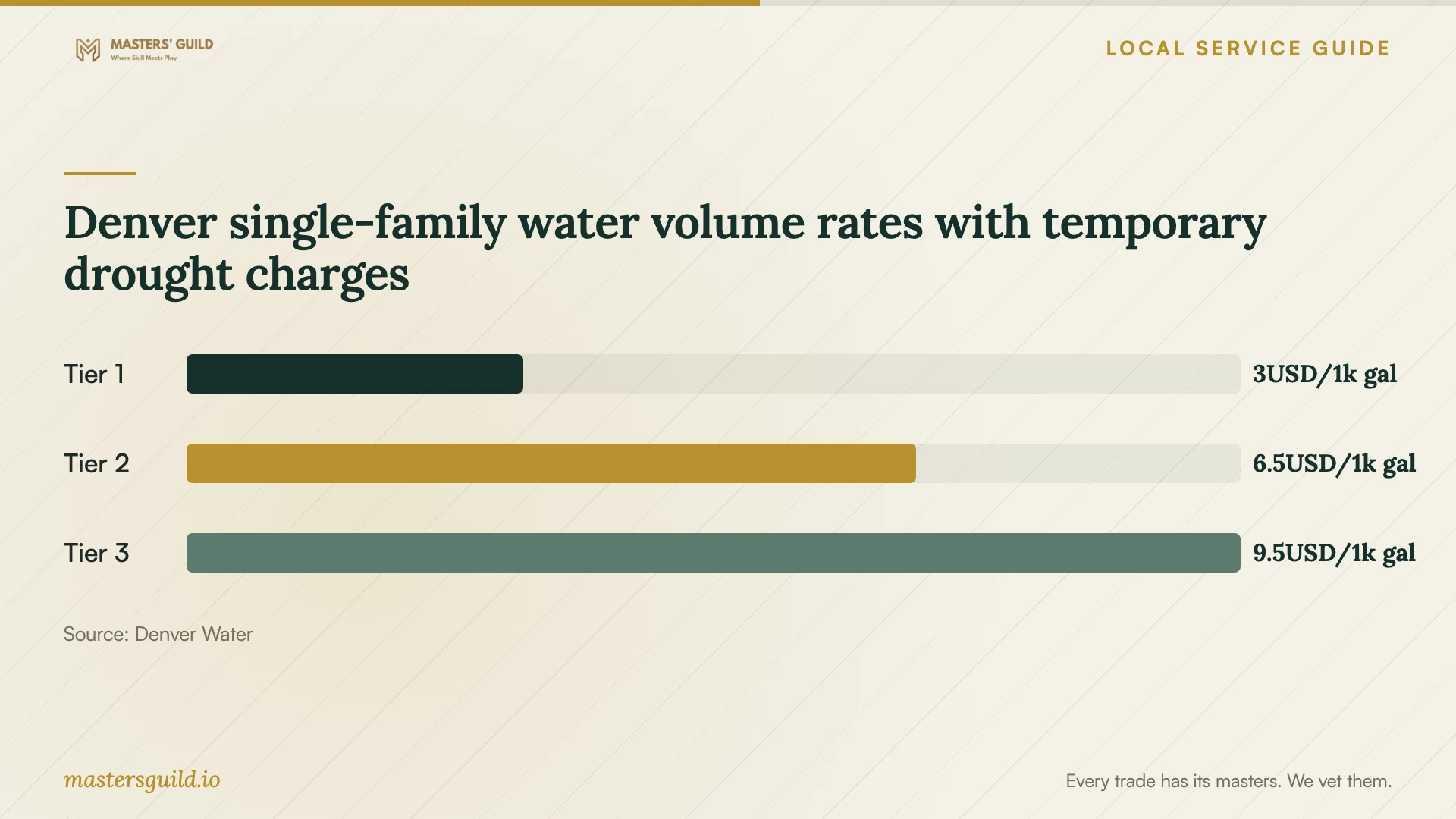
The published figures shown here concern water consumption, not plumbing labor. Request a project quote for the repair itself. Use the utility rates to understand the water-use portion of your bill, without assuming a particular repair will save a stated amount. [5]
Confirm credentials and the permit route
Colorado’s State Plumbing Board states that water-heater installations and replacements require a licensed plumber working for a registered plumbing contractor, with permits and inspections by the authority having jurisdiction. Ask for both credential numbers, evidence of insurance, and the name of the person responsible for scheduling the inspection. [4]
Denver issues quick permits for specified trade work without plan review. Its residential plumbing list includes water heaters, water service, showers, tubs, sinks, and toilets. The city also identifies permit-exempt work, so ask the contractor to confirm the requirement for your exact repair rather than treating the eligibility list as a rule for every service call. [1]
Tell the contractor whether your home is in a single-family, duplex, or multifamily building. Denver lists different requirements by building type, including restrictions for gas-fired water heaters in commercial and multifamily buildings. Ask the contractor to confirm the current route with the city before promising an installation date. [1]
Coordinate service line work with Denver Water
Denver Water customers own the water service line from its connection to the main in the street into the property. If you suspect lead, check the utility’s property information and planned work before commissioning private replacement. Denver Water investigates the line material before its replacement work unless it has confirmed lead. [3]
For utility-led replacement, arrange access inside and outside the home and have someone age 18 or older present throughout the work. Denver Water says most replacements take four to eight hours, with water shut off for that period. Move belongings away from the entry point and ask about any drywall or flooring removal; the utility does not restore those interior finishes. [3]
After replacement, follow the crew’s flushing instructions. Denver Water calls for daily flushing for 30 days and continued use of filtered water for cooking, drinking, and infant formula for six months. It schedules asphalt and concrete restoration one to three weeks after replacement, with possible delays for weather or cold temperatures. [3]
Denver single-family water volume rates with temporary drought charges
Local details that affect your job
Apply before private lead line replacement
Denver Water’s $3,800 reimbursement requires advance application and approval. The property must not be on the utility’s replacement schedule for the current or next calendar year, and the work must meet paving restrictions. Replacement must leave no lead anywhere in the service line; an untouched portion must be copper. Complete approved work before the end of the approval year or reapply the following year. Check these conditions before signing a private replacement contract. [2]
Additions need the main permit first
For new buildings and additions involving single-family homes, duplexes, and IRC townhomes, Denver requires an issued Residential Construction Permit before the plumbing quick permit application can proceed. Ask your general contractor for that permit number before scheduling the plumbing phase. The city does not require that prerequisite for the repair/replace or alteration/tenant finish classes of work. [1]
Historic exterior work needs another review
Denver requires Landmark Preservation review for quick permits involving exterior work on an individual landmark or a building in a historic district. If your plumbing project includes exterior work at such a property, ask the contractor to include that review in the schedule and application scope. [1]
Choose the next step for your plumbing job
| Situation | Next step | Confirm before work |
|---|---|---|
| Leaking fixture or blocked drain | Arrange diagnosis and describe the symptoms. | Visit charge, repair approval, and scope. |
| Water-heater replacement | Hire a licensed plumber through a registered plumbing contractor. | Permit, inspection, equipment, and connection work. |
| Suspected lead service line | Check Denver Water’s schedule and reimbursement conditions. | Advance approval and removal of all lead. |
| Plumbing for a home addition | Ask the general contractor for the issued Residential Construction Permit. | Main permit number before the trade application. |
| Exterior work at a designated historic property | Confirm Landmark Preservation review. | Application materials and review timing. |
Your hiring checklist
- Photograph the problem and equipment label, and describe which fixtures you can still use.
- Ask for the diagnosis charge, arrival window, and process for approving repair costs.
- Request credential numbers and evidence of insurance.
- Put equipment, materials, disposal, permits, and inspection responsibilities in writing.
- Confirm who will restore walls, floors, concrete, and landscaping.
- For service line work, check Denver Water’s schedule and approval requirements before committing.
- Arrange access and a water-shutoff plan, then keep the invoice and inspection records.
Frequently Asked Questions
Does a replacement water heater need a permit?
Colorado’s State Plumbing Board says water-heater installations and replacements require permits and inspections, along with a licensed plumber working for a registered plumbing contractor. Ask the installer to include those responsibilities in the quote. [4]
Can I get reimbursement after replacing a lead service line?
Denver Water requires an application and approval before replacement. Do not count on reimbursement for work you commission without advance approval. Qualifying owners can receive a one-time $3,800 payment after the utility inspects the new line and sets the meter. [2]
Will Denver Water repair my interior after service line replacement?
Denver Water says it does not restore drywall or flooring removed for replacement access. Ask about the access area during the site visit and arrange interior restoration as a separate part of your plan. [3]
Sources and scope
This guide combines the sources below with practical planning guidance. Figures apply to the stated geography and period; request a written quote for your property.