
Local service guide
Pest control in Denver: Hiring and Preparation
Arrange pest control in Denver by requesting pest identification, a written treatment scope and a follow-up plan before approving work. For pesticide application, request the commercial business license, insurance evidence and the qualified supervisor’s relevant Colorado application category. Colorado separates residential pest treatment, wood-destroying organism control and structural fumigation, so check credentials against the proposed treatment. [1]
Identify the pest before approving treatment
Send clear photographs and describe where you found the pest, when you noticed it and which rooms or exterior areas need inspection. Include previous treatments and products you used. Have the contractor explain the evidence supporting the identification before you approve pesticide application.
Request a proposal that names the target pest, inspection areas, treatment method and follow-up plan. Discuss entry-point repairs and monitoring as separate parts of the job. Confirm who will complete repairs and how the contractor will assess remaining pest activity.
Match Colorado credentials to the proposed work
CSU’s Colorado licensing guidance says pesticide application for hire requires commercial licensing. Commercial business applicants must employ or have a qualified supervisor available in the application category and provide proof of required insurance. Request the business license details, insurance evidence and the supervisor’s name and category. [1]
Residential/Commercial Pest Control, category 304, covers pesticide applications and bait stations for structural insects and rodents. It excludes fumigants and wood-destroying organism control. Colorado assigns wood-destroying organism pesticide treatment to category 301 and structural fumigation to category 303. CSU explains that certified operators work under a qualified supervisor. Confirm how the company supervises the person attending your home. [1]
Include sunny foundations in a clover mite inspection
CSU Extension describes clover mites entering Colorado homes through window and door cracks during warm days in fall and spring, with heavier infestations on south-facing walls. They do not bite people, transmit diseases or feed on household furnishings. Crushing them leaves rusty stains. Request identification and include the sunny exterior wall in the inspection. [3]
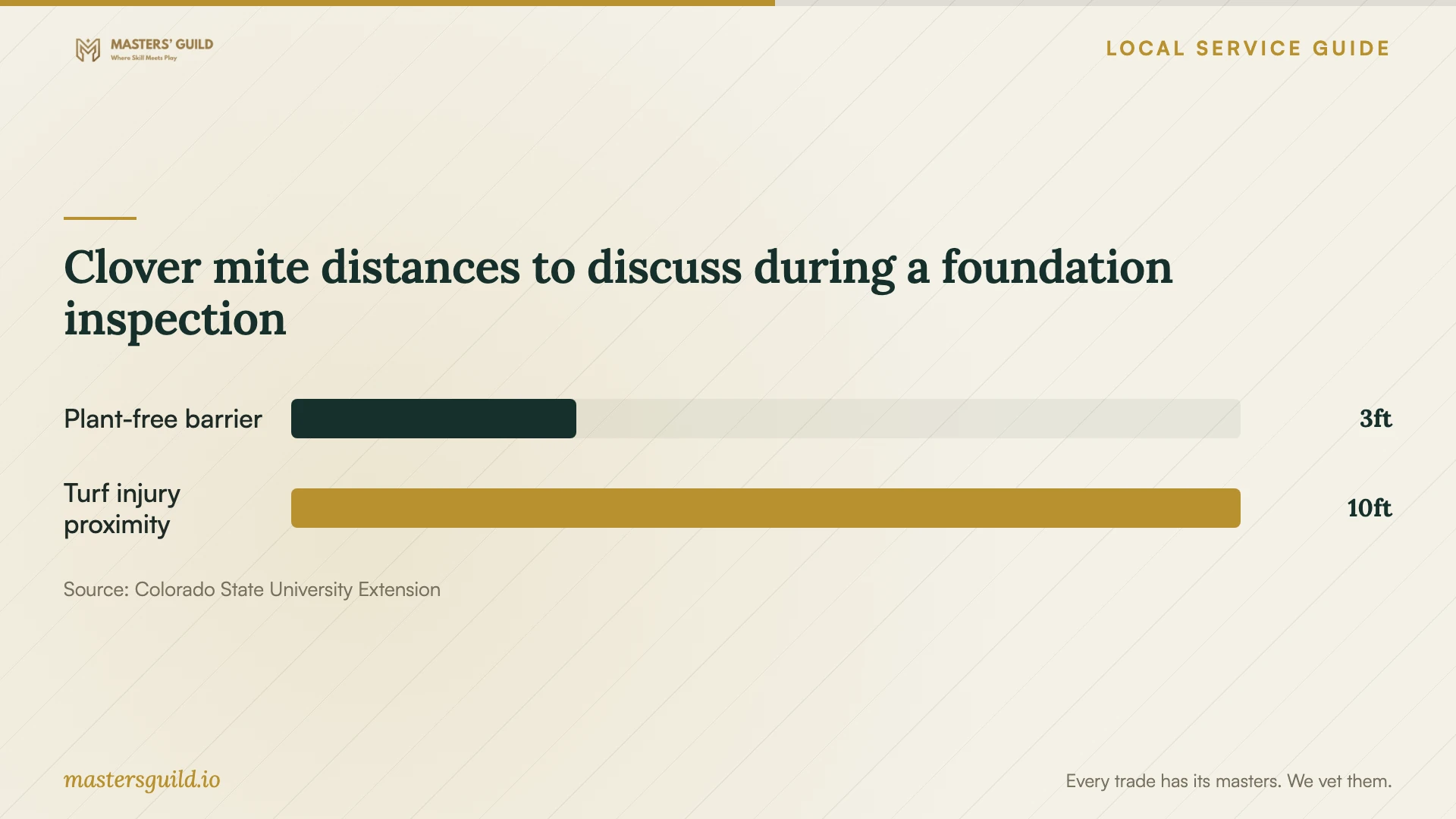
CSU recommends sealing exterior openings, especially window cracks, and describes a plant-free foundation barrier of about three feet to deter migration. Mites can sometimes cross that barrier. Vacuum indoor mites instead of crushing them. Discuss sealing and foundation vegetation with the contractor, and request separate explanations for indoor nuisance control and any proposed turf treatment. [3]
Coordinate rental bed bug notices and access
For a rental home, coordinate suspected bed bug inspection with the landlord. The Colorado General Assembly’s enacted 2019 bill summary describes tenant notification through written or electronic notice. Under that historical summary, electronic notice must use the email address, telephone number or portal designated in the rental agreement for communications. If the agreement contains no such provision, the tenant must use a method the landlord previously used to communicate with them. The summary also directs tenants to retain sufficient proof of electronic delivery. [2]
The same historical summary describes landlord inspection within 96 hours after receiving notice and inspection of contiguous units after confirmation. It assigns inspection and treatment costs to landlords with exceptions, and preparation costs to tenants. These are provisions described by the enacted 2019 source; this page does not establish the law in force today. Confirm current requirements before relying on deadlines or cost allocations in a dispute. [2]
The historical summary also describes advance entry notice, tenant access and preparation duties, and restrictions on moving or disposing of infested belongings. Request written preparation instructions from the landlord and pest control agent before moving furniture or discarding items. If you own the rental, agree with the tenant on access, preparation and responsibility for coordinating neighboring units. [2]
Compare written quotes and prepare for the visit
Build your budget from written quotes for your specific job. Request separate prices for inspection, treatment, sealing or exclusion work, monitoring and return visits. Confirm any minimum commitment, cancellation terms and charges for further treatment. Have each contractor explain the reason for a recurring service recommendation.
Before booking, obtain preparation instructions and requirements for leaving and returning to treated areas. Describe children, pets and spaces you cannot clear or access. Agree on who will move belongings, unlock shared areas and complete repairs. Keep the proposal and service record so you can compare the agreed scope with the completed work.
Clover mite distances to discuss during a foundation inspection
Local details that affect your job
Colorado licensing changes contractor selection
For a Denver home, match the contractor’s Colorado application category to the proposed pesticide work. Category 304 excludes wood-destroying organism control and fumigants. If inspection leads to termite pesticide treatment or structural fumigation, request the credentials covering that revised scope before approving it. [1]
Colorado clover mite guidance changes inspection scope
Use CSU’s statewide guidance to plan an exterior check around south- and west-facing foundations, window cracks and nearby vegetation. Request pest identification and sealing recommendations before accepting recurring service for suspected clover mites. This guidance does not establish how common clover mites are in Denver. [3]
Rental bed bugs call for neighboring-unit coordination
Colorado’s historical enacted 2019 summary describes inspection of contiguous rental units after bed bug confirmation. For a Denver rental, discuss who will coordinate those inspections and access. Follow the rental section’s notice-channel explanation and verify current legal duties before relying on the historical provisions. [2]
Choose the next step for your situation
| Situation | Next step | Question to resolve |
|---|---|---|
| Unidentified pest indoors | Request identification and an inspection proposal. | What evidence supports the identification? |
| Suspected clover mites near sunny windows | Include window cracks and foundation vegetation in the inspection; CSU recommends vacuuming indoor mites. | Does the scope include sealing recommendations? |
| Proposed termite pesticide treatment | Request category 301 credentials for wood-destroying organism control. | Who supervises this application? |
| Proposed structural fumigation | Request category 303 credentials. | What preparation and reentry instructions will you provide? |
| Suspected bed bugs in a rental | Follow the rental section’s notice-channel explanation and keep delivery proof; confirm current requirements. | Who coordinates access and neighboring-unit inspection? |
Your hiring checklist
- Photograph the pest and list affected rooms and exterior locations.
- Record previous treatments and products used.
- Request business license details, insurance evidence and supervisor information.
- Confirm the application category for the proposed pesticide work.
- Compare inspection, treatment, repairs and return visits in writing.
- Obtain preparation and reentry instructions before the appointment.
- For rental bed bugs, review the notice-channel explanation and coordinate access with the landlord.
- Agree on completion criteria and the response to further pest activity.
Frequently Asked Questions
Does a residential pest credential cover termites?
Colorado’s Residential/Commercial Pest Control category 304 excludes wood-destroying organism control. CSU lists termite pesticide treatment under category 301. Request the relevant credentials before approving termite treatment. [1]
Should I accept recurring treatment for clover mites?
Request identification and an explanation of the schedule. CSU describes clover mites as cool-season pests and says spring indoor problems end with warm weather in May or early June. Discuss window sealing and foundation vegetation alongside any treatment proposal. [3]
How should I report suspected rental bed bugs?
The enacted 2019 Colorado summary describes written or electronic notice. For electronic notice, it specifies the communication channel designated in the rental agreement or, without that provision, a method the landlord previously used. It also calls for delivery proof. Review the rental section and confirm current requirements if notice compliance becomes disputed. [2]
What should I compare in treatment quotes?
Compare target pests, inspection areas, treatment methods, repairs, monitoring and included return visits. Request preparation instructions, completion criteria and any further-treatment charges before agreeing to the job.
Sources and scope
This guide combines the sources below with practical planning guidance. Figures apply to the stated geography and period; request a written quote for your property.