
Local service guide
Denver mold removal: Hiring and Cleanup Planning
For mold removal in Denver, hire an experienced remediator for suspected hidden growth, substantial water damage, or sewage contamination. Request a written plan covering moisture repair, affected materials, containment, and completion checks. EPA says homeowners can handle many patches under about 10 square feet, using an N95 respirator, gloves, and appropriate eye protection while avoiding disturbance or spread of mold. Denver’s health department does not provide mold inspection, testing, or remediation. [1] [2] [3]
Decide whether you need a remediator
EPA uses about 10 square feet as one consideration when choosing who should clean up mold. Treat that size as a planning guideline, not a health threshold. For homeowner cleanup, wear an N95 respirator, gloves, and goggles designed to keep out dust and small particles. Avoid disturbing mold or spreading it into unaffected rooms. EPA recommends cleaning small hard-surface patches with detergent and water, then drying them completely. [2] [3]
You may need to discard moldy carpet or ceiling tiles because growth can penetrate porous materials. For suspected hidden mold, consider an experienced professional: opening wallpaper or other affected surfaces can release spores. Describe leaks, wet materials, recurring growth, and musty odors when requesting an assessment. For sewage or other contaminated water, choose someone experienced in cleaning and repairing that type of damage. [2] [3]
Consult a health professional before cleanup if you have health concerns. Discuss room access and temporary relocation with the remediator. EPA says relocation decisions should consider the affected area, reported health effects, debris exposure, and disruption. [2] [3]
Compare written scopes before comparing prices
Have each contractor identify the affected area and materials, describe the moisture problem, and explain the proposed cleanup. EPA’s guidance calls for a plan addressing moisture, protective equipment, containment, and removal of moldy materials. Discuss how the contractor will revise the plan if they discover damage behind a wall or beneath flooring. [3]
Request separate prices for assessment, drying, cleanup, disposal, moisture-source repairs, and reconstruction where those services apply. Identify who will perform each part and which items the quote excludes. Agree on how the contractor will document added work and obtain your approval before proceeding. Compare offers against the same scope rather than choosing by the total alone.
Check references for comparable work and discuss which remediation guidance the contractor follows. EPA recommends checking mold-cleanup experience and references and requesting recognized professional or government guidance. Have the contractor explain how their proposed methods apply to your home. [2]
Understand testing and completion checks
EPA says sampling is unnecessary in most cases when you can see mold. Testing may help when the source is unclear, litigation is involved, or health concerns warrant evaluation. Before agreeing to testing, have the assessor explain the sampling plan and how results would change the work. EPA says no federal mold-spore thresholds exist for demonstrating compliance through sampling. [3]
Agree on completion criteria before cleanup starts. EPA calls for fixing the moisture problem, removing mold, and checking that visible growth, mold-damaged materials, and moldy odors are absent. Request photos and drying records, then arrange a follow-up check for returning moisture or growth. If the scope includes sampling, identify who will interpret the results. [3]
Request an explanation if a contractor proposes spraying or fogging as the entire treatment. EPA says remediation requires removing contamination and does not recommend bleach as a routine remediation practice. Clean and dry moldy surfaces before painting or caulking. [2] [3]
Prepare for the assessment and cleanup
Photograph visible damage without disturbing it. Record when you noticed the problem, which repairs you attempted, and whether growth returned. Share access constraints and the location of affected belongings before the visit. Confirm which possessions you should move and which the contractor should handle.
Fix leaks and other water problems as soon as possible. EPA’s water-damage guidance targets action within 24 to 48 hours to help prevent mold growth; it does not promise completion of existing mold cleanup in that time. Request a schedule that separates drying, remediation, repairs, and final review. [2] [3]
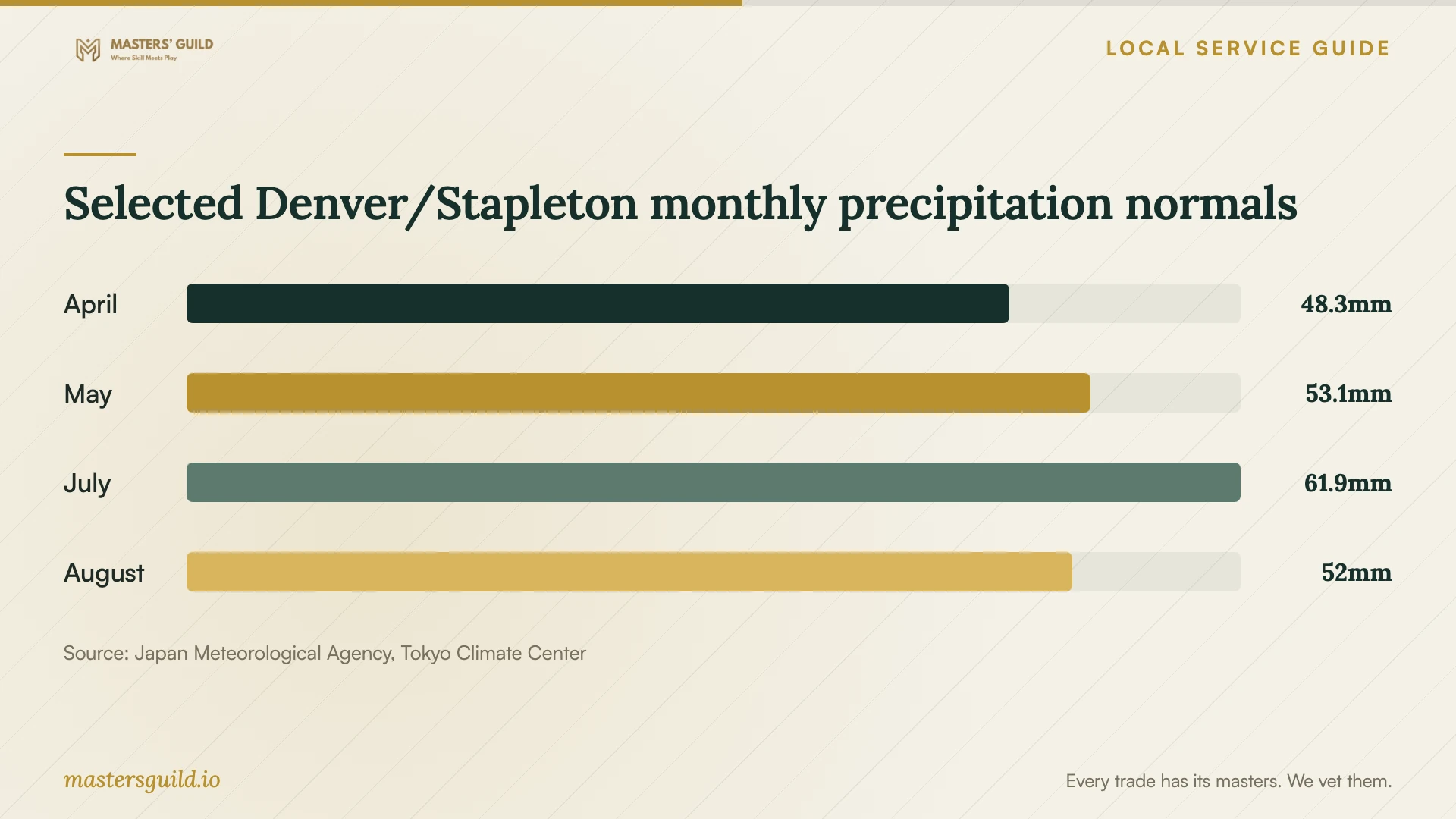
Use the precipitation chart as a reminder to investigate rain-related entry points when tracing moisture. The Japan Meteorological Agency publishes these monthly normals for Denver/Stapleton, a single weather station. They cannot diagnose your home’s moisture source or predict a leak. [4]
Selected Denver/Stapleton monthly precipitation normals
Local details that affect your job
Choose the right role for Denver’s Residential Health Program
Denver conducts complaint-based housing investigations, but DDPHE does not provide mold inspection, testing, or remediation. Arrange mold assessment and cleanup through a professional rather than expecting city investigators to perform those services. Renters should notify their landlord or property manager, as the city recommends. [1]
Check address records within the dashboard’s limits
Denver’s Residential Health address-search dashboard covers complaints from May 2022 onward and updates daily. You can search complaints and violations by address, record ID, or map and track their progress. Review relevant records and request repair documentation when evaluating a reported moisture problem. The city labels these records as working data. An absent record does not establish that a property has no moisture or mold problem, and this dashboard cannot establish its complete complaint history. [1]
Check rental licensing alongside repair arrangements
Denver’s Residential Health page includes an address lookup for residential rental licensing. The city says its licensing requirement covers residences rented or offered for rent for 30 days or more at a time. If you own a rental and are arranging remediation, check its licensing status alongside the repair plan. Arrange the mold assessment separately from that lookup. [1]
Choose the next step for your situation
| Situation | Next step | Question to resolve |
|---|---|---|
| Small hard-surface patch under about 10 square feet | Consider EPA homeowner-cleanup guidance; use an N95 respirator, gloves, and appropriate eye protection, and avoid disturbing or spreading mold | Can you address the moisture source, clean the material, and dry it completely? |
| Substantial water damage or a larger affected area | Seek a remediation assessment using EPA planning guidance | Which materials need drying, cleaning, or removal? |
| Musty odor with no visible source | Consider an experienced hidden-mold investigator | How will they investigate while limiting disturbance and spread? |
| Suspected HVAC contamination | Do not run the system; arrange assessment | Does the moisture problem involve the system or its intake? |
| Sewage or contaminated-water damage | Hire a professional experienced with contaminated water | How will they clean and repair the affected building materials? |
Your hiring checklist
- Photograph damage and record the moisture history without opening affected surfaces.
- Describe affected rooms, materials, odors, and previous cleanup attempts.
- Check references for similar remediation work.
- Request a written scope with exclusions and separate repair and reconstruction costs.
- Ask what proposed sampling will establish and who will interpret it.
- Agree on access, room use, occupant arrangements, and protection of belongings.
- Set completion criteria and a follow-up moisture check before work starts.
Frequently Asked Questions
Does Denver provide mold testing?
No. DDPHE says its investigators do not test for mold and the department does not provide mold inspection, testing, or remediation. Its Residential Health Program handles complaint-based housing investigations. [1]
Should I pay for testing before removing visible mold?
EPA says sampling is unnecessary in most cases with visible growth. Ask what uncertainty testing would resolve. If you need sampling, choose a professional experienced in designing sampling plans and interpreting results. [3]
Can I stay home during remediation?
Discuss this before work starts. EPA says some projects may require temporary relocation, depending on the affected area, reported health effects, debris risks, and disruption. Confirm which spaces you can occupy and consult a health professional about health concerns. [3]
How should I compare cleanup quotes?
Have contractors price the same affected area and list drying, removal, disposal, moisture repairs, and reconstruction. Check exclusions and the approval process for added work. Agree on completion checks so you can compare what each contractor promises to deliver.
Sources and scope
This guide combines the sources below with practical planning guidance. Figures apply to the stated geography and period; request a written quote for your property.