
Local service guide
Lighting Installation in Denver: Plan Before Hiring
Arrange Lighting Installation in Denver by giving an electrician a fixture list, photos and a clear description of any new wiring, then asking them to confirm the permit route before you book. Denver lists lighting among electrical quick-permit work for single-family and duplex structures and garages with single-phase utility service rated 400 amps or less. For quick permits involving exterior work on an individual landmark or a building within a historic district, Denver requires Landmark Preservation review. Ask your installer to include applicable approvals, inspection arrangements and finish repairs in the written scope. [1]
Give the electrician a scope they can price
Make a room-by-room list of the lights you want installed. For each location, identify whether you want to keep the existing position, move it or add a new one. Send photos of the room, ceiling and current fixture without removing electrical covers. Include the proposed fixture's model, dimensions, weight and installation instructions.
Ask the electrician to assess the existing wiring, mounting support and access before you commit to a heavy pendant or chandelier. For recessed lights, ask them to explain the proposed locations and any ceiling openings. Agree on who will patch and paint after installation, and whether that work belongs in the electrician's quote or a separate contract.
Request an itemized written quote covering labor, fixtures, controls, wiring, mounting work, permit charges and cleanup. Ask which items remain allowances pending an inspection of the property. Compare quotes for the same scope, and request a written explanation of any exclusions before choosing an installer.
Confirm the permit route for your building
Denver includes lighting and interior or exterior wiring in its residential electrical quick-permit list for single-family and duplex structures and garages. That eligibility applies to single-phase services rated 400 amps or less. The city excludes electrical work at those properties when service size exceeds 400 amps from the quick-permit route. [1]
Denver issues quick permits for specified work without plan review. Quick-permit eligibility does not establish that a project needs no permit. The city also directs readers to its building-code exemptions, so ask the installer to confirm whether your exact replacement scope requires a permit and who will obtain it. [1]
Check the separate rules for a condo. Denver's multifamily and commercial list allows relocating lights within the same room or space without adding new lights. It also lists fewer than 10 new circuits, subject to limits on amperage, voltage and circuit configuration. Ask the electrician to assess the complete project against those rules before promising a quick permit. [1]
Choose brightness and controls before ordering
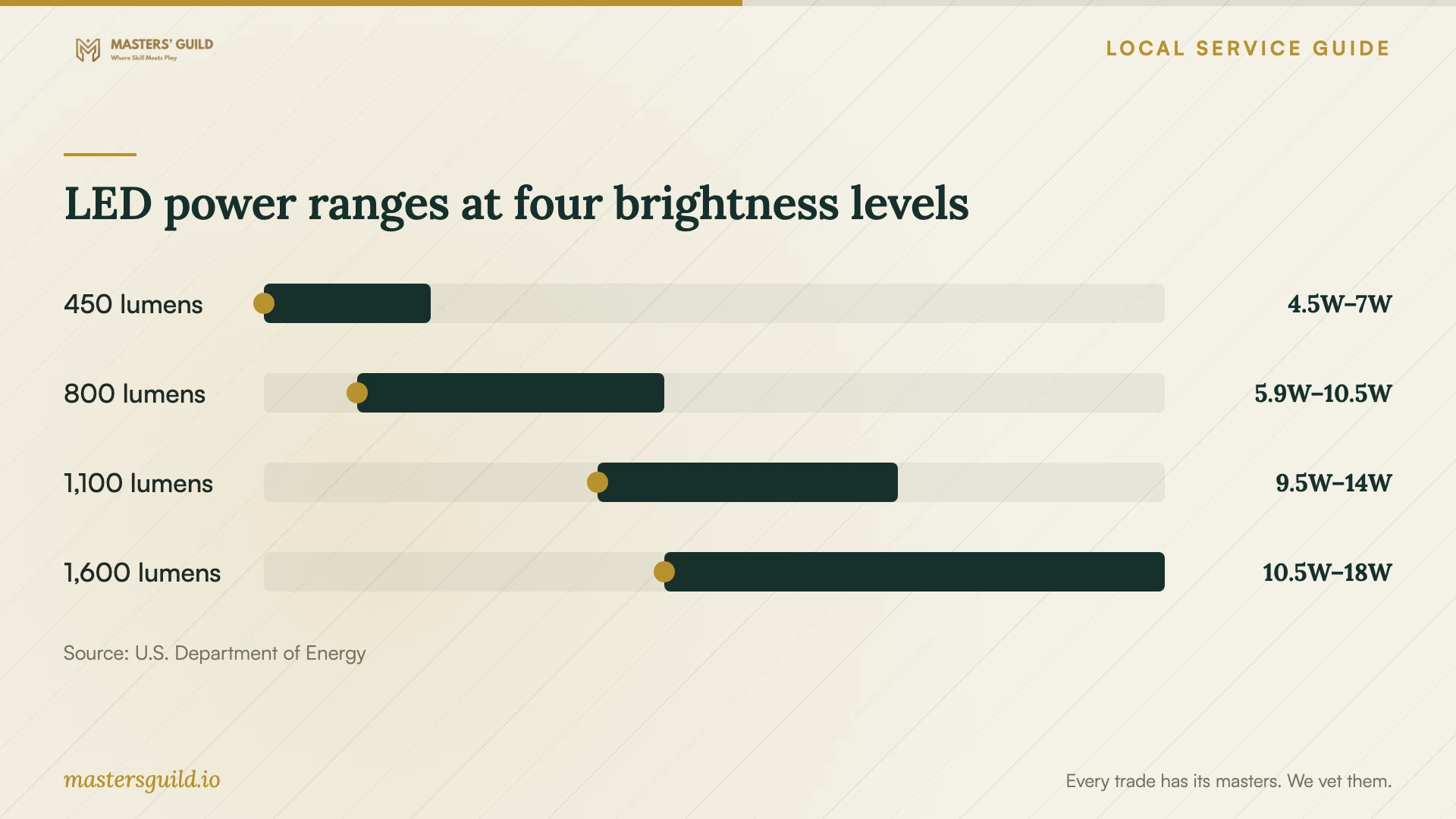
Use lumens to compare brightness and watts to compare power input. The Department of Energy's national reference table pairs 800 lumens with a 60-watt incandescent bulb and an LED range of 5.9 to 10.5 watts. Use the chart as a bulb-selection reference when discussing your preferred brightness with the installer. [3]
Check color temperature as well as brightness. DOE describes 2,700 K as warm and 3,000 K as soft, with homes among the listed applications for both. Try your chosen light color in the room before ordering a full set, especially if you plan to retain nearby fixtures. [3]
DOE advises buyers to check whether LED bulbs suit fully enclosed fixtures and whether dimmable bulbs work with the intended dimming system. Send the electrician the bulb, fixture and dimmer specifications together. Ask them to confirm compatibility and demonstrate the dimming range at handover. [3]
Discuss where you need task lighting before adding more overhead fixtures. DOE's fixture guidance recommends combining task or under-cabinet lighting with lower ambient light levels where possible. DOE provides this advice in federal purchasing guidance; it is not a Denver residential requirement. [4]
Agree on access and completion checks
Before the appointment, clear space beneath each installation location and identify any furniture you need help moving. Agree on the work sequence, the expected interruption to power and who will be present to approve fixture positions. For several pendants or recessed lights, review the proposed layout before the installer makes openings.
At handover, test each switch, dimmer and control with the installer. Confirm fixture alignment and review any outstanding patching or painting. Ask for the installed model numbers, warranty terms, permit information and any required inspection records. Put responsibility for unfinished work and the follow-up date in writing.
LED power ranges at four brightness levels
Local details that affect your job
Exterior lighting at historic properties
Denver requires Landmark Preservation review for quick permits involving exterior work on an individual landmark or a building within a historic district. The application calls for a Landmark quick-review application and checklist, a street-view photo, photos of the work area and product information for proposed electrical equipment. Confirm the review route before purchasing a porch light or exterior sconce, and keep its product sheet available. [1]
Lighting in a new home or addition
For new buildings and additions involving single-family homes, duplexes and IRC townhomes, Denver requires an issued Residential Construction Permit before the trade quick-permit application can proceed. Ask your general contractor for that permit number. Denver says this prerequisite does not apply to the alteration/tenant-finish or repair/replace classes of work, so describe the whole project when confirming the application category. [1]
Check the address for design review
Denver directs property owners to its Design Review Districts map to establish whether an address lies in a review district. The city describes separate processes for landmark properties, Lower Downtown and other designated areas. For an exterior lighting proposal, ask city staff which process applies to your property instead of relying on a neighborhood name or the home's appearance. [2]
Match your project to the next planning step
| Project | Relevant distinction | Next step |
|---|---|---|
| Lighting in a single-family home or duplex | Denver lists lighting for quick permits with single-phase service rated 400 amps or less. | Ask the electrician to confirm service details and permit requirements for the scope. |
| Lighting in a condo | Multifamily quick-permit eligibility includes moving lights within the same room or space without adding lights. | Have the installer assess the full project under multifamily rules. |
| Exterior fixture at a landmark or historic-district building | Denver requires Landmark Preservation review for quick permits involving exterior work at these properties. | Prepare building photos and fixture product information before applying. |
| Lighting as part of a new single-family home, duplex or IRC townhome, or an addition | Denver requires an issued Residential Construction Permit before the trade quick-permit application can proceed. | Obtain the permit number from the general contractor. |
| LED bulbs with a dimmer | DOE advises checking bulb dimming capability and compatibility with the dimming system. | Give the installer the proposed bulb and dimmer specifications together. |
Your hiring checklist
- List fixture locations and mark each as replacement, relocation or new installation.
- Send room photos and proposed fixture specifications before requesting a final quote.
- Ask the electrician to confirm mounting support, wiring scope and ceiling access.
- Confirm the permit route, applicant and inspection responsibilities in writing.
- Check property-specific review requirements before ordering exterior fixtures.
- Compare quotes that include the same fixtures, controls, repairs and cleanup.
- Agree on fixture positions and test the completed lights with the installer.
Frequently Asked Questions
Does replacing a light fixture require a Denver permit?
Denver lists lighting as eligible electrical quick-permit work under specified residential conditions, but that list does not settle whether a particular replacement qualifies for an exemption. Ask the installer to confirm the exact scope with the city before work starts. [1]
Can I use the residential permit rules for my condo?
Check the multifamily rules. Denver provides a separate multifamily and commercial quick-permit list, including relocation of lights within the same room or space without adding lights. Ask the electrician to identify the applicable route for your building and project. [1]
Should I buy fixtures before getting a quote?
Get the electrician's assessment first. Share the proposed models and ask them to confirm mounting, wiring and control compatibility. Denver requires Landmark Preservation review for quick permits involving exterior work on an individual landmark or a building within a historic district. If that applies to your project, confirm the approval route before committing to the purchase. [1] [3]
How do I compare LED brightness with my old bulbs?
Compare lumen output. DOE's national table lists an 800-lumen LED range of 5.9 to 10.5 watts alongside a 60-watt incandescent bulb. Check the proposed bulb's lumen rating, color temperature and compatibility with your fixture. [3]
Sources and scope
This guide combines the sources below with practical planning guidance. Figures apply to the stated geography and period; request a written quote for your property.