
Local service guide
Denver lawn mowing: Hiring and Scheduling
For lawn mowing in Denver, hire a provider who agrees to a cutting height, adjusts visits to grass growth, and puts trimming, cleanup, and extra charges in writing. CSU Extension recommends 2.5 to 3 inches for conventional turf and removing no more than one-third of its height per cut. Before approving fall renovation, confirm your water supplier: as of October 14, 2026, Denver Water prohibits lawn watering and spray irrigation under restrictions that began October 1. [1] [2]
Compare quotes for the same work
Give each provider the same description: approximate lawn area, current grass height, slopes, obstacles, gate access, and sections to leave untouched. Send photos of the whole lawn and the narrowest entrance. Have the provider confirm that their equipment can reach the backyard without crossing planted beds.
Request a written scope covering mowing, trimming around obstacles, edging, and cleanup. Specify whether the crew will return clippings to the lawn, collect them, or haul them away. Get separate prices for an initial overgrown cut and ongoing visits, including any return trip.
Get property-specific quotes for the same scope of work. Compare the total charge and clarify billing for skipped visits, weather delays, bagging, and hauling. Request insurance documentation and agree on how the provider will report damage. For a seasonal contract, record how you can change the schedule or end service.
Set the cutting height and visit interval
For conventional turf, use CSU Extension's Colorado guidance when discussing the scope: maintain 2.5 to 3 inches and remove no more than one-third of the grass height per cut. CSU warns that cutting below two inches can reduce heat and drought tolerance. It recommends maintaining a consistent height through the year, including fall. [2]
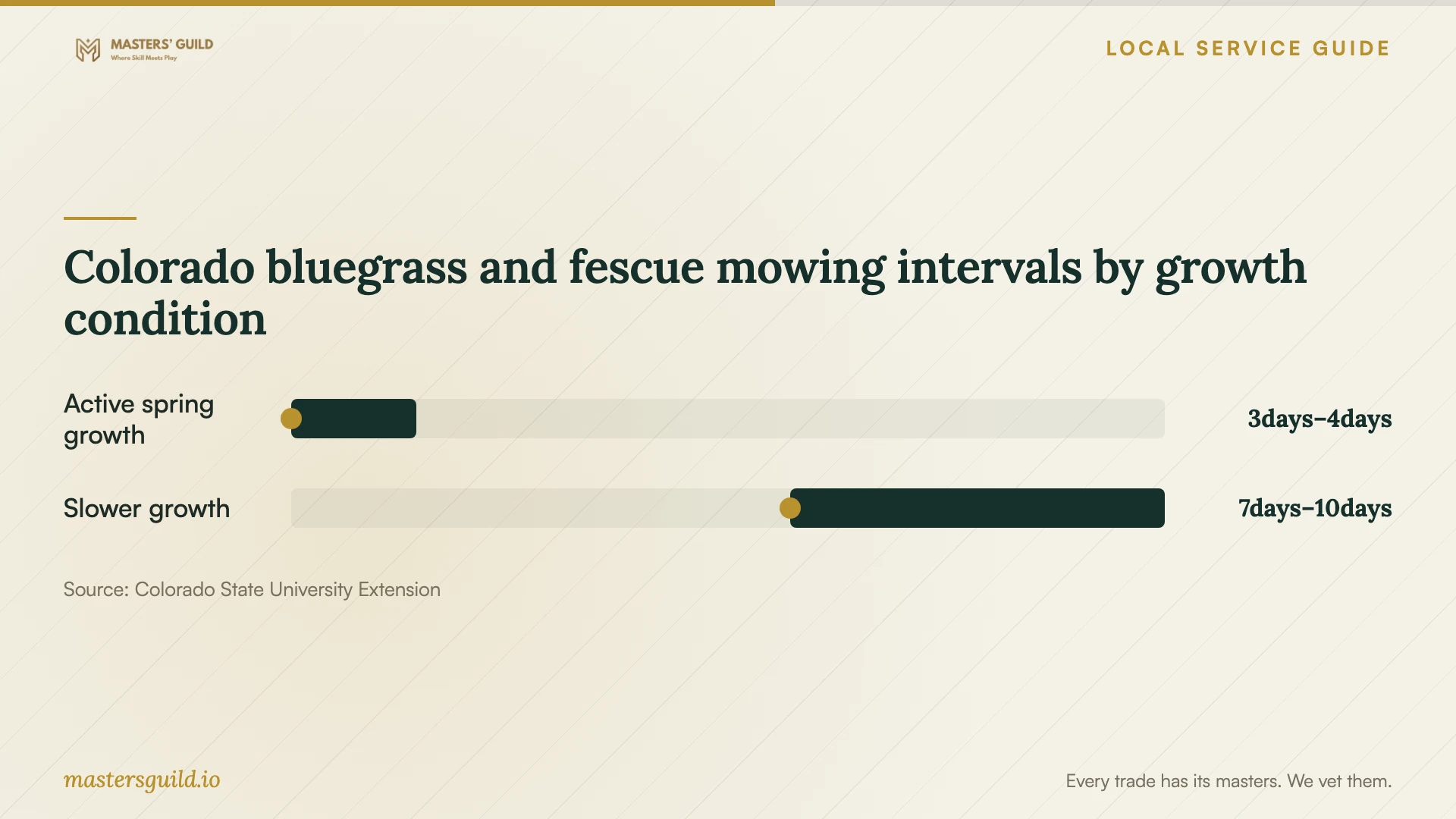
Choose appointments around growth. CSU says bluegrass or fescue may need cuts every three to four days during active spring growth and every seven to ten days during slower growth caused by heat, drought, or cold. Have the provider explain how they will add or pause visits when your lawn outgrows the agreed schedule or stops needing a cut. [2]
For an overgrown lawn, settle the first-cut height before the crew arrives. CSU recommends raising the mower height after a delay, then returning a few days later at the normal height. Confirm whether the initial quote includes both visits. [2]
Give native-grass areas a separate scope. Denver Water says owners may choose whether to mow based on the desired appearance, distinguishes shorter buffalograss from other native grasses that prefer infrequent mowing, and recommends a height no shorter than six inches where possible. Identify the species, check HOA or local land-use requirements, and confirm the provider can maintain your agreed height. [3]
Resolve fall watering before approving add-ons
For Denver Water customers, the October drought notice takes precedence over general seasonal watering advice. The utility prohibits lawn watering and all spray irrigation beginning October 1 until further board action. Its notice also prohibits hand-watering grass. Confirm your supplier before applying these restrictions to your property. [1]
Confirm eligibility before paying for seed, sod, or work that requires establishment watering. Denver Water's drought FAQ describes special circumstances involving approved establishment permits after October 1. Another section on the same page says those permits will not be available after September 30 until further notice. These statements do not resolve current availability. Contact Customer Care at 303-893-2444 and obtain confirmation for your project before authorizing work. [1]
Keep tree and shrub care separate from grass watering. Denver Water allows customers to water trees, shrubs, and perennials with a hand-held hose fitted with a shut-off nozzle or low-volume, non-spray irrigation. Have the provider identify the plants and irrigation zones involved before adding watering to the visit. [1]
Specify cleanup and protect equipment
For routine mowing, CSU recommends returning clippings to the lawn because they recycle nutrients and do not contribute to thatch. Discuss any proposed bagging charge and how the crew will handle clippings after a delayed cut. [2]
Include sidewalk, driveway, and street-edge cleanup in the agreement. CSU advises keeping clippings out of streets and gutters because rain can carry them into storm drains and pollute waterways. Require the crew to collect or return stray clippings to the lawn. [2]
Mark sprinkler heads before the first visit. Denver Water recommends checking them after mowing for breakage or misalignment. Inspect visible equipment without running spray irrigation during the current prohibition, and agree on how the crew will report damage. Remove loose objects, secure pets, and record gate-closure instructions. [1] [4]
Colorado bluegrass and fescue mowing intervals by growth condition
Local details that affect your job
October restrictions change renovation decisions
As of October 14, 2026, Denver Water prohibits lawn watering and spray irrigation under its October 1 restriction. The drought page gives conflicting instructions about establishment-permit availability: it describes limited approved exceptions but also states that permits are unavailable after September 30 until further notice. Confirm your project's eligibility with Customer Care at 303-893-2444 before paying for renovation. [1]
Colorado guidance changes recurring service
CSU Extension's regional guidance applies to bluegrass and fescue lawns here: active spring growth may require mowing every three to four days, while slower growth from heat, drought, or cold may require seven to ten days. Use those ranges and the one-third removal rule to discuss flexible visits rather than choosing a fixed biweekly contract without a growth check. [2]
Native-grass areas need their own agreement
Denver Water makes mowing native grass conditional on the desired appearance and distinguishes species in its guidance. It recommends cutting no shorter than six inches where possible and checking HOA or local land-use requirements. Confirm the species and equipment height before including a converted area in routine mowing. Its water-wise seed program is closed for the season and directs customers to check back in 2027; do not assume a current quote includes free program seed. [3]
Choose a mowing arrangement
| Lawn situation | Approach to discuss | Question before booking |
|---|---|---|
| Bluegrass or fescue in active spring growth | CSU says mowing may be needed every three to four days. | Can you add visits to stay within the one-third removal rule? |
| Slower growth from heat, drought, or cold | CSU gives seven to ten days as a mowing interval. | How will we adjust visits and charges as growth changes? |
| Overgrown conventional turf | CSU recommends a raised first cut, then a normal-height cut a few days later. | Does the initial quote include both visits? |
| Native-grass area | Choose mowing by species and appearance; Denver Water recommends no shorter than six inches where possible, subject to local requirements. | Can your equipment maintain the agreed height? |
| Fall seed or sod for a Denver Water customer | Confirm eligibility with the utility because its current page contains conflicting permit-availability instructions. | Has Denver Water confirmed permission for this project? |
Your hiring checklist
- Send lawn photos, approximate area, current height, and gate measurements.
- Identify grass types and mark areas to leave untouched.
- Record the cutting height and how you will adjust the visit schedule.
- Confirm trimming, edging, clipping handling, and hard-surface cleanup.
- Get initial-cut, recurring, return-visit, and hauling prices in writing.
- Confirm your water supplier and project eligibility before approving renovation.
- Mark sprinkler heads, remove loose objects, secure pets, and specify gate closure.
- Check insurance documentation and agree on damage reporting and cancellation terms.
Frequently Asked Questions
Should I book weekly or biweekly mowing?
Choose an interval that lets the crew remove no more than one-third of the grass height. CSU says bluegrass or fescue may need cuts every three to four days in active spring growth and every seven to ten days during slower growth. Agree on adjustments after checking your lawn. [2]
Should the crew cut the lawn shorter for winter?
CSU recommends a consistent mowing height throughout the year and says there is no need to cut turf shorter in late summer or fall. Its conventional-turf recommendation is 2.5 to 3 inches. Set a separate height for native-grass areas using species guidance and local requirements. [2] [3]
Can I water grass after an October mowing visit?
Denver Water's October 1 prohibition includes lawn watering, spray irrigation, and hand-watering grass. A mowing visit does not provide watering permission. Its page contains conflicting establishment-permit instructions, so obtain utility confirmation before relying on any claimed exception. [1]
Should I pay to remove grass clippings?
CSU recommends returning routine clippings to the lawn because they recycle nutrients and do not create thatch. Have the provider explain proposed removal, include hauling in the quote, and agree to keep clippings out of streets and gutters. [2]
Sources and scope
This guide combines the sources below with practical planning guidance. Figures apply to the stated geography and period; request a written quote for your property.