
Local service guide
Interior Design in Denver: Hiring and Project Planning
For Interior Design in Denver, choose a designer whose proposed deliverables match your project: advice and furniture selections for a room refresh, or drawings and contractor coordination for a renovation. Before hiring, agree on the budget, purchasing responsibilities, revision limits, and who will confirm permit requirements. Denver limits quick permits to specific trade work and excludes structural work from that route. [1]
Choose the design scope before comparing proposals
Write a brief that names the rooms, what you want to keep, and what frustrates you about using the space. Include storage needs, seating, lighting preferences, pets, and accessibility goals. Give the designer a total spending ceiling and explain whether you plan to buy furniture yourself or want help with ordering and installation.
Request a proposal that names the work you will receive. For a consultation, request written recommendations. For a furnished room, ask about measured layouts, finish samples, product selections, and a shopping list. For a renovation, establish who prepares construction documents and who coordinates with the contractor. Review a sample deliverable so you can judge the level of detail.
Review portfolio projects that resemble your intended scope. Have the designer explain their role in those projects, including whether they selected finishes, prepared drawings, managed purchases, or attended site meetings. Choose based on the work you need and how they explain decisions to you.
Assign permit coordination before construction
Denver issues quick permits for specific trade work without plan review. The city excludes most projects, including structural work, from this route. Its single-family and duplex lists include lighting and receptacles, showers and sinks, ductwork, and range hoods under the applicable trade categories and conditions. Have your designer and contractor identify the permit route for each proposed change. [1]
For new buildings and additions involving single-family homes, duplexes, and IRC townhomes, Denver requires an issued Residential Construction Permit before the covered trade quick-permit applications can proceed. The city does not impose that prerequisite on alteration or repair projects through this particular application rule. Do not interpret that distinction as a permit exemption for your remodel. [1]
Put a name beside each responsibility in the agreement: checking requirements, preparing drawings, applying for permits, answering review comments, and arranging inspections. Denver requires review and a modified permit when construction changes depart from approved plans. Establish how the team will handle a layout change after approval before you authorize the change. [1]
Set a complete budget and purchasing agreement
Request a fee proposal that explains the billing method, included meetings, revision allowance, and charges for additional work. Keep design fees, furniture, contractor work, freight, receiving, storage, and installation as separate budget categories. Discuss product markups, discounts, substitutions, returns, and damaged deliveries before signing.
Agree on an approval process before anyone places orders. Require the product name, dimensions, finish, total purchase amount, and return terms for your approval. Assign someone to check doorways, stairs, elevators, and room measurements. For a condo, confirm building access and delivery rules with your community manager before setting an installation date.
Build the schedule around decisions and dependencies. Have the designer identify when you must approve the layout, finishes, and orders, and when the contractor needs those selections. Request a plan for unavailable products and define who pays for redesign or replacement purchases if you change your mind.
Specify bathroom fixtures with rebate rules in mind
Denver Water offers up to $100 for qualifying WaterSense-labeled replacement toilets averaging 0.8 gallon per flush or less. The utility publishes a qualifying-model list. New construction does not qualify, and the program covers new products replacing old fixtures. Have the designer verify the exact bowl and tank model numbers before you approve a purchase. [3]
Denver Water says the rebate applicant should be the end purchaser. The customer requesting the rebate must receive a water bill from Denver Water or a qualifying distributor. Condo and homeowners association customers can qualify, but applicants need to obtain the water account number from their community manager. If your designer purchases fixtures on your behalf, confirm the purchasing, invoice, and applicant arrangements with Denver Water before ordering. [3]
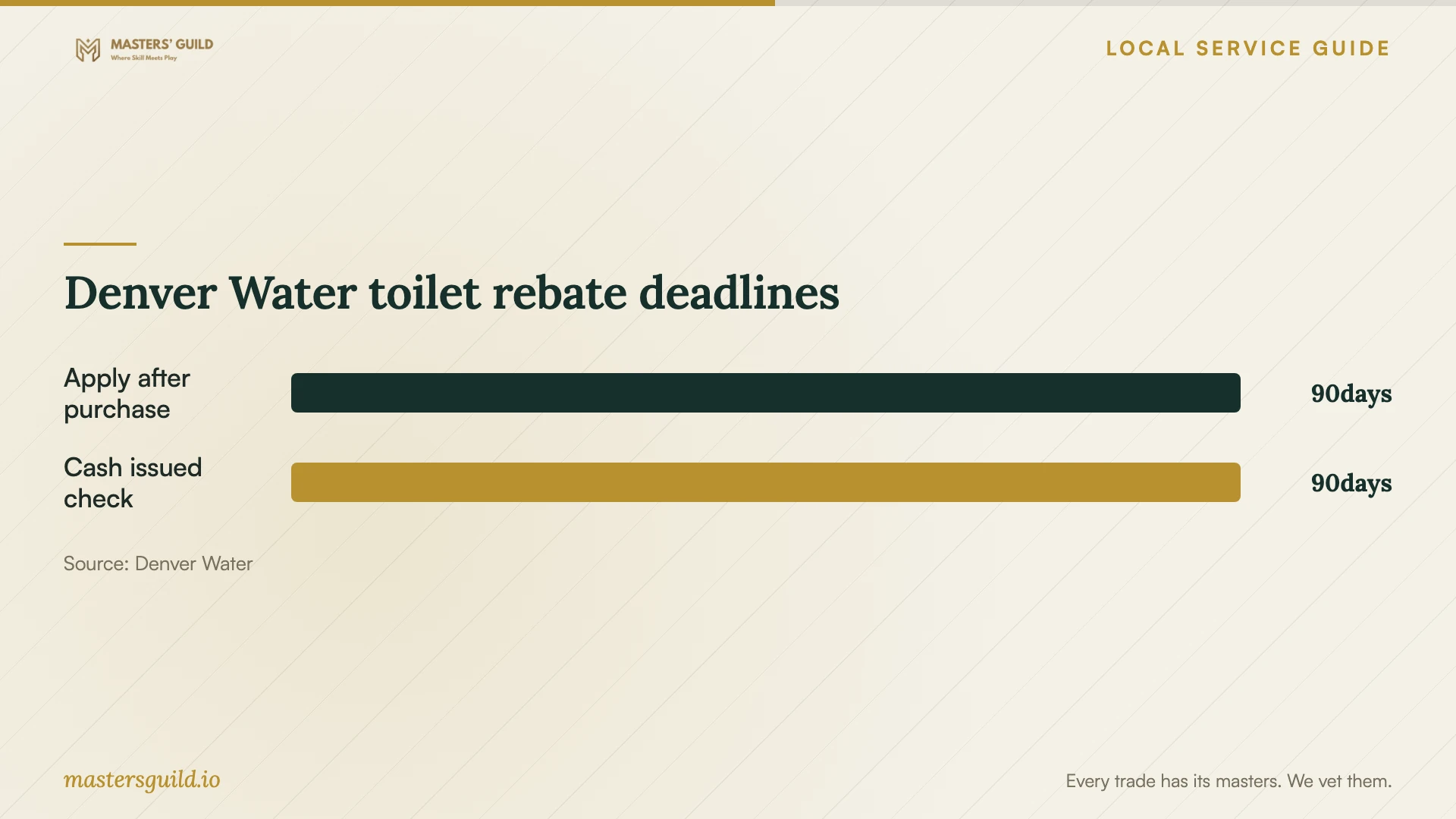
Submit the application within 90 days of purchase with a receipt or paid invoice that includes the purchase date, model or item number, item price, and proof of full payment. Denver Water limits rebates to two toilets per residence in a 10-year period and may discontinue the program or exhaust its funds. Keep the rebate separate from the money you need to complete the bathroom. [3]
Denver Water toilet rebate deadlines
Local details that affect your job
Check historic-property review when the design reaches outside
Denver Landmark Preservation reviews exterior work requiring a zoning or building permit on individual landmarks and properties in historic districts. The quick-permit page also requires Landmark review for roof permits and other quick permits involving exterior work on these properties. If your interior plan includes an exterior vent, mechanical unit, or roof penetration, have the team confirm review requirements before choosing the installation location. [1] [2]
An interior remodel can need floodplain review
Denver requires a floodplain permit as part of SUDP review for construction within a regulatory floodplain, including an interior remodel. Have the project team check the property's floodplain status before finalizing the construction scope and schedule. Keeping the project indoors does not remove this requirement. [2]
Use the city contact for unresolved permit questions
Denver lists 720-865-2720 for e-permits support and general permitting questions. Prepare the address, building type, and a written description of proposed work before calling. Have the designer record the guidance and identify any follow-up needed before construction. [1]
Match the designer's scope to your project
| Your project | What to request | Local planning question |
|---|---|---|
| Furniture and color refresh | Written recommendations, measured furniture layout, and purchase list | Ask whether any proposed work extends into electrical, plumbing, or mechanical changes. |
| Kitchen or bathroom renovation | Fixture schedule, drawings, and named contractor coordination | Which trade permits apply, and does the project require plan review? |
| Layout change involving structural work | A team with an assigned professional for structural design | Denver excludes structural work from quick permits. |
| Interior remodel in a regulatory floodplain | Early coordination with the permitting team | Denver requires a floodplain permit as part of SUDP review. |
| Replacement toilet purchase | Exact model numbers and a documented purchasing arrangement | Check the qualifying list. Denver Water says the applicant should be the end purchaser; confirm arrangements if the designer buys the fixture. |
Your hiring checklist
- Prepare room photos, measurements, and a list of items you want to keep.
- Set a total budget and separate design, purchases, construction, and delivery allowances.
- Request sample deliverables and a proposal with revision limits.
- Assign responsibility for drawings, permit questions, applications, and inspections.
- Have the project team check floodplain status and historic-property constraints.
- Agree on purchasing approvals, markups, return terms, and damage handling.
- For a toilet rebate, confirm the exact model, applicant arrangement, and receipt requirements with Denver Water before ordering.
Frequently Asked Questions
How should I compare interior design quotes?
Give each designer the same brief and budget. Compare deliverables, meetings, revisions, purchasing responsibilities, and construction coordination. Have each designer identify expenses outside their fee, including freight, storage, installation, and contractor work.
Does a quick permit mean my renovation needs no review?
Denver issues quick permits without plan review for specific eligible trade work. Most projects, including structural work, cannot use that route. Have the project team confirm eligibility for the full scope before scheduling construction. [1]
Can I receive a toilet rebate if I live in a condo?
Denver Water allows condo and homeowners association customers to qualify. Obtain the water account number from your community manager and confirm eligible water service and the exact toilet model. The utility says the applicant should be the end purchaser. If your designer buys the fixture, confirm the applicant and invoice arrangements with Denver Water before ordering. Submit the application within 90 days of purchase. [3]
What should I resolve before approving the final design?
Confirm dimensions, product specifications, the full budget, purchasing terms, and who coordinates construction. Have the team resolve permit questions before ordering items whose location or specification depends on approval.
Sources and scope
This guide combines the sources below with practical planning guidance. Figures apply to the stated geography and period; request a written quote for your property.