
Local service guide
Denver gardening: Hiring, Watering and Cleanup
For Denver gardening, hire around a defined task list and agree on watering and debris removal before accepting a quote. For Denver Water customers, the restrictions current on October 14, 2026 prohibit lawn watering and spray irrigation beginning October 1. Request a watering plan that follows the utility's October guidance for the plants you want cared for. [1]
Define what the gardener will do
Start with photographs or a walk-through of each bed. Mark plants to retain, weeds to remove and areas to leave alone. Choose a cleanup, planting visit or recurring maintenance arrangement. For repeat visits, specify the tasks and how the gardener should request approval for extra work.
Ask how the gardener will identify unfamiliar plants before pulling or cutting them. Discuss which plants to retain, move or replace. Request proof of liability insurance, agree on how to report damage and identify any work that needs a separate specialist.
Set a watering plan before buying plants
Identify your water supplier first. Denver Water prohibits lawn watering, including hand watering of grass, and all spray irrigation beginning October 1 until further action by its board, subject to approved exceptions. Its October FAQ permits watering trees, shrubs and perennials any day with a hand-held hose with a shut-off nozzle or low-volume, non-spray irrigation such as drip. [1]
The October FAQ permits those methods for annuals and vegetables until the first frost. A general passage elsewhere on the page omits that cutoff. Use the October-specific limit when planning care, and agree on who will water between visits. [1]
For planting that depends on an establishment exception, contact Denver Water Customer Care at 303-893-2444 before purchasing materials. The FAQ describes approved exceptions after October 1, but another passage says establishment permits will not be available after September 30 until further notice. Neither statement resolves actual availability for your project. Describe the plants, irrigation method and proposed work when seeking confirmation. [1]
Schedule vegetable planting by conditions
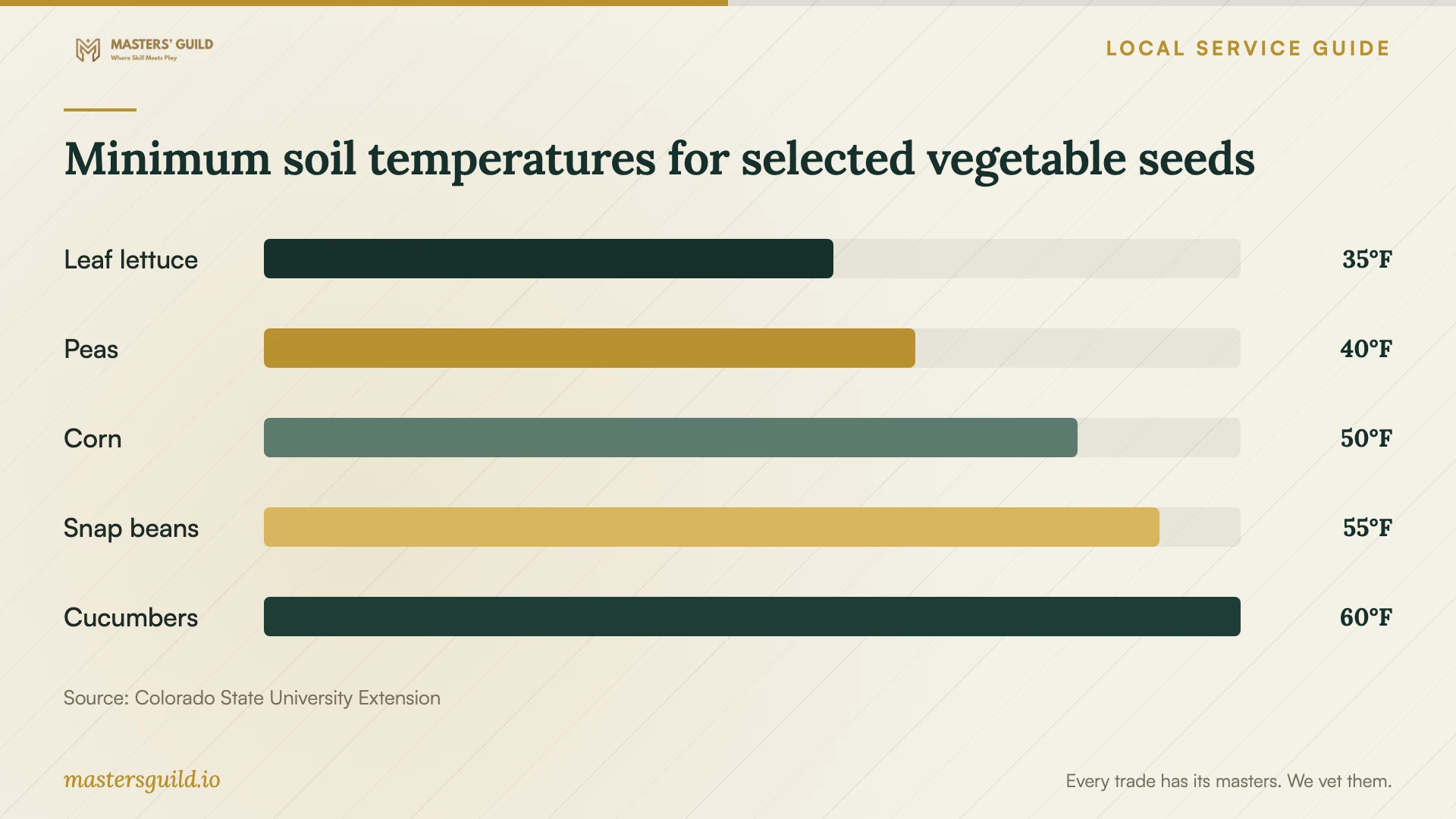
Ask the gardener to explain planting timing using soil conditions and frost tolerance. CSU Extension recommends checking minimum germination temperatures at 8 a.m., 4 inches deep, except for beans, which require measurement at 6 inches. The guide also calls for soil dry enough to work. These are Colorado recommendations, rather than measured planting dates for your property. [2]
CSU distinguishes hardy crops such as lettuce and peas from frost-intolerant warm-season crops. It advises delaying cucumber and summer-squash transplants without frost protection until frost potential has passed. For very tender crops such as peppers and tomatoes, it describes planting typically two or more weeks after the average last spring frost, with suitable soil and summer-like weather. [2]
Before buying seedlings, decide who will select plants, prepare beds and provide any agreed frost protection. Ask for spacing that leaves access for harvesting. For autumn work, identify crops to harvest, plants to remove and beds to prepare for later planting.
Compare complete quotes and disposal plans
Give each candidate the same photographs and task list. Request descriptions of labor, plants, soil amendments, delivery and disposal. For hourly work, agree on an estimated total and a spending limit requiring approval. For a fixed quote, identify included beds, exclusions and material substitutions.
Denver assigns residents responsibility for removing and disposing of all tree stumps. It also assigns residents responsibility for branches over 4 inches in diameter or over 4 feet long. Separately, the city recommends composting branches and stumps under 4 inches in diameter and less than 4 feet long. That recommendation does not establish acceptance in a city compost cart. [3]
Ask the gardener to identify stumps and oversized branches during the walk-through and price their handling. Confirm accepted materials before planning city-cart disposal. Denver requires closed cart lids and says crews cannot empty carts that are overfilled, stuffed or too heavy. [3]
Show gate access, hose connections and the route for carrying materials and debris. Agree on the finish condition: clear paths, retained plants protected and waste removed or placed in the agreed location. For recurring care, request a brief record of completed work and plants needing attention.
Minimum soil temperatures for selected vegetable seeds
Local details that affect your job
October restrictions change irrigation choices
For Denver Water customers, specify non-spray watering for trees, shrubs and perennials. Its October FAQ permits a hand-held hose with a shut-off nozzle or low-volume irrigation such as drip any day; annuals and vegetables have a first-frost cutoff. Exclude grass watering unless the utility approves an exception. [1]
Stumps need a disposal agreement regardless of size
Denver places removal and disposal responsibility for all tree stumps on residents, along with branches over 4 inches in diameter or over 4 feet long. Include those items in the cleanup scope. The city recommends composting pieces under both thresholds, but its supplied guidance does not confirm city compost-cart eligibility. [3]
Choose the scope before booking
| Your situation | Scope to request | Decision before booking |
|---|---|---|
| Overgrown beds | Plant identification, weeding and cleanup | Mark retained plants and agree on debris handling |
| Existing plants need watering | For Denver Water customers, use a shut-off hose or low-volume non-spray irrigation for trees, shrubs and perennials; annuals and vegetables only until first frost | Exclude grass unless Denver Water approves an exception |
| New planting needs spray irrigation | A planting plan conditional on utility confirmation | Resolve conflicting establishment-permit guidance before committing |
| Vegetable planting | Crop selection, soil-temperature checks and frost planning | Use CSU's crop-specific guidance to agree on timing |
| Cleanup includes stumps or large branches | Removal and disposal of all tree stumps and branches over 4 inches in diameter or over 4 feet long | Agree who handles each item and where it will go |
Your hiring checklist
- Photograph beds and mark plants to retain.
- List first-visit tasks and any recurring work.
- Identify your water supplier and agree on plant-specific watering responsibilities.
- Resolve any required watering exception before purchasing plants.
- Request a complete quote covering materials, delivery and disposal.
- Show gate access, hose connections and the debris-removal route.
- Agree on spending approval, substitutions and the garden's finish condition.
Frequently Asked Questions
Can a gardener water my garden under the current restrictions?
Denver Water's October FAQ permits watering trees, shrubs and perennials with a hand-held hose with a shut-off nozzle or low-volume, non-spray irrigation. It permits those methods for annuals and vegetables until first frost. Grass watering and spray irrigation require an approved exception. [1]
Should I arrange cleanup or recurring maintenance?
For a garden you want restored before maintaining it, request a defined cleanup scope and a separate recurring-care proposal. Ask the gardener to explain what they would complete at each visit and what would require extra approval.
Can small branches and stumps go in my city compost cart?
Confirm accepted materials before using the cart. Denver recommends composting branches and stumps under 4 inches in diameter and less than 4 feet long, but this guidance does not verify cart acceptance. Residents remain responsible for all tree stumps. Ask about pieces at the exact size boundaries and arrange another disposal route where needed. [3]
Sources and scope
This guide combines the sources below with practical planning guidance. Figures apply to the stated geography and period; request a written quote for your property.