
Local service guide
Electrical Repairs in Denver: Hiring and Permit Guide
For Electrical Repairs in Denver, choose an electrician who explains the diagnostic charge, writes down the repair scope, and identifies who will handle permits and inspections. Ask about your building type and service size before accepting a quote: Denver offers electrical quick permits for listed work in single-family homes and duplexes with single-phase utility service rated 400 amps or less. [1]
Describe the fault before requesting a repair
Give the electrician a short account of the problem: which outlets or lights lose power, what you were using when it happened, and whether it affects one room or several. Mention recent appliance changes, remodeling, or water exposure. Photograph visible equipment labels only where you can do so without opening covers or approaching damaged equipment.
Ask the contractor to separate troubleshooting from the proposed repair. For a dead outlet, request an explanation of what they will test before replacing it. For recurring circuit problems, ask what finding would justify a breaker replacement, wiring repair, or panel work. Agree on a spending limit for diagnosis and require approval before the contractor expands the job.
Stop using equipment that sparks, feels hot, smells burned, or gives you a shock, and seek professional help. Do not open the panel or handle exposed wiring. If you see smoke or fire, leave the area and call emergency services.
Compare the whole quote
Request a written quote that separates the visit or diagnostic charge, labor, parts, permit handling, and any return visit. Ask whether the contractor credits the diagnostic charge toward an approved repair. Have them state any after-hours charge before dispatch and explain how they price additional work discovered during testing.
For an outlet or switch repair, specify the device and location. For panel work, ask the contractor to identify the equipment, affected circuits, shutdown arrangements, and any wall repair they exclude. Request credential details and proof of insurance, then ask who will perform the work and who will supervise it. Keep warranty terms and exclusions with the quote.
Compare proposals against the same scope. If one electrician proposes replacing a component and another proposes rewiring, ask each to explain the diagnosis and share the findings that support their recommendation. Set a written approval process for added work.
Confirm the permit route for your building
Denver lists panels and subpanels, wiring or rewiring, GFCI outlets, lighting, and receptacles among electrical quick-permit work for single-family homes, duplexes, and garages. That route applies to single-phase utility services rated 400 amps or less. Denver excludes electrical work on those properties from quick permits when the service exceeds 400 amps. [1]
Tell the contractor if you own a condo or another multifamily property. Denver places multifamily and commercial panels, subpanels, and new, replacement, or upgraded services outside the electrical quick-permit route. Ask the electrician to identify the application and plan requirements before you agree on a start date. [1]
Denver tells applicants to select Repair/Replace when the entire project scope consists of equipment replacement or repair. For new buildings and additions involving single-family homes, duplexes, and IRC townhomes, applicants need an issued Residential Construction Permit before completing the residential trade quick-permit application. Ask your contractor to classify the entire project, especially if the repair accompanies an addition. [1]
Arrange shutdowns, inspections, and closeout
Before a service or panel repair, ask which equipment will lose power and who will coordinate the shutdown and restoration. Discuss refrigeration, heating controls, medical equipment, and access to shared electrical rooms. Request separate expectations for the repair, inspection, and utility coordination.
Denver requires an issued permit before you can schedule an inspection. The city says it completes inspections within two business days. You can check permit and inspection status without an e-permits account, but you need an account to schedule. Ask the contractor for the permit number and inspection arrangements. [2]
For a meter release, schedule the named meter release inspection online. Denver does not accept this request through its automated phone system. The city describes sending the release request to Xcel following the inspection. Ask the contractor to track the release and confirm restoration arrangements with the utility before you plan around a reconnection time. [2]
At handover, ask the electrician to explain the fault they found, the repair they completed, and any unresolved items. Keep the invoice, equipment information, warranty, and applicable inspection results. Ask them to demonstrate the repaired equipment and explain any changes to circuit labels.
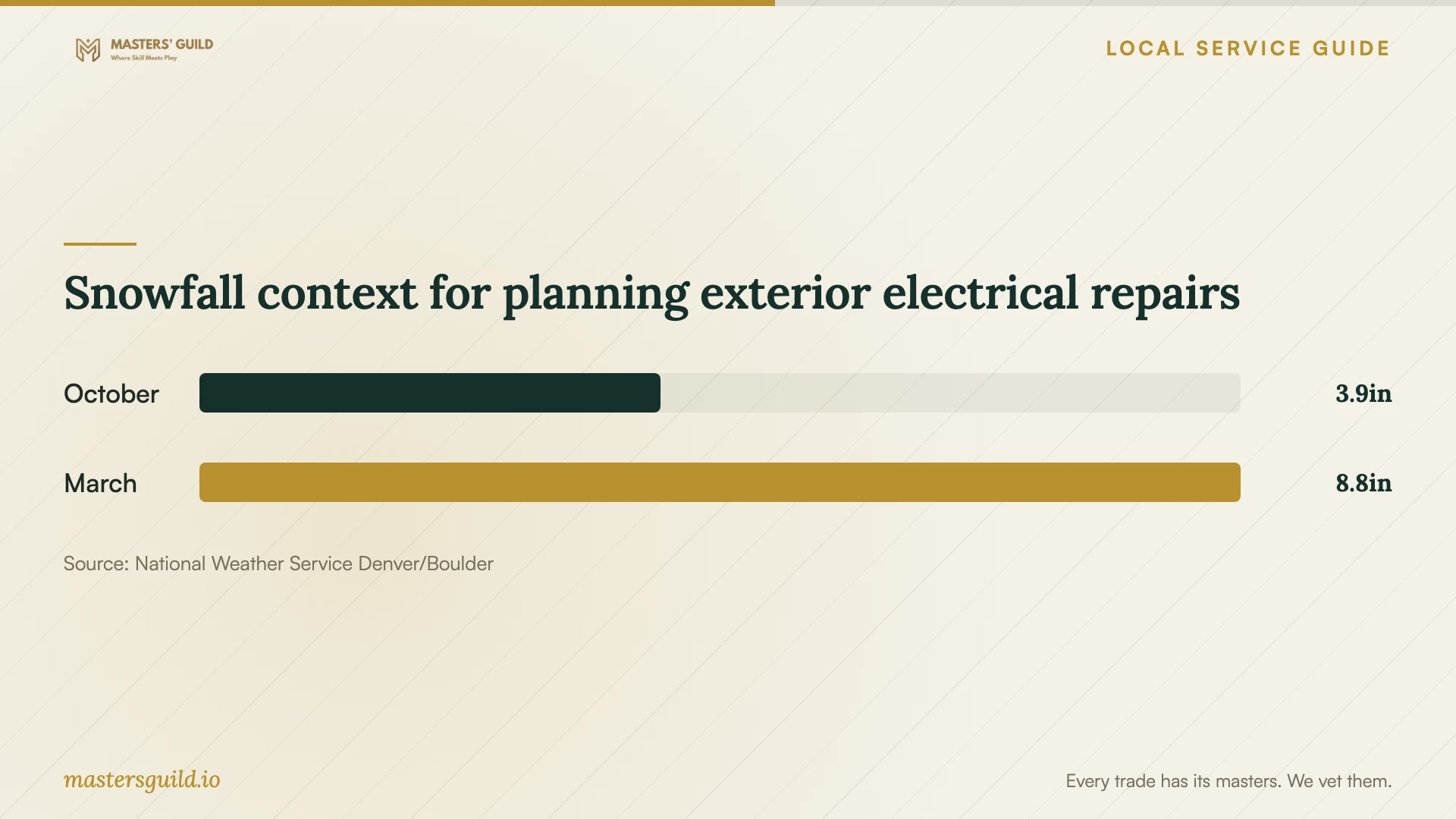
Snowfall context for planning exterior electrical repairs
Local details that affect your job
Check the code edition on a new submission
Denver's August 2026 notice requires all new project submittals to Community Planning and Development from August 1, 2026 to comply with the 2026 National Electrical Code. Projects submitted for plan review before that date may use the 2023 edition as their design basis. Ask which edition applies to your project and its submission date, particularly if you are continuing previously planned work. [3]
Include landmark review for exterior work
Denver requires Landmark Preservation review for quick permits involving exterior work on an individual landmark or a building within a historic district. Applicants must supply a Landmark quick review application, street and work-area photos, and relevant product information. For an exterior meter, mast, or lighting proposal, ask the contractor to confirm landmark status and include that review in the schedule. [1]
Prepare exterior access for snow
The National Weather Service's Central Park/Stapleton table gives 1991–2020 monthly snowfall normals of 3.9 inches for October and 8.8 inches for March. NWS warns that the site's 1991–2020 average likely underestimates snowfall because observers reduced measurements to once daily. These station values provide seasonal context rather than a forecast for your home. For exterior repairs, discuss weather postponements and agree on a clear access route. [4]
Questions that determine the repair plan
| Your situation | Planning implication | Ask before approving |
|---|---|---|
| Single-family or duplex, single-phase service up to 400 amps | Listed electrical work can qualify for a quick permit. | Does this exact scope qualify, and who obtains the permit? |
| Single-family or duplex service over 400 amps | Denver excludes electrical work from the quick-permit route. | What plans and review does this repair require? |
| Condo or other multifamily panel replacement | Multifamily panels and subpanels do not qualify for electrical quick permits. | Have you included plan review and shared-building coordination? |
| Exterior work on a landmark or in a historic district | Exterior quick-permit work requires Landmark Preservation review. | Who prepares the photos, application, and product information? |
| Repair involving a meter release | Schedule the meter release inspection online; Denver does not accept this request through its automated phone system. | Can the contractor coordinate inspection tracking, release to Xcel, and restoration arrangements? |
Your hiring checklist
- Write down affected rooms, devices, symptoms, and when the fault occurs.
- Tell the contractor your building type and share visible equipment labels without opening covers.
- Request credential details, proof of insurance, and the name of the person performing the work.
- Agree on the diagnostic charge and an approval limit for additional work.
- Ask who handles the permit application, fees, inspections, and any landmark review.
- Confirm shutdown arrangements and any meter-release or utility coordination.
- Keep the repair findings, invoice, warranty, and applicable inspection results.
Frequently Asked Questions
Does a quick permit mean no permit is needed?
No. Denver uses quick permits for specified trade work that can proceed without plan review. Ask your electrician to confirm eligibility and any inspection requirements for the scope before work starts. [1]
Can I check whether the contractor's permit has closed?
You can search Denver e-permits by address or permit number without an account. The record shows whether the permit is in progress, issued, or finaled. Open Record Info and then Inspections to view inspection results. [2]
How much should I budget for a repair?
Request a diagnostic price first, then a written repair proposal based on the findings. Ask for labor, parts, permit handling, and any return visit as separate items. Compare quotes for the same repair scope and require approval for additions.
How should I plan for power restoration after a meter release?
Confirm restoration timing with the contractor and utility. Denver describes sending a meter release request to Xcel following the named inspection. Ask who will track that request and confirm the utility's reconnection arrangements before you commit to a shutdown date. [2]
Sources and scope
This guide combines the sources below with practical planning guidance. Figures apply to the stated geography and period; request a written quote for your property.