
Local service guide
Denver Duct and Vent Cleaning: Hiring and Planning
Arrange Duct and Vent Cleaning in Denver after a contractor shows you the reason for cleaning and provides a written whole-system scope and total price. EPA identifies substantial visible mold on hard-surface ducts or HVAC components, pest infestation, or ducts clogged with substantial dust or debris deposits and/or particles released through supply registers as reasons to consider cleaning. For wildfire smoke concerns, request a filter and HVAC assessment before choosing a cleaning package. [1] [2]
Decide whether cleaning addresses the problem
Ask for an inspection before agreeing to a cleaning package. EPA identifies substantial visible mold on hard-surface ducts or HVAC components, vermin infestation, or ducts clogged with substantial dust or debris deposits and/or particles released through supply registers as reasons to consider cleaning. Have the contractor show affected locations and explain how they inspected sections you cannot see. [1]
EPA explains that return registers collect dust as air passes through them; you can vacuum or remove and clean those registers. Dust on the grille alone does not establish heavy contamination inside the ducts. EPA says duct cleaning has not been shown to prevent health problems and finds little evidence that cleaning ducts alone improves system efficiency. [1]
For suspected mold, request evidence before approving treatment. An expert may need laboratory analysis to confirm the substance. Have a qualified contractor correct the moisture source and replace wet or moldy duct insulation that cannot be cleaned effectively. EPA warns that mold can recur if you leave the underlying cause unresolved. [1]
Compare the scope behind each quote
Request a written agreement naming the system and components the contractor will clean. EPA describes system cleaning as including supply and return ducts, registers, grilles, coils, drain pans, fans and the air-handler housing. Ask each bidder to identify exclusions and explain who will address contaminated components outside their scope. [1]
Have each bidder state the total price, system count, access arrangements, expected work time and charges for proposed extras. List dryer exhaust, bathroom exhaust and other requested vents as separate line items so you can see which work you are buying. Require your approval before the crew adds repairs or chemical treatments.
Ask how the crew will capture debris and protect your furnishings. EPA recommends vacuum equipment that exhausts outdoors, or HEPA vacuuming equipment when the exhaust stays indoors. The contractor should match tools to the duct material and seal and reinsulate access holes after cleaning. Ask about experience with systems like yours, references and liability insurance. [1]
Question any claim of EPA certification: EPA does not certify or approve duct-cleaning companies. For proposed biocides, request the product label, intended use and explanation of need. EPA reports no registered biocides for fiberglass duct board or fiberglass-lined ducts and advises against routine use of encapsulating sealants. [1]
Choose filtration with your equipment in mind
Ask an HVAC technician to check filter fit and the efficiency your equipment can accommodate. EPA recommends MERV 13 or the highest rating the system fan and filter slot can support when upgrading filtration. Follow the manufacturer's replacement instructions and have the technician confirm compatibility before you change the filter specification. [4]
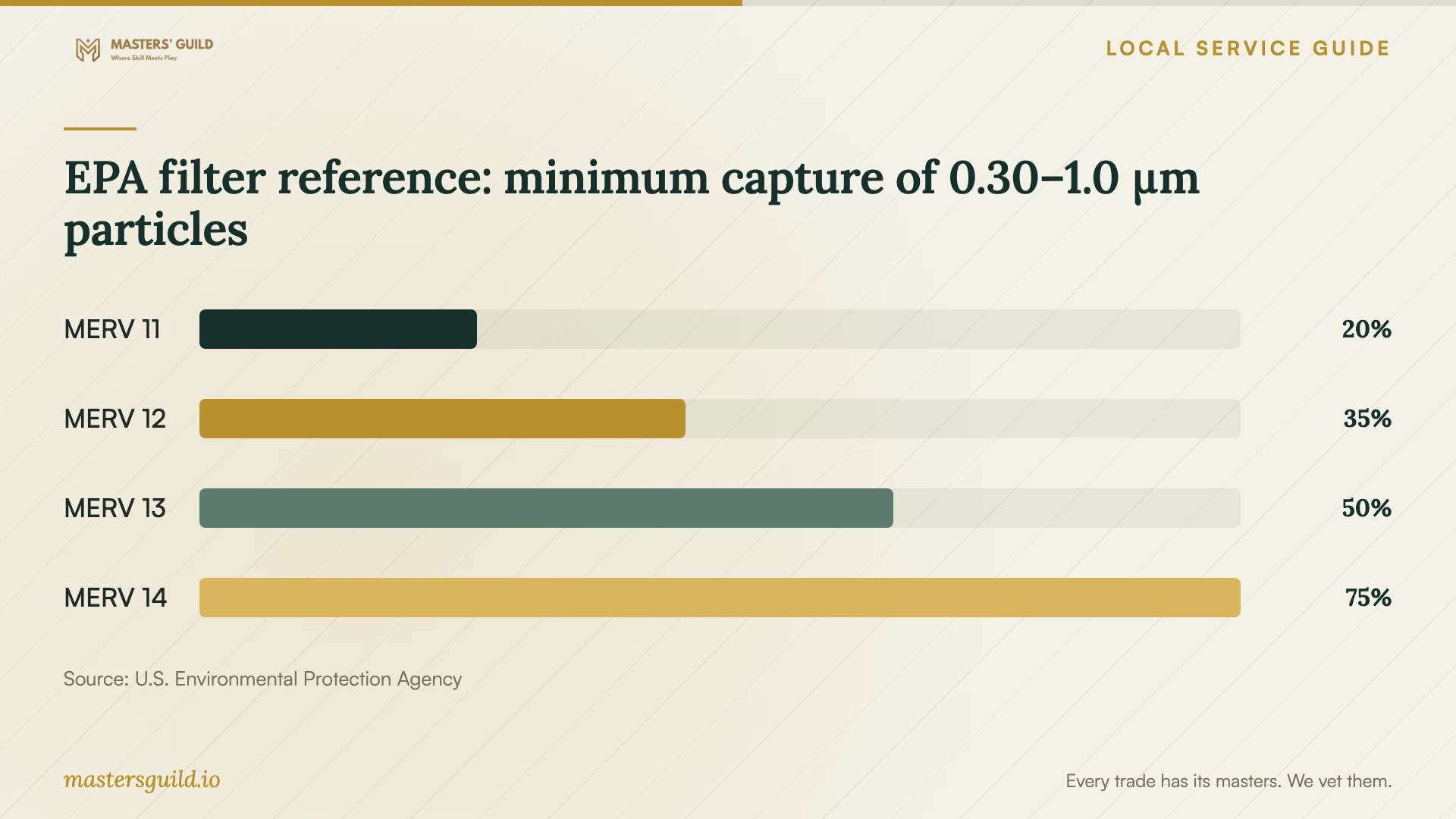
Use the filter chart to compare EPA's published capture thresholds for one particle-size band. These values describe filter ratings, not measurements of your ducts or indoor air. Ask the technician to explain the proposed filter choice and write the replacement specification on your service record. [4]
Prepare for access and check the finished work
Before the visit, share photographs of the equipment, filter slot and accessible registers. Describe renovation dust, water damage or pest history. Clear the agreed work areas, arrange access to equipment rooms and ask where pets should stay. In a condo, confirm access and approval arrangements with the building manager.
Ask the crew to inspect for suspected asbestos-containing materials before disturbing the system. EPA says those materials require specialized procedures and trained contractors. Have the cleaner explain how they will protect fiberglass lining or flex duct from damage. [1]
Before signing off, ask the contractor to show the cleaned components, using photographs for areas you cannot see. EPA recommends visual inspection to verify cleanliness. Check that the crew reattached registers, closed access openings and demonstrated system operation. Record remaining contamination and repair recommendations separately. [1]
EPA filter reference: minimum capture of 0.30–1.0 µm particles
Local details that affect your job
Denver repairs can change the permit scope
Denver lists ductwork, exhaust systems and ventilating systems among eligible mechanical quick-permit categories for single-family and duplex structures. Those categories do not determine whether ordinary cleaning requires a permit. If an inspection leads to replacement or alterations, have the contractor describe that work separately and ask Community Planning and Development about the exact scope. Denver directs applicants to E-permits, where they select Apply for a Permit under Development Services and follow the prompts. For permit questions, call 720-865-2720. If proposed exterior work involves an individual landmark or a building in a historic district, Denver requires Landmark Preservation review of the quick-permit application. [3]
Colorado smoke guidance changes the first service request
For a Denver household concerned about wildfire smoke, use Colorado's regional guidance to request a filtration assessment before purchasing a smoke-related cleaning package. CDPHE advises using filtered HVAC equipment, keeping filters clean and closing outdoor-air intakes during smoke episodes. It recommends HEPA room filtration when available. Ask a technician to identify your intake controls, especially if you use an evaporative cooler; CDPHE warns that running unfiltered equipment can worsen indoor smoke. Follow its warning against closing up your home if doing so makes it dangerously warm. [2]
Choose the next step from the inspection findings
| Finding or concern | Next step | Question to ask |
|---|---|---|
| Dust on a return grille | Clean the grille and inspect before buying whole-system cleaning. | Can you show contamination beyond this grille? |
| Ducts clogged with substantial dust or debris deposits and/or particles released through supply registers; pest infestation | Assess cleaning and correct the underlying cause. | Which components need cleaning, and what caused the problem? |
| Wet or moldy duct insulation | Arrange assessment and replacement of affected insulation. | How will you correct the moisture source? |
| Wildfire smoke concern | Check filtration and outdoor-air intake controls. | Does this equipment filter the air it brings inside? |
| Proposed duct replacement | Confirm Denver's permit route for the repair scope. | Who will handle the application and required inspections? |
Your hiring checklist
- Describe the concern: particles from supply registers, suspected growth, pests, smoke or renovation dust.
- Request photographs or an inspection showing why the contractor recommends cleaning.
- Ask each bidder to name included components, exclusions and the total price.
- Confirm duct materials, debris collection methods and access-hole repairs.
- Require separate approval for chemicals, duct replacement or ventilation alterations.
- Clear agreed access areas and arrange building-manager access if needed.
- Review completion photographs and ask the crew to demonstrate system operation.
Frequently Asked Questions
Should I book duct cleaning every year?
EPA recommends cleaning as needed rather than on a routine schedule. Keep up with filter changes and equipment maintenance. EPA recommends inspection and service of fuel-burning heating equipment before each heating season; arrange that service separately from any decision about duct cleaning. [1]
How should I compare duct-cleaning prices?
Get comparable written estimates covering the same system and components. EPA identifies service scope, system size, accessibility and contamination as cost factors. Ask bidders to state the total price and charges for additional work before you approve it. Compare exclusions as well as the quoted amount. [1]
Will cleaning solve allergies or smoke exposure?
EPA says duct cleaning has not been shown to prevent health problems. For smoke, follow CDPHE's filtration and exposure guidance. Discuss unexplained symptoms with your health care provider rather than relying on a cleaner's health claims. [1] [2]
Does ordinary cleaning need a Denver permit?
Denver's cited quick-permit categories cover ductwork and ventilation work but do not determine whether ordinary cleaning requires a permit. Ask Denver about your exact scope. If the contractor proposes alterations or replacement, describe those additions separately when confirming the permit route. [3]
Sources and scope
This guide combines the sources below with practical planning guidance. Figures apply to the stated geography and period; request a written quote for your property.