
Local service guide
Bathroom Remodeling in Denver: Plan and Compare Bids
For Bathroom Remodeling in Denver, hire a contractor who gives you a written scope, identifies the trade permits for your property and explains how you will manage without the bathroom. Compare bids against the same fixture locations and shower specifications. Denver allows quick permits for specified trade work, but excludes structural work from that route. [1]
Define the bathroom before requesting bids
Write down what you want to keep, replace and move. Include the tub or shower, toilet, vanity, lighting, outlets, exhaust fan and storage. Tell bidders whether you want to preserve the layout or consider another arrangement. Ask them to price any proposed layout change as a separate option.
Give each bidder the same photos, measurements and product preferences. Describe any leaks, loose tile, soft flooring or drainage concerns you have noticed. Ask for an inspection before accepting a firm scope, and request a written process for approving repairs discovered after demolition.
For a shower rebuild, request a description of the waterproofing system, drain connection, wall preparation and enclosure. Ask who will install each part and document the work before tile covers it. Include accessibility preferences such as entry height, seating and grab-bar placement in the initial brief.
Confirm the permit route for your building
Denver issues quick permits for specified trade work without plan review. Its lists include bathroom plumbing fixtures, exhaust and ventilation systems, and eligible electrical work. For single-family and duplex structures, the electrical quick-permit list applies to single-phase utility services rated 400 amps or less. Ask the contractor to confirm eligibility for your address and scope. [1]
Denver distinguishes renovations in existing buildings from additions. Its requirement for an issued Residential Construction Permit before certain trade quick-permit applications applies to new buildings and additions involving single-family homes, duplexes and IRC townhomes. The city does not impose that prerequisite through this update for alteration or repair classes. That distinction does not establish that your remodel needs no building permit. [1]
Ask the contractor to name the permit applicant, list the planned inspections and explain any work requiring plan review. Denver excludes structural work from quick permits and requires review of changes to approved plans. For scope questions, the city lists [email protected] and 720-865-2720. [1]
Compare the full contract and disruption plan
Request an itemized proposal covering demolition, disposal, preparation, waterproofing, fixtures, tile, plumbing, electrical work, ventilation and finishing. Ask bidders to identify exclusions and allowances. For each allowance, request the product budget, installation scope and method for calculating a change in price.
Ask for evidence of insurance and the names of the people responsible for plumbing, electrical and shower work. Request comparable project references and ask those homeowners about communication, cleanup and correction of defects. Get the warranty terms and responsibility for subcontractor work in writing.
Before signing, agree on payment milestones, written change approvals and the handover documents. Ask for a schedule that separates product ordering, demolition, inspections and completion. If this is your only bathroom, agree on toilet access, water shutoffs and a backup arrangement before work starts.
Choose a toilet with rebate eligibility in mind
Denver Water offers up to $100 for a listed WaterSense-labeled toilet averaging 0.8 gallon per flush or less. The program covers new fixtures replacing old ones and excludes new construction. You must receive a bill from Denver Water or a qualifying distributor, and the applicant should be the fixture’s end purchaser. [2]
Compare the exact model and bowl-and-tank combination against the utility’s qualifying list before ordering. Agree with the contractor on who purchases the toilet and supplies the receipt. Denver Water requires an online application within 90 days of purchase and a paid receipt or invoice showing the purchase date, model or item number and item price. [2]
Denver Water limits rebates to two toilets per residence in a 10-year period. The rebate cannot exceed the purchase price with tax, and the utility makes it subject to available funds or program discontinuation. Confirm current eligibility before including it in your budget. [2]
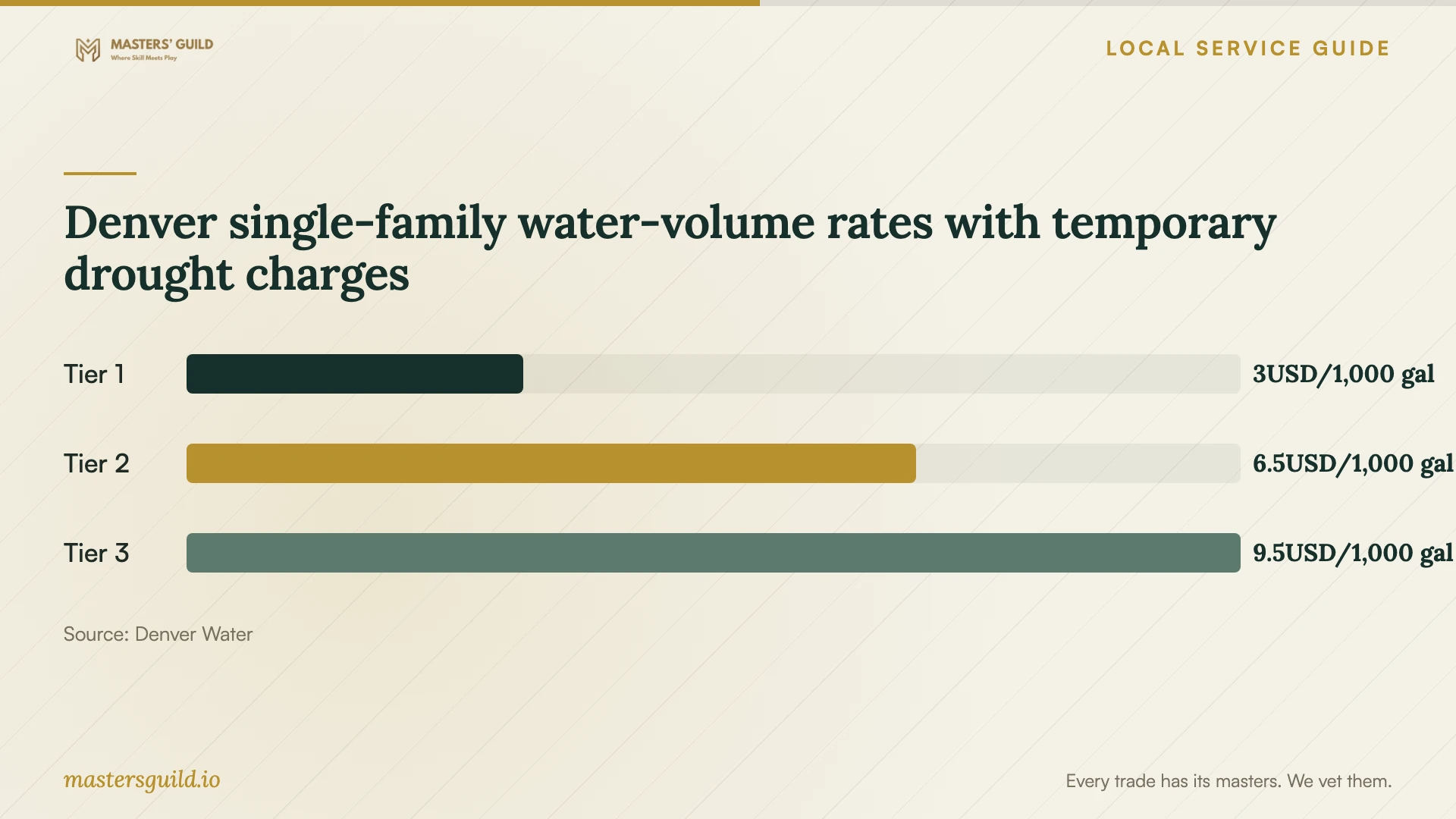
Denver single-family water-volume rates with temporary drought charges
Local details that affect your job
Exterior exhaust work on a historic property
If your ventilation plan includes exterior work on an individual landmark or a building within a historic district, Denver requires Landmark Preservation review of the quick-permit application. Ask the contractor to identify the exterior outlet location before scheduling installation. The city requests street and work-area photos, a Landmark checklist and relevant product information. [1]
Condo toilet rebate applications
Denver Water allows eligible condo and homeowners association customers to apply for toilet rebates. If your community handles the water account, contact the community manager for the account number before applying. Coordinate the purchase documentation with the remodeler so you can meet the 90-day application deadline. [2]
Check the project record
Denver’s ePermit center provides permit-record searches, plan-review status and inspection scheduling. Ask for the permit numbers and check the records for your project. The center also provides contractor-license application and renewal services; a permit record alone does not assess a contractor’s workmanship. [4]
Match the scope to the next planning step
| Your proposed work | Ask before accepting the bid |
|---|---|
| Paint, hardware and finish changes | Define preparation and exclusions; confirm whether any associated work needs permits. |
| Replace a shower, tub, sink or toilet | Denver lists these fixtures under plumbing quick permits. Ask the contractor to confirm the full scope’s eligibility. |
| Move walls or change structural framing | Denver excludes structural work from quick permits. Ask who will arrange the required review. |
| Add an exterior exhaust outlet on a landmark property | Ask about Landmark Preservation review for exterior quick-permit work. |
| Purchase a replacement toilet | Check Denver Water’s qualifying model list and assign responsibility for the rebate application. |
Your hiring checklist
- Give each bidder the same fixture list and proposed layout.
- Request written shower preparation and waterproofing specifications.
- Ask the contractor to confirm permit scope for your building type.
- Review exclusions, allowances and change-order pricing before signing.
- Agree on bathroom access, water shutoffs and cleanup arrangements.
- Assign responsibility for toilet purchasing and rebate documentation.
- Request permit records, warranty terms and product information at handover.
Frequently Asked Questions
Does a quick permit mean my whole remodel avoids plan review?
No. Denver limits quick permits to specified trade work and excludes structural work. Ask your contractor to explain the permit route for the entire project, including any building work beyond the plumbing, electrical or mechanical scope. [1]
How much should I budget?
Request itemized bids for your actual layout, fixture choices and shower construction. Ask for optional work as separate prices and agree on how the contractor will price hidden repairs. The evidence here does not establish a local remodeling price range.
Does any WaterSense toilet qualify for the rebate?
No. Denver Water specifies qualifying models averaging 0.8 gallon per flush or less. Customer and purchase rules also apply. Verify the model before buying, retain the paid receipt and submit the application within 90 days of purchase. [2]
Can I use the water-rate chart to estimate fixture savings?
The chart shows published water-volume charges for single-family customers inside Denver. To estimate a bill change, you would need your actual reduction in consumption and billing tier. The rates do not establish a toilet’s annual savings or a remodel’s payback. [3]
Sources and scope
This guide combines the sources below with practical planning guidance. Figures apply to the stated geography and period; request a written quote for your property.