
Local service guide
Appliance installation in Denver, CO
Appliance installation in Denver starts with confirming whether your new model fits the space and existing connections. Send the installer the model number and photos before booking, and ask who will handle plumbing, electrical work, gas connections, permits, and testing. Denver lists appliances, dishwashers, washers, gas piping, and range hoods under different trade permit scopes, so have the installer confirm the permit path for your exact work before delivery. [1]
Choose the installer around the connections
Describe the appliance and the work you expect. For a dishwasher, send photos of the opening, under-sink connections, and power connection. For laundry equipment, include the water valves, drain, outlet, and dryer vent. For a refrigerator with an ice maker, show the water connection. Ask the installer to review these photos against the manufacturer's installation instructions.
Ask who will complete each part of the job and what credentials they hold for that work. If you need a new circuit, relocated water connection, gas-piping change, or altered exhaust route, include that work in the quote. Ask the installer to identify any work that requires another trade and arrange the sequence before you choose a delivery date.
Confirm the Denver permit route
Denver's plumbing quick-permit list includes dishwashers, washers, garbage disposals, and gas piping outlets. Its mechanical list for single-family and duplex structures includes gas piping, range hoods, and exhaust systems. Its electrical list for those structures includes appliances and wiring, with eligibility limited to single-phase utility services rated at 400 amps or less. Ask which categories apply to your proposed installation. [1]
Denver directs applicants to E-permits, where they select the appropriate trade permit under Quick Permits. The city defines Repair/Replace as a project whose only scope is equipment repair or replacement. It uses Alteration/Tenant Finish for renovations in existing buildings or added equipment serving an existing building. Ask the contractor to describe the whole project when selecting the application category. [1]
Confirm any claimed exemption with Community Planning and Development. The quick-permit page points readers to Denver Building and Fire Code Section 130.3 for exempted work; it does not establish that every hookup-ready appliance swap needs no permit. For permitting questions, the city lists 720-865-2720 and [email protected]. [1]
Compare quotes for the same work
Ask each installer to quote the same model, location, and connection work. Have them itemize labor, connection parts, removal, disposal, delivery handling, and any cabinet or countertop changes. Ask whether the price includes securing the appliance, leveling it, and running the manufacturer's startup checks. Get written terms for extra work discovered after the old unit comes out.
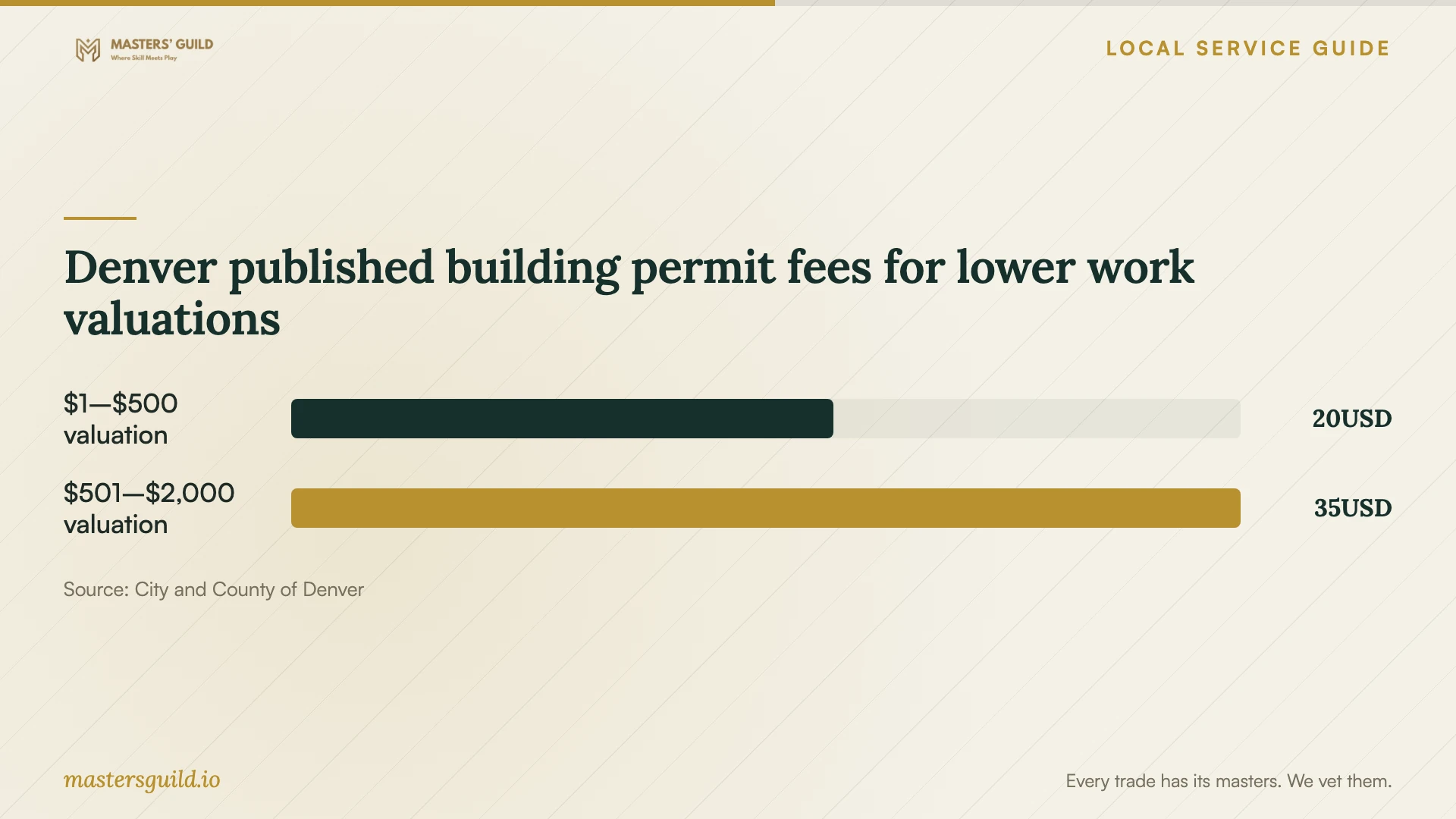
Treat city permit charges as a separate budget item. Denver publishes a building permit fee schedule based on work valuation, but those figures do not establish a flat appliance-installation permit charge. Ask the contractor to identify the applicable permit and explain the fee allowance in your quote. Denver states that permit fees cover customary inspections and charges for certain additional inspections. [2]
Compare the final scope as well as the total. A quote that omits water-line disconnection, haul-away, or a required trade visit leaves you with work to arrange. Ask who schedules inspections, who returns to address installation problems, and what completion records you will receive.
Prepare the delivery and test the installation
Measure the appliance opening and the delivery route, including doorways, turns, and stairs. Check the model's required clearance and door swing. Tell the crew about parking, loading access, elevator reservations, and building work-hour rules. Confirm who disconnects the old appliance and whether delivery and installation happen during the same visit.
Ask the installer to demonstrate the completed setup before leaving. Follow the model's instructions for startup and testing, including checking water connections during operation, confirming drainage, and reviewing vent connections where applicable. Keep the installation instructions, invoice, and any permit records together. Ask how to report a leak or operating problem after the visit.
Denver published building permit fees for lower work valuations
Local details that affect your job
A condo installation needs a building-specific permit check
Denver gives multifamily and commercial electrical work a narrower quick-permit list than single-family and duplex work. One eligible category covers fewer than 10 new circuits, each no more than 20 amps at 120 or 277 volts, with single-pole circuits. Other appliance installations outside the listed categories require the plan-review route. If your condo project adds a 240-volt circuit, ask the electrician to confirm the application route before scheduling installation. [1]
Refrigerator recycling can change your removal plan
Xcel Energy's program accepts qualifying refrigerators and freezers from Colorado residential electric customers who own the appliance. Units must work, hold 10 to 30 cubic feet, and have a manufacture year of 2021 or earlier. The program lists a $50 rebate per eligible appliance and a limit of four per customer per calendar year. Arrange water-line disconnection before indoor pickup, empty and clean the unit, and clear the removal path. Crews require elevator access above the second floor. Basement pickup has additional restrictions: dedicated refrigerators, freezers, and refrigerators with a freezer on top qualify; customers must move other types to the main floor. [3]
Plan the next step around your installation
| Situation | Next step | Question to resolve |
|---|---|---|
| Replacement using existing connections | Send photos and the model instructions for review. | Does the quoted scope cover disconnection, hookup, testing, and removal? |
| Dishwasher or washer plumbing work | Ask the contractor about Denver's plumbing quick-permit route. | Who applies for the permit and handles inspections? |
| New electrical connection in a condo | Have the electrician check multifamily electrical eligibility. | Does the proposed circuit qualify for a quick permit or need plan review? |
| Gas piping or range-hood changes in a house | Ask the contractor to check the mechanical permit scope. | Does the quote include piping or exhaust work as well as appliance placement? |
| Removal of a working refrigerator | Check Xcel program eligibility before buying haul-away. | Does the unit meet size, manufacture-year, ownership, and pickup-access requirements? |
Your hiring checklist
- Send the installer the model number, installation instructions, and photos of existing connections.
- Measure the opening, clearance, door swing, and delivery route.
- Describe any planned changes to wiring, water lines, gas piping, cabinets, or exhaust.
- Confirm the permit route and who handles applications and inspections.
- Get an itemized quote with written terms for extra work.
- Assign old-appliance disconnection and removal to a named person or crew.
- Arrange building access and ask for a startup demonstration before the crew leaves.
Frequently Asked Questions
Does a quick permit mean I can skip permitting?
No. Denver defines quick permits as permits for specified trade work that can proceed without plan review. Ask the contractor to confirm whether your scope needs a permit or qualifies as exempted work. [1]
Can I use the same permit assumptions for a house and a condo?
Have the contractor check your building type. Denver publishes separate electrical quick-permit eligibility lists for single-family and duplex structures and for multifamily and commercial structures. A proposed connection may follow a different route in a condo. [1]
Will Xcel recycling crews disconnect my refrigerator's water line?
Arrange that work before pickup. Xcel's program requires customers to have indoor appliances disconnected from the water line, empty, free of food and mold, and accessible through a clear removal path. [3]
What should I ask before accepting an installation quote?
Ask who handles each connection, what parts the price includes, how the crew handles unexpected work, and who removes the old unit. Request the testing procedure and written terms for a return visit if you find an installation problem.
Sources and scope
This guide combines the sources below with practical planning guidance. Figures apply to the stated geography and period; request a written quote for your property.