
Local service guide
Duct cleaning in Dallas, TX: Plan and Compare
Arrange duct cleaning in Dallas by requesting evidence of contamination and written estimates that identify the components included and the total with tax. EPA says to consider cleaning for substantial visible mold inside hard-surface ducts or on other system components, duct infestations, or ducts clogged with excessive dust and debris or releasing particles through supply registers. Before approving added HVAC changes, confirm contractor credentials and Dallas permit requirements. [1] [2] [3] [4]
Decide whether cleaning addresses your problem
Have the inspector show you the affected locations before discussing a cleaning package. EPA identifies substantial visible mold inside hard-surface ducts or on other heating and cooling components, ducts infested with rodents or insects, and ducts clogged with excessive dust and debris or releasing particles through supply registers as reasons to consider cleaning. Request photographs and identify which supply ducts, return ducts or equipment components need attention. [1]
Treat suspected mold as a finding that needs confirmation. EPA says an expert must identify mold and may need laboratory analysis. Have a qualified heating and cooling contractor remove and replace wet or moldy duct insulation. Correct the moisture source before cleaning or replacement; EPA warns that growth will recur if you leave the cause unresolved. [1]
EPA says duct cleaning has not been shown to prevent health problems and finds little evidence that cleaning ducts alone improves system efficiency. Discuss unexplained symptoms with your doctor. For dust complaints, consider other indoor particle sources alongside the inspection findings rather than accepting a promise of allergy relief. [1]
Request a written scope for the system
List the heating and cooling systems you want inspected. Have each bidder identify supply and return ducts, registers, grilles, the air handler, blower, coils and drain pans, with inclusions and exclusions beside each item. EPA warns that leaving a contaminated component uncleaned can recontaminate the system. Agree on who will handle any component outside the cleaner’s qualifications. [1]
Have the crew explain access, debris collection and protection of furnishings. EPA recommends vacuum equipment that exhausts particles outdoors, or HEPA vacuum equipment if the exhaust stays indoors. The contractor should identify your duct materials and choose suitable cleaning methods; EPA specifies soft-bristled brushes for fiberglass duct board and fiberglass-lined metal ducts. [1]
Require separate approval for chemical treatments. Before accepting a biocide, review the product label, its approved use and the contractor’s explanation of why physical cleaning and moisture control will not resolve the problem. EPA cautions about these treatments and advises against routine coatings that encapsulate contaminants inside ducts. [1]
Compare the complete invoice
The Texas Comptroller lists air-duct cleaning among taxable cleaning services and directs providers to collect state tax plus applicable local taxes. Request an itemized estimate showing cleaning, access work, optional treatments, repairs and tax. Have the provider explain the tax treatment of each item when the visit combines different services. [2]
Compare the written scope before comparing totals. For a vent-based offer, ask whether the price includes returns and equipment components. Establish whether the contractor charges for each system, how it handles inaccessible sections and which discoveries could lead to extra work. Require your approval before added charges.
Obtain property-specific cleaning estimates. Give bidders photographs, system counts and access information so they can price the work you intend to authorize. Request a revised written total if an inspection changes the scope.
Plan access and time without cooling
Agree on the expected work time and HVAC shutdown period before booking. Share access instructions for the air handler, attic hatch and occupied rooms. Move fragile items away from registers, clear the crew’s route and arrange a place for pets. Tell the contractor if anyone in your household needs a shorter cooling interruption.
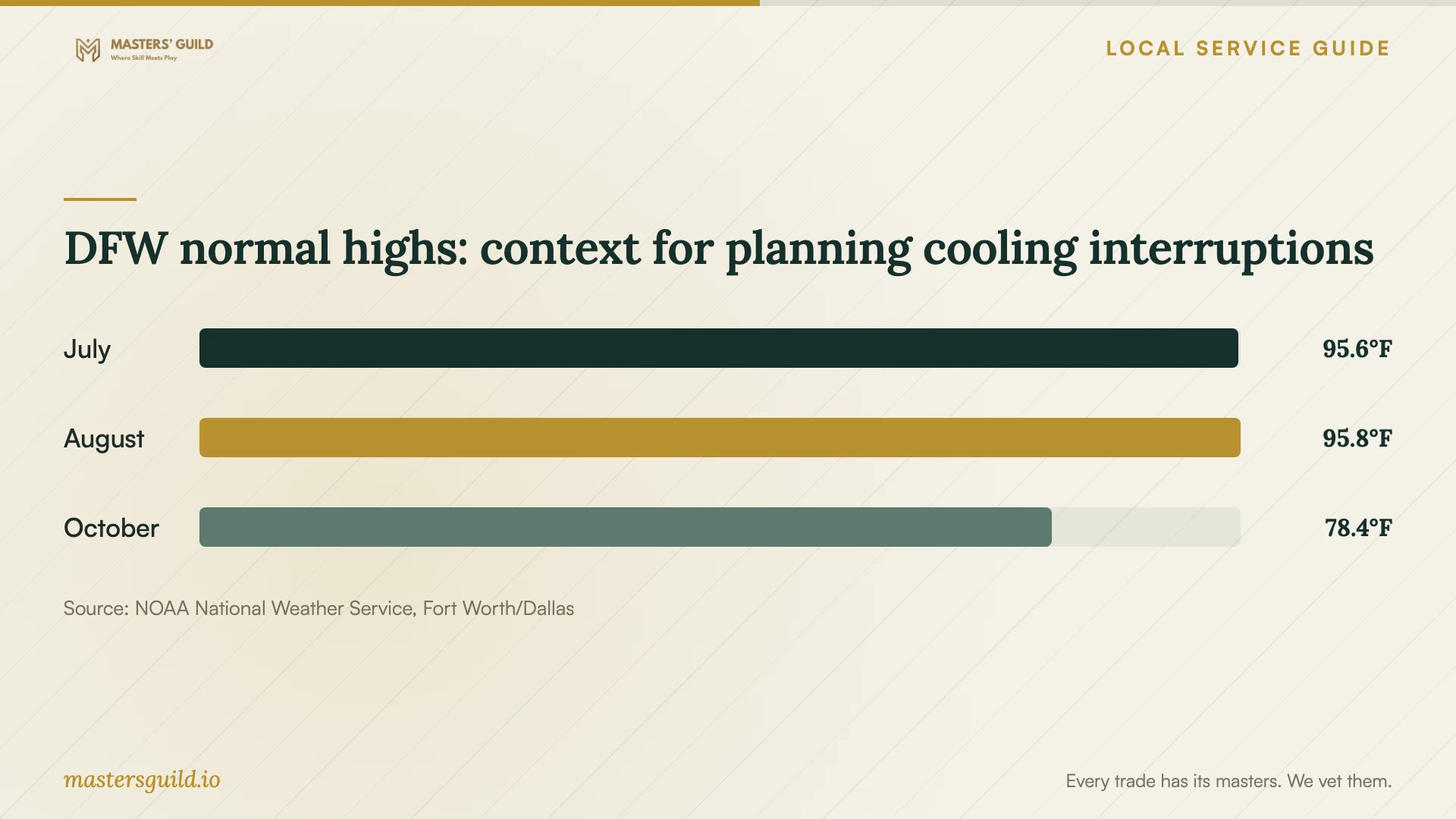
The National Weather Service’s DFW regional record gives 1991–2020 normal high temperatures of 95.6°F in July, 95.8°F in August and 78.4°F in October. Use this context to discuss cooling interruptions, then check the appointment-day forecast before settling on a shutdown plan. These historical temperatures do not establish a cleaning interval. [5]
For a fuel-burning furnace, arrange inspection and service before the heating season as EPA advises. Keep that maintenance task distinct from deciding whether the ducts need cleaning. EPA does not recommend routine duct cleaning; it advises cleaning only as needed. [1]
Check the result with the crew
Agree on completion evidence before work begins. EPA identifies visual inspection as the best way to verify system cleanliness and notes that providers may use remote photography. Request views of the same locations before and after cleaning, including the equipment components in your agreement. [1]
Walk through the work with the crew. Have them demonstrate clean registers and accessible components, reattach grilles, and seal and reinsulate access holes they created. EPA’s completion checklist also calls for checking system operation in heating and cooling modes after cleaning. [1]
Keep the scope, invoice and photographs together. Record sections the crew could not reach and agree on a written next step. To prevent contamination, EPA advises following the equipment manufacturer’s filter recommendations, changing filters regularly and correcting leaks, standing water and drainage problems. [1]
DFW normal highs: context for planning cooling interruptions
Local details that affect your job
Include Texas cleaning tax in the bid total
Texas tax guidance explicitly includes air-duct cleaning among taxable services for homes and other buildings. Ask each Dallas bidder for a total that includes state and applicable local taxes. If the quote combines cleaning and repairs, request itemized charges and an explanation of their tax treatment before comparing offers. [2]
Confirm Dallas requirements before HVAC changes
Dallas identifies HVAC installation, replacement and modification as mechanical-permit work, with a registered Air Conditioning Contractor responsible for the permit. If an inspection leads to proposed duct replacement or another HVAC change, call Planning & Development at (214) 948-4480 to confirm the requirements for your exact scope. Agree on who will obtain the permit and arrange inspections before authorizing the added work. [3]
Verify credentials for the added trade work
TDLR says contractors installing, repairing or maintaining HVAC-related systems must hold its license, and ACR companies must employ an ACR contractor at each permanent location. Verify the contractor through TDLR’s license search for that work. For Dallas mechanical-permit work, also use DallasNow: select Contractor Registration, then Search Applications, and search the business name or registration number. Confirm Active status, the correct trade and the expiration date. [3] [4]
Choose the next step from the inspection findings
| Finding | Next step | Question for the provider |
|---|---|---|
| Dust on a return grille | Vacuum or remove and clean the grille; inspect before ordering whole-system cleaning. | Can you show contamination beyond the grille? |
| Ducts clogged with excessive debris or releasing particles through supply registers | Consider cleaning and correct the underlying cause before the work. | Which ducts and equipment components need attention? |
| Suspected substantial mold on hard surfaces | Have an expert identify the substance, correct moisture and consider cleaning. | Do you need laboratory confirmation, and who will address the moisture? |
| Wet or moldy duct insulation | Have a qualified heating and cooling contractor remove and replace it. | Who will replace the material and correct the cause? |
| Duct infestation | Correct the underlying cause before cleaning the affected system. | How will you address the infestation and prevent recurrence? |
| Proposed duct replacement or HVAC modification | Confirm Dallas mechanical-permit requirements and contractor credentials. | Who will obtain the permit and arrange inspections? |
Your hiring checklist
- Describe the problem and request photographs of the affected locations.
- Give each bidder the same system count and requested scope.
- Request an itemized total with applicable taxes and written exclusions.
- Discuss duct materials, debris collection and protection of furnishings.
- Require separate approval for chemicals, repairs and replacements.
- Agree on access arrangements and the expected HVAC shutdown period.
- Confirm credentials and permit responsibility before approving HVAC changes.
- Review completion photographs and agree on next steps for inaccessible sections.
Frequently Asked Questions
How often should I have my ducts cleaned?
EPA advises cleaning as needed rather than on a routine schedule. Consider cleaning for its specified contamination findings: substantial visible mold on hard-surface ducts or other system components, duct infestations, or ducts clogged with excessive debris or releasing particles through supply registers. Maintain filters and equipment on a separate plan. [1]
Do I need a Dallas permit for the work?
Confirm the requirements with Dallas Planning & Development for your exact scope. Dallas requires mechanical permits for installing, replacing or modifying HVAC systems. If your cleaning quote includes those changes, resolve permit responsibility before approving them. [3]
Should the cleaning estimate include sales tax?
Request a tax-inclusive total. The Texas Comptroller lists air-duct cleaning as taxable and directs providers to collect state and applicable local taxes. For a combined cleaning and repair visit, ask the provider to itemize and explain the charges. [2]
Does EPA certify duct-cleaning companies?
EPA does not certify, endorse or approve duct-cleaning companies. Check relevant experience, references and proposed procedures. Verify TDLR credentials for proposed HVAC installation, repair or maintenance, and Dallas registration for mechanical-permit work. [1] [3] [4]
Sources and scope
This guide combines the sources below with practical planning guidance. Figures apply to the stated geography and period; request a written quote for your property.