
Local service guide
Dallas carpet cleaning: quotes and preparation
Arrange carpet cleaning in Dallas by getting a written quote for the rooms, treatments, furniture moving, access charges, and drying plan. Compare final totals: Texas generally taxes residential carpet cleaning and the related treatments listed by the Comptroller. Disclose soaked padding, leaks, or visible mold before booking so the provider can assess whether you need restoration or mold work. [1] [2] [4]
Compare written quotes for the same work
Send each cleaner room dimensions and photographs of traffic lanes, stains, and damaged areas. Include stairs, closets, and hallways you want cleaned. Identify pet accidents and products you have applied. Ask the provider to explain how they measure chargeable areas and count oversized rooms.
Request separate prices for base carpet cleaning and optional treatments. Ask about minimum charges, vacuuming, furniture moving, parking or access charges, and follow-up visits. Agree on who can approve extra work after inspection. Compare the final payable totals for the same scope.
The Texas Comptroller classifies residential carpet cleaning, protective chemical treatments, and odor-control chemical applications as taxable, subject to applicable exemptions. Its guidance specifies 6.25 percent state sales tax plus applicable local tax on taxable charges. Ask the provider to identify the tax treatment for your job. [1]
Agree on treatment limits and room access
Share your carpet care instructions or warranty requirements. Ask the cleaner to explain their proposed method and its suitability for the material. If you do not know the fiber, request an assessment before approving treatment. For delicate rugs, ask whether the provider handles that material and how they will test the proposed treatment.
Describe the result you want: cleaning traffic lanes, treating a known spill, or investigating an odor. During the walkthrough, discuss which marks the technician expects to remain. Record existing damage and agree on the areas they will treat before work starts.
Plan around household access. Get the expected time on site, a drying estimate for your home, and instructions for walking on the carpet and returning furniture. Tell the cleaner if you need a bedroom that evening. Keep a contact number and instructions for reporting dampness that lasts beyond their estimate.
Arrange restoration help for soaked carpet
Tell the contractor when the carpet became wet, where the water came from, and whether the leak continues. EPA's national guidance says that, in most cases, drying wet or damp items within 24–48 hours prevents mold growth. This describes water-damage prevention rather than routine cleaning drying time. Seek prompt restoration help for soaked carpet. [4]
Have the contractor explain how they will inspect and dry the carpet backing, padding, and floor beneath them. EPA explains that wet vacuums alone will not dry carpets and that affected carpet and padding need drying. Discuss whether the contractor needs to lift the carpet and how they will check materials before reinstallation. [4]
EPA limits this guidance to clean-water damage. For suspected sewage or chemical or biological contamination, consult a professional with relevant restoration experience. EPA cautions against using fans until someone has determined that the water is clean or sanitary. [4]
Investigate mold and recurring musty odors
TDLR advises investigating visible mold or a musty odor and correcting the underlying moisture problem. It explains that mold is difficult to clean from porous materials such as carpet and advises removing and discarding those moldy materials. Request an assessment before approving deodorizing or a proposal to leave moldy carpet in place. [2]
Tell the assessor about earlier leaks, previous cleaning, and areas where the odor returns. Discuss the proposed scope, the moisture correction, and how they will decide which materials can remain. Keep the assessment and any remediation proposal with your property records.
Prepare the home and review the result
Clear small belongings from the work areas. Confirm who moves heavy furniture and handles breakables. Arrange somewhere for children and pets during the visit. If your building controls parking, elevators, or service access, confirm the arrangements with management and pass them to the cleaner.
Walk through the completed rooms with the technician. Compare the invoice with the approved scope, discuss remaining marks, and request written drying instructions. Photograph concerns you want the provider to revisit and agree on the next step before they leave.
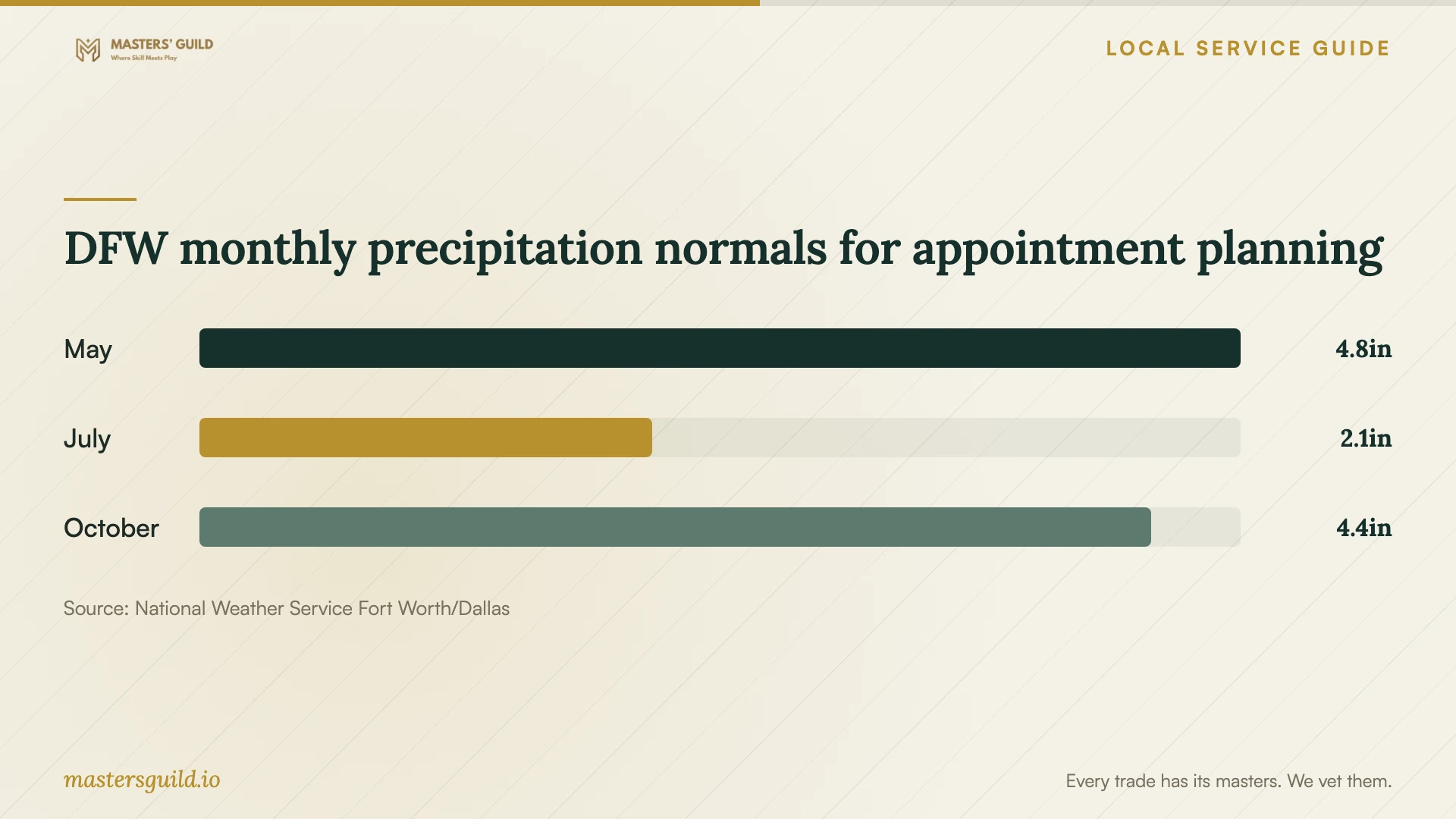
DFW monthly precipitation normals for appointment planning
Local details that affect your job
Texas invoice rules for mixed cleaning and restoration
For a Dallas home, ask the contractor to distinguish residential water extraction and carpet repairs from carpet cleaning and related treatments. The Comptroller lists residential extraction and repairs as nontaxable; carpet cleaning, deodorizing, protective chemical treatments, and disposal of water-ruined carpet or pad are generally taxable. The agency presumes a mixed lump-sum charge taxable when the taxable portion exceeds 5 percent. Request distinct charges at billing; the guidance also allows later documentation establishing the taxable percentage. [1]
Check the disaster exemption before accepting tax charges
The Comptroller provides an exemption for qualifying disaster-damaged carpet-cleaning labor when the Governor or President has declared the area a disaster area. The provider must bill labor separately from materials, and the customer must supply an exemption certificate stating that the disaster damaged the property. Materials and waste removal remain taxable. If your cleaning follows disaster damage, ask the provider to establish eligibility and document the exemption before billing. [1]
Texas mold credentials require a property-specific check
TDLR regulates mold assessment and remediation with exemptions that depend on the circumstances. Ask which license or exemption applies to your property rather than treating 25 square feet as a universal licensing threshold. A licensed remediation contractor hired for a smaller project must still follow the mold rules, including a work plan based on a licensed consultant's protocol. Licensed assessors and remediators must provide the Consumer Mold Information Sheet before mold-related activity begins. [2]
Plan entry protection using regional precipitation context
The National Weather Service reports an October precipitation normal of 4.37 inches for Dallas/Fort Worth over 1991–2020, compared with July's 2.08 inches. For an October appointment, check the forecast and agree on entry-route protection if precipitation is expected. These regional averages do not predict conditions at your home or establish a carpet drying time. [3]
Choose the next step for your carpet
| Situation | Next step | Confirm before approving |
|---|---|---|
| Dry carpet with soil or stains | Request a routine carpet-cleaning assessment | Method, treatment limits, furniture moving, and final total with applicable tax treatment |
| Carpet soaked by clean water | Seek prompt water-damage assessment | Drying of carpet, backing, pad, and underlying floor |
| Suspected contaminated water | Consult a contractor experienced in contaminated-water restoration | Establish whether water is clean or sanitary before using fans |
| Visible mold on carpet | Request a moisture and mold assessment | Removal needs and applicable Texas licensing rules or exemptions |
| Residential extraction plus carpet cleaning | Request distinct invoice charges | Nontaxable residential extraction and repairs; generally taxable carpet cleaning, subject to qualifying exemptions |
| Carpet cleaning after disaster damage | Ask the provider to establish exemption eligibility | Declared disaster area, separate labor billing, customer exemption certificate; taxable materials and waste removal |
Your hiring checklist
- Send measurements, photographs, carpet care instructions, and stain or odor details.
- Disclose leaks, soaked padding, visible mold, and the source of water.
- Request comparable written scopes and final totals with applicable tax or exemption treatment.
- Confirm the proposed method, treatment tests, and expected stain-removal limits.
- Arrange parking, building access, furniture moving, and approval of additional charges.
- Get drying instructions and a contact for unresolved dampness or stains.
- Review the completed rooms and approved invoice with the technician.
Frequently Asked Questions
How much should I budget for carpet cleaning?
Get written quotes for the same measured areas and requested treatments. Ask about minimum charges, stairs, furniture moving, access charges, and optional treatments. Compare final payable totals and confirm who can approve additional work after inspection.
Does Texas charge tax on carpet cleaning in my home?
Generally, yes: the Comptroller specifies 6.25 percent state sales tax plus applicable local tax on taxable carpet-cleaning charges. Residential water extraction and carpet repairs are nontaxable. Qualifying disaster-damaged carpet-cleaning labor can be exempt with a declared disaster area, separate labor billing, and a customer exemption certificate. Materials and waste removal remain taxable. [1]
How long will my carpet take to dry?
Ask the cleaner for an estimate based on their method and your home's conditions. Request instructions for returning furniture and reporting persistent dampness. EPA's 24–48-hour guidance concerns preventing mold after water damage; it does not establish routine cleaning drying times. [4]
Can a cleaner leave moldy carpet in place?
Request an assessment before approving treatment. TDLR advises removing and discarding moldy porous carpet and correcting the moisture problem. Ask which Texas mold license or exemption applies to the proposed assessment and remediation. [2]
Sources and scope
This guide combines the sources below with practical planning guidance. Figures apply to the stated geography and period; request a written quote for your property.