
Local service guide
Yard Cleanup in Corpus Christi, TX: Plan Disposal
Arrange Yard Cleanup by choosing whether the crew will stage debris for scheduled city collection or haul it away before leaving. Ask for a written scope covering the areas to clear, bagging, debris separation, and disposal. Corpus Christi allows heavy-brush set-out only during authorized periods, so check your address’s collection section before agreeing to curbside staging. [1]
Define the cleanup before asking for a quote
Send photographs of the front yard, back yard, side yards, and existing debris piles. List the work you want: litter pickup, leaf raking, weed removal, mowing, shrub trimming, or removal of fallen branches. Mark plants you want to keep and identify any items you want the crew to leave. Ask the contractor to inspect areas that photographs do not show before confirming the price.
Treat cutting, gathering, and disposal as separate parts of the job. Request a written description of each part, including whether the crew supplies bags and loads a truck. Define the finish you expect, such as cleared beds, swept paths, and removal of the agreed debris. Ask for separate approval before the crew adds tree work, chemical treatments, or fence removal.
Choose scheduled collection or immediate hauling
Use scheduled city collection only after checking your address in the city’s interactive map or CC Recycles app. The city publishes section-specific set-out windows and begins collection the day after each window ends. Arrange the cleanup within the authorized period if you want the crew to place brush near the curb. [1]
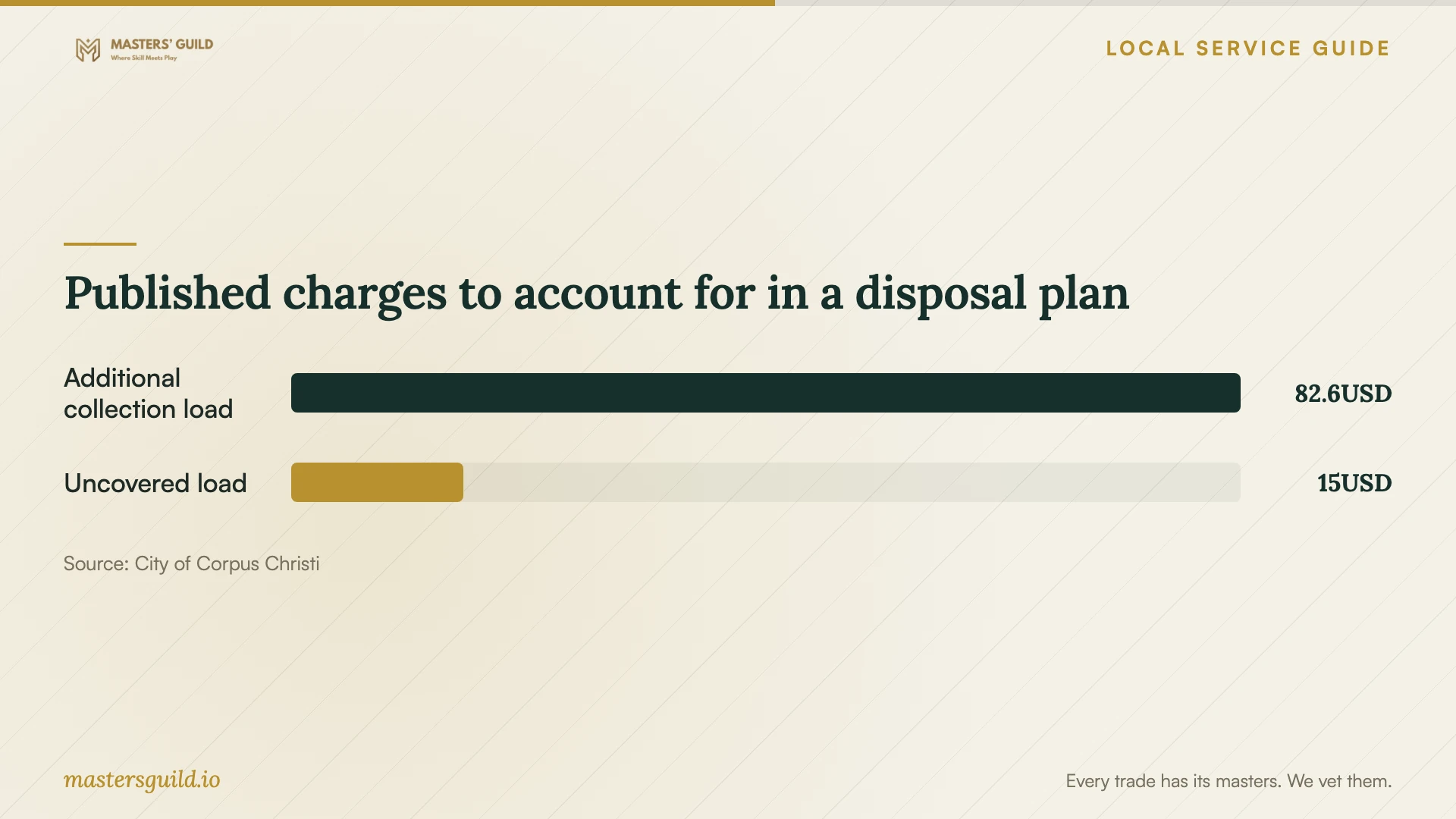
City rules cap each brush or bulky pile at 6 feet high, 10 feet long, and 6 feet deep. Customers receive one truckload of collection per scheduled event; the city charges $82.63 plus tax for each additional load. Ask the crew to assess the volume before you choose staging, and agree who will handle material beyond the planned amount. [1]
Request hauling when you need the debris gone by the job’s completion or cannot use the authorized set-out window. Have the contractor name the disposal destination and include transport, loading, disposal charges, and any extra trips in the quote. Ask for a disposal receipt when the crew finishes.
Separate materials before the crew arrives
The city accepts shrubs, tree limbs, tree trimmings, and bagged grass clippings, weeds, leaves, and mulch through heavy-brush collection. Keep those materials separate from bulky household items. The city prohibits construction materials, including lumber and fencing, along with dirt, sand, rocks, and household hazardous waste in these collections. [1]
Walk the yard with the contractor or send close-up photographs of mixed piles. Identify paint containers, pesticides, old fencing, and rubble before anyone loads them. Ask the contractor to explain how each material will leave the property. Avoid approving a single undifferentiated pile when the disposal routes differ.
For a resident planning a self-haul, J.C. Elliott Transfer Station accepts household brush and lists hours of Monday through Saturday, 8 a.m. to 5 p.m. The city tells visitors to bring a valid driver’s license showing an address within city limits. Confirm access and charges for your load before traveling, particularly if a paid contractor will transport it. [3]
Plan an overgrown-property cleanup around the required result
The city’s Code Compliance guidance says owners and tenants share responsibility for premises care. Its Lots & Sidewalks guidance requires lots and parcels to remain under 12 inches and free of diseased trees or plants. The city also prohibits outdoor accumulation of litter, solid waste, inoperative appliances, furniture, and other unsightly or unsanitary matter. [4]
If you have a code notice, share it with the contractor before accepting the scope. Ask the issuing office to clarify the required correction and deadline. Photograph the property before work and after completion, and keep the invoice. Arrange a completion date that leaves time to address anything the crew misses.
Ask for proof of insurance and a written agreement identifying the contractor, total price, payment terms, and disposal responsibility. Before the visit, clear the access route, secure pets, and point out irrigation heads or other features hidden by growth. At the final walkthrough, check the agreed areas and confirm the crew removed or staged all included debris.
Published charges to account for in a disposal plan
Local details that affect your job
Curbside placement has specific restrictions
Corpus Christi directs residents to place brush and bulky items in the usual trash collection location during authorized periods. Keep piles out of the street, gutter, sidewalk, and drainage ditch, and out of a side yard adjoining an arterial or collector street. Confirm the staging location with the crew before work begins; call 311 if your frontage leaves no clear compliant location. [1]
The free container requires approval and driveway access
For properties that do not meet code standards, the Neighborhood Clean-up Container program requires an application and approval before delivery. The city schedules applicants in order of application, delivers Friday afternoon, and retrieves Monday morning; delivery dates may change. Keep the driveway clear and leave the container where the driver places it. Confirm acceptance of your debris before scheduling labor: the program excludes appliances, tires, hazardous waste, and construction materials, and charges applicants for prohibited items. [2]
Choose the disposal plan for your cleanup
| Your situation | Plan to discuss | Confirm before booking |
|---|---|---|
| Brush cleanup during your authorized set-out window | Crew gathers and stages accepted brush for city collection | Address section, compliant placement, pile dimensions, and load allowance |
| You need debris removed at job completion | Contractor loads and hauls the agreed materials | Disposal destination, included trips, charges, and receipt |
| Property does not meet code standards | Apply for the city cleanup container and coordinate labor after approval | Accepted materials, assigned delivery date, clear driveway, and Monday retrieval |
| You plan to transport household brush yourself | Check J.C. Elliott Transfer Station access before loading | City-address identification, operating hours, charges, and a secured covered load |
Your hiring checklist
- Photograph the work areas and list debris types before requesting quotes.
- Mark plants and belongings to keep, plus hidden irrigation fixtures.
- Choose curbside staging, contractor hauling, or an approved container.
- Confirm the collection window or container delivery before booking dependent labor.
- Get the cleanup scope, disposal responsibility, and extra-work approval terms in writing.
- Clear gates and access routes, and secure pets before arrival.
- Walk the completed yard with the crew and retain photographs and disposal records.
Frequently Asked Questions
Can the crew leave brush at the curb whenever it finishes?
City rules allow heavy-brush set-out only during authorized periods for your collection section. Have the crew check the schedule and placement rules before staging. If the job falls outside that window, agree on another disposal plan. [1]
Can I put a small amount of yard waste in my garbage cart?
The city allows residents to bag yard waste and place it in garbage carts for regular collection. For a small cleanup, discuss that option before paying for a separate hauling trip. [1]
Does the free cleanup container accept everything in the yard?
The program excludes appliances, tires, household hazardous waste, construction materials, dead animals, and flammable or hazardous materials. The applicant must pay costs associated with prohibited items found in the container. Confirm your material list with the program before loading. [2]
How should I compare cleanup prices?
Ask each contractor to price the same areas and tasks, then identify bagging, loading, hauling, and disposal as included or excluded. For an hourly quote, request the crew size, expected hours, and a spending limit that requires your approval to exceed. Compare the complete scope before choosing.
Sources and scope
This guide combines the sources below with practical planning guidance. Figures apply to the stated geography and period; request a written quote for your property.