
Local service guide
Junk Removal in Corpus Christi, TX: Plan Your Pickup
For Junk Removal in Corpus Christi, check your city bulky-item set-out window before booking a crew. Consider a private hauler if you need indoor lifting or removal by a chosen deadline. Use municipal collection for eligible curbside items during your authorized period, and arrange a separate disposal route for chemicals and construction debris, which the city excludes from bulky pickup. [1]
Choose city collection, self-hauling or a crew
Start with an item list and your deadline. The city accepts furniture, mattresses, box springs, carpet and large household appliances through scheduled bulky collection. It also accepts up to four tires measuring 20 inches or smaller. If your items fit those categories, check the collection section for your address before arranging paid hauling. [1]
Consider self-hauling if you can load, secure and unload the items without risking injury. Ask a crew for a quote if you want help carrying furniture through the home, navigating stairs or clearing several rooms. Tell the crew which items need disassembly and whether you want a final sweep of the cleared area.
Do not treat the last set-out date as a guaranteed pickup appointment. City crews begin the following day and continue through the route. For a move-out or property handover, choose an arrangement that meets your deadline and confirm the removal date in writing. [1]
Prepare a quote the hauler can assess
Send photos of the full pile, individual large items and the route to the truck. Include stairs, narrow doors, gate widths, parking access and the distance from the items to the loading area. Identify what stays so the crew does not need to guess during a cleanout.
Ask whether the quote covers loading labor, disassembly, transport, disposal, taxes and cleanup. If the hauler prices by truck space, request the truck capacity and the volume included in your quote. Ask how the crew will handle additional items or a changed scope, and approve the total before loading begins.
Ask for proof of insurance and the company's waste-hauler permit details. The city publishes an application packet for becoming a permitted waste hauler. Ask the company to name its intended disposal facility and explain how it will handle any items that facility refuses. [2]
Separate renovation debris and household chemicals
Keep renovation debris out of your city bulky pile. The city prohibits lumber, fencing, roofing materials, concrete, brick, dirt and other listed construction materials in this collection. J.C. Elliott lists non-commercial construction materials among its accepted items, including lumber, plywood, sheetrock, roofing and remodeling waste, but excludes rock, concrete and brick from that category. [1] [2]
Call 311 before loading an uncertain material or arranging contractor delivery. Describe the material and whether it came from a homeowner project or commercial work. Do not assume the transfer station's residential acceptance rules apply to a hired hauler's load. [2] [3]
For household hazardous waste, the city limits each container to one gallon and allows up to five one-gallon paint containers. Keep materials in their original containers when possible, identify unknown contents and avoid mixing chemicals. The program excludes commercial waste, compressed gas cylinders, medical waste and other listed materials. [3]
Plan a trip to J.C. Elliott
J.C. Elliott Transfer Station sits at Highway 286 at Ayers, just south of Saratoga Boulevard. The city lists hours of Monday through Saturday, 8 a.m. to 5 p.m. Bring the required city-address identification. For double-axle trailers arriving after 4:30 p.m., station managers or supervisors decide whether to allow unloading. [2]
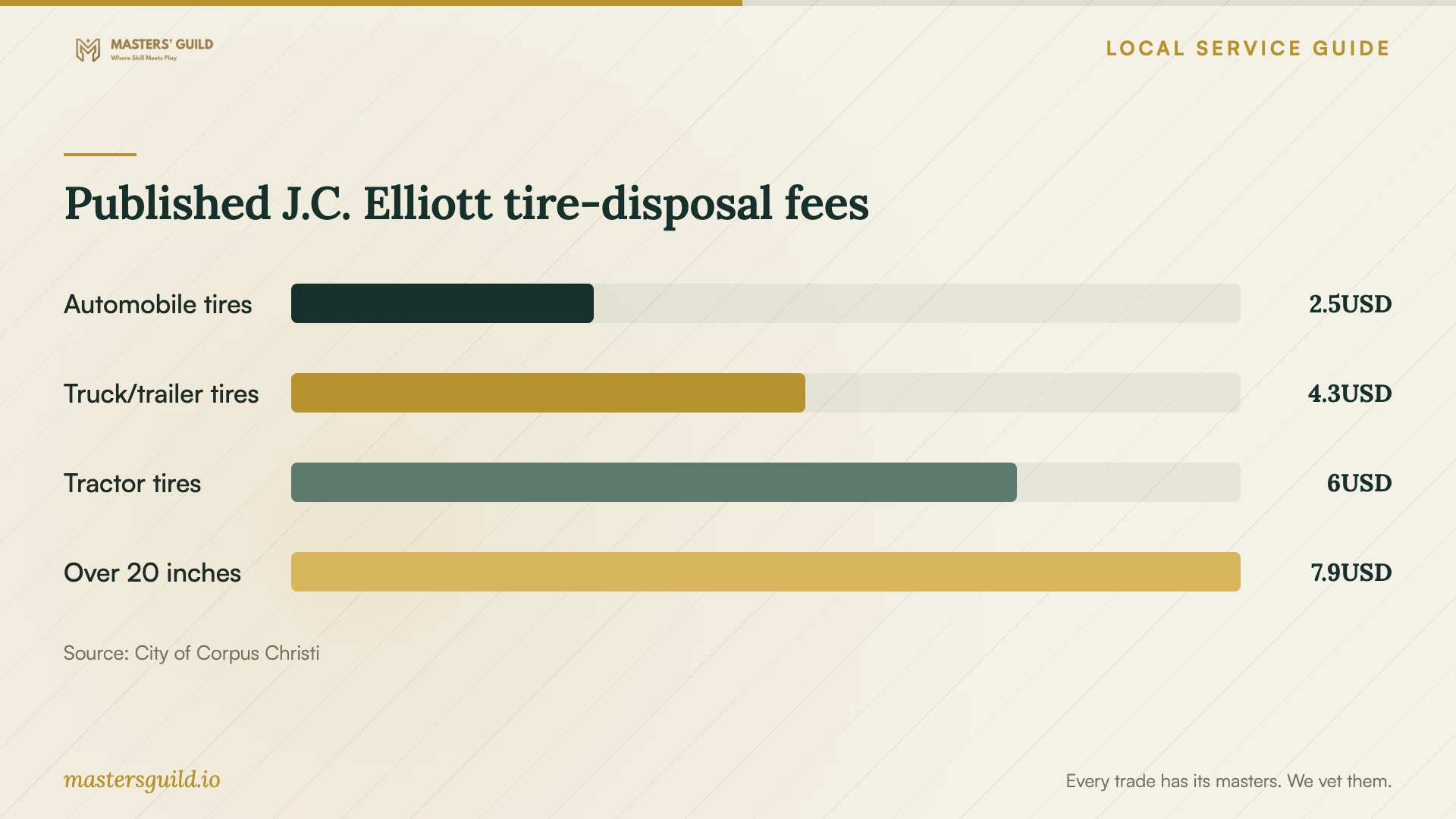
Secure and cover the load with a tarp before driving. The city states that compliance officers can issue citations for uncovered loads and that the landfill entrance may charge a $15 uncovered-load fee. Check acceptance and any applicable disposal charges before leaving; the published tire fees do not establish a total price for a mixed cleanout. [2]
Prepare the property for removal
For city collection, separate brush from bulky items and use the usual garbage collection location during the authorized set-out period. Keep the street, gutter, sidewalk and drainage ditch clear. The city also prohibits placement in a side yard adjoining an arterial or collector street. [1]
For a private crew, agree on a staging area before moving anything outside. Clear the carrying route, set aside valuables and label items you want to keep. Photograph the finished area and retain the invoice and any disposal documentation the hauler provides.
Published J.C. Elliott tire-disposal fees
Local details that affect your job
October set-out windows depend on your section
As of October 13, 2026, the city lists October 14 through 18 for Section 9-C, October 21 through 25 for Section 9-D, and October 28 through November 1 for Section 10-A. Use the city's address map to identify your section before setting items out. These dates authorize placement; crews start collection after each window ends. [1]
A code-related cleanout may qualify for a city container
If your property does not meet code standards, you can apply for the Neighborhood Clean-up Container program. The city requires approval, schedules applicants in order of application, delivers Friday afternoon and retrieves Monday morning. Clear the driveway for delivery and leave the container where the city places it. The program has no cost unless the load contains prohibited items, including appliances, tires, hazardous waste and construction materials. [4]
Choose a removal route for your load
| Your situation | Route to consider | Confirm before proceeding |
|---|---|---|
| Eligible furniture and a flexible deadline | Scheduled city bulky collection | Your address section, authorized set-out dates and pile limits |
| Indoor lifting or a fixed removal deadline | Private hauling crew | Accepted items, carrying work, final price and removal date |
| A manageable load you can transport | J.C. Elliott self-hauling | City-address identification, covered load and material acceptance |
| Leftover household paint or chemicals | Resident hazardous-waste drop-off | One-gallon container limit, paint quantity and excluded materials |
| Property that does not meet code standards | Neighborhood Clean-up Container application | Approval, clear driveway and prohibited-item restrictions |
Your hiring checklist
- List the items, quantities and removal deadline before requesting quotes.
- Check your address section and authorized city set-out window.
- Separate household chemicals, tires and renovation materials from ordinary furniture.
- Send photos of the items, stairs, doorways and truck access.
- Request an itemized total and agree on how scope changes require your approval.
- Ask for insurance, waste-hauler permit details and the intended disposal destination.
- Clear the carrying route and mark everything the crew should leave.
Frequently Asked Questions
Can I put a mattress or refrigerator out for city pickup?
The city lists mattresses and large household appliances as accepted bulky items. Use your authorized set-out window and follow placement and pile limits. For a refrigerator, confirm preparation requirements with 311 before moving it outside or arranging hauling. [1]
Does the city collect fencing or concrete with bulky items?
No. The bulky collection rules prohibit fencing, concrete and other listed construction materials. J.C. Elliott accepts specified non-commercial renovation debris, but its construction-material category excludes rock, concrete and brick. Confirm another disposal destination before loading those materials. [1] [2]
How much should I budget for a private hauler?
Request a written quote for your item list and access conditions. The city fees shown here cover specific municipal services and tire disposal; they do not establish private hauling prices. Ask the hauler to include labor, transport, disposal, taxes and any item-specific charges. [1] [2]
Can the free clean-up container take appliances and tires?
No. The Neighborhood Clean-up Container program prohibits appliances and tires, along with hazardous waste and construction materials. The city makes the applicant responsible for costs associated with prohibited items found in the container. [4]
Sources and scope
This guide combines the sources below with practical planning guidance. Figures apply to the stated geography and period; request a written quote for your property.