
Local service guide
Corpus Christi duct cleaning: hiring and planning
Arrange duct cleaning in Corpus Christi after a provider shows you contamination that warrants the work and gives you a written scope and total price. EPA recommends considering cleaning for substantial visible mold growth inside hard-surface ducts or on other heating and cooling components, pest infestation, or excessive dust and debris. Wet or moldy fiberglass duct material needs replacement. Before booking, identify who will correct moisture or pest entry and separate cleaning from proposed repairs. [1]
Decide whether you need cleaning or an inspection
Start by describing what you see: dust on a return grille, debris blowing from a supply register, water staining, or suspected growth inside the system. Request photographs of the affected area and its location. EPA distinguishes normal dusty return registers from substantial deposits inside ducts. [1]
If a cleaner reports mold, have them show you the material and identify the surface. EPA notes that appearance alone cannot confirm mold; an expert may need laboratory analysis. Substantial visible growth on hard-surface ducts or other system components can warrant cleaning, while wet or moldy fiberglass duct material requires replacement. Find out who will identify and correct the moisture source. [1]
Do not buy cleaning on a promise that it will prevent illness or reduce your cooling bill. EPA says duct cleaning has not been shown to prevent health problems and finds little evidence that cleaning ducts alone improves system efficiency. If someone in your household has unexplained symptoms, discuss them with a doctor rather than treating a cleaning quote as a diagnosis. [1]
Compare written scopes before comparing prices
EPA recommends written estimates from at least three providers. Give each company the same description of the problem and request an inspection before settling the scope. Compare the total job price, included components, access work, exclusions, and proposed treatments. Request separate prices for repairs so you can approve them on their own merits. [1]
Check whether the quote covers supply and return ducts, registers, grilles, the air handler, blower, coils, and drain pans. EPA describes cleaning as work on the heating and cooling system and warns that leaving a contaminated component untreated can contaminate the system again. Have the company identify who will handle each component and any work they exclude. [1]
Discuss how the crew will collect debris and protect your home. EPA recommends vacuum equipment that exhausts outdoors, or HEPA equipment when the vacuum exhausts indoors. Ask how workers will protect fiberglass lining and seal and reinsulate access holes. Request references from customers with similar duct materials. [1]
Request proof of liability insurance, the names of the people doing the work, and documentation of claimed credentials. EPA says it does not certify, endorse, or approve duct-cleaning companies. For proposed repairs or equipment work, have the provider identify the applicable licensing requirements before you sign. [1]
Resolve water damage before approving extra work
If the inspection finds standing water in a condensate pan, wet insulation, or moisture stains, request a cause-and-repair plan. EPA advises checking drainage, repairing leaks, and keeping ducts sealed and insulated in spaces such as attics. Correct the moisture source before cleaning so you address the conditions that caused contamination. [1]
After flood damage, have the provider distinguish cleanable surfaces from duct material that needs replacement. For a property subject to Corpus Christi floodplain requirements, contact the city's Floodplain Management Division before accepting a broader repair proposal. The city applies substantial-damage and substantial-improvement rules that can affect how you restore a building and locate mechanical equipment. [1] [3]
Treat a chemical treatment as a separate approval. Request the product label, intended use, duct material, and reason physical cleaning and moisture correction will not suffice. EPA cautions against routine chemical treatments and says it has no registered biocides for fiberglass duct board or fiberglass-lined ducts. [1]
Prepare for the visit and inspect the result
Before the appointment, clear access to the air handler and registers. Tell the crew about attic access, fragile ceiling finishes, pets, and rooms you need to keep available. Ask how long they expect the work to take and whether you will lose cooling during the visit. Agree on how they will request approval for additional work.
Request before-and-after photographs from the same locations, including supply and return sections. EPA recommends a visual inspection to verify cleanliness and asking the provider to show you each cleaned component. Before the crew leaves, review the agreed scope, check that workers have reattached registers, and have them demonstrate system operation. [1]
Choose a compatible filter
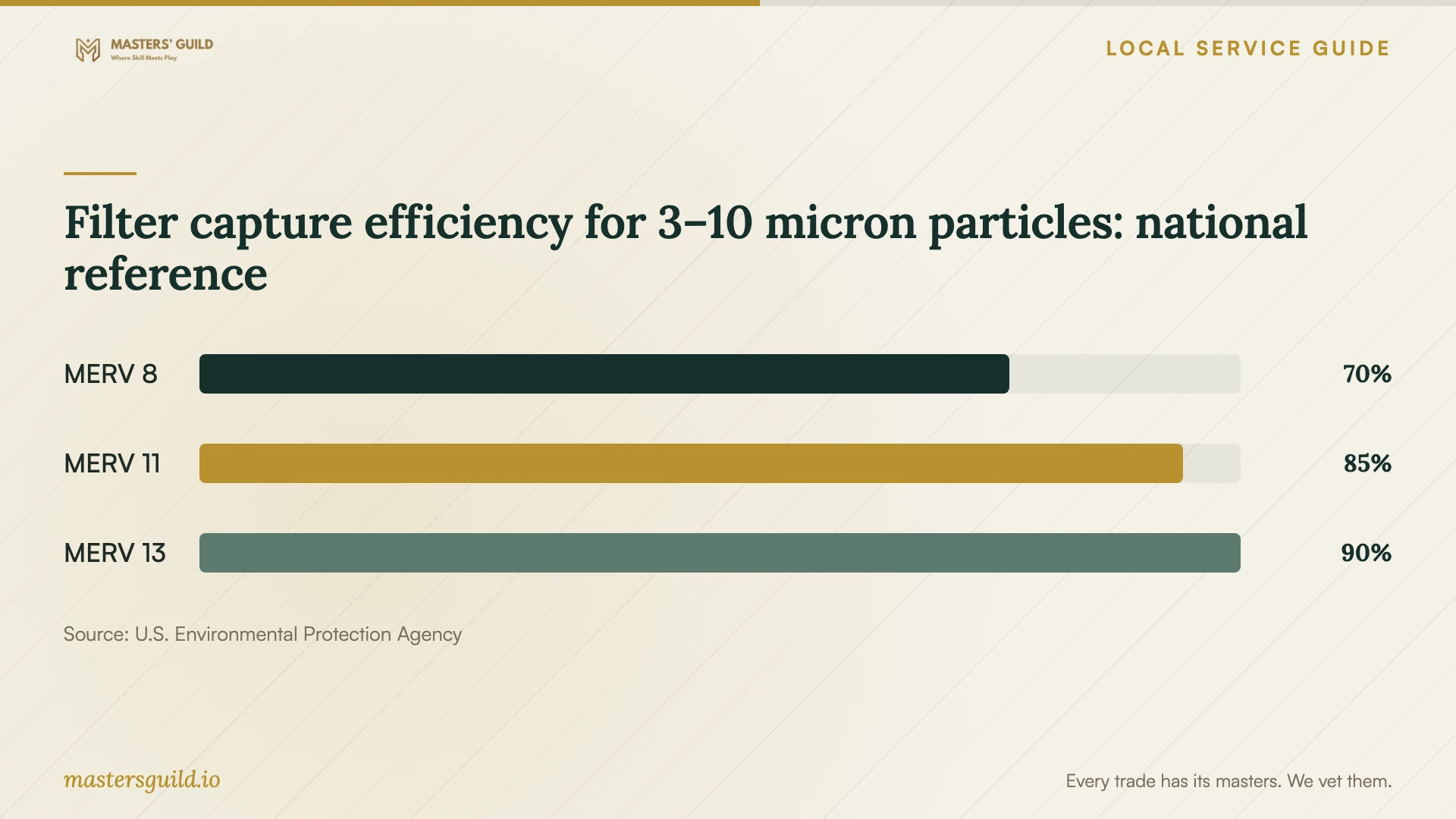
Ask your HVAC technician which filter rating your system can accommodate. EPA recommends MERV 13 or the highest rating the fan and filter slot can support when upgrading filtration. Follow the manufacturer's replacement guidance and check that the filter fits without bypass gaps. [1] [4]
The chart compares EPA's published minimum average capture efficiencies for particles between 3 and 10 microns. Use it to discuss filter options with your technician. It does not measure air cleanliness in your home, establish a need for duct cleaning, or predict health benefits. [4]
Filter capture efficiency for 3–10 micron particles: national reference
Local details that affect your job
Check repair scope with Development Services
For a quote that expands into duct replacement or HVAC alterations, call Corpus Christi Development Services at (361) 826-3240 with the property address and written scope. Ask which permits and inspections apply. The city's Building Permits page directs applicants to its Dynamic Portal for applications, permit records, documents, fees, and inspection scheduling. Confirm requirements for your proposed work before authorizing repairs. [2]
Get floodplain advice before broader restoration
For flood-damaged property, call Corpus Christi Floodplain Management at (361) 826-1875 before authorizing broader restoration. The city defines substantial damage and substantial improvement using costs equal to or exceeding 50 percent of the structure's market value. For damage, it uses value before the damage occurred; for improvements, value before construction begins. Ask the division to assess the full repair project. Applicable requirements can include elevation and protection of mechanical equipment, so bring the complete restoration estimate rather than a duct-cleaning line item. [3]
Choose the next step from the inspection findings
| Finding | Next step | Question to ask |
|---|---|---|
| Dust on a return grille alone | Clean the accessible grille and inspect before buying whole-system work. | Can you show substantial contamination beyond this grille? |
| Excessive debris or particles leaving supply registers | Consider cleaning after identifying the cause. | Which components contain debris, and what will you clean? |
| Substantial suspected mold growth inside hard-surface ducts or on other system components | Request confirmation and address moisture before deciding on cleaning. | Who will identify the material and correct the water source? |
| Wet or moldy fiberglass duct material | Arrange a replacement assessment. | Which sections need replacement, and who will perform the work? |
| Flood damage with a broader repair proposal | Consult Corpus Christi Floodplain Management. | Does the full restoration trigger floodplain requirements? |
Your hiring checklist
- Record the symptom and request photographs of the affected duct or component.
- Ask the provider to identify duct materials and propose a compatible cleaning method.
- Request comparable written scopes and total prices.
- Identify who will correct moisture, pest entry, or damaged duct material.
- Ask for insurance documentation and an explanation of claimed credentials.
- Keep repairs and chemical treatments subject to separate written approval.
- Clear equipment access and agree on cooling interruptions.
- Review matching before-and-after photographs and system operation before closing the job.
Frequently Asked Questions
How often should I have my ducts cleaned?
EPA recommends cleaning as needed rather than on a routine schedule. Ask for evidence of pest infestation, excessive debris, or substantial visible mold on hard-surface ducts or other system components. Replace wet or moldy fiberglass duct material. Keep up with filter replacement and inspection of coils and drain pans. [1]
How much should I budget for this job?
Get inspection-based written quotes for your home before setting a budget. Ask each provider to price the same components and separate cleaning, access work, repairs, and optional treatments. Confirm the total price and how the company will seek your approval if workers discover additional work.
Does routine cleaning require a city permit?
Confirm requirements for your proposed scope with Development Services. If the proposal includes replacement or alterations, provide the written scope and ask for a permit determination before authorizing that work. The city uses its Dynamic Portal for permit applications and inspection scheduling. [2]
Should I approve a duct sanitizer?
Request the label and a specific reason for using it. EPA says no biocides are registered for fiberglass duct board or fiberglass-lined ducts. Ask the provider to explain physical cleaning and moisture correction before you consider chemical treatment. [1]
Sources and scope
This guide combines the sources below with practical planning guidance. Figures apply to the stated geography and period; request a written quote for your property.