
Local service guide
Plan concrete work in Corpus Christi: Bids and Permits
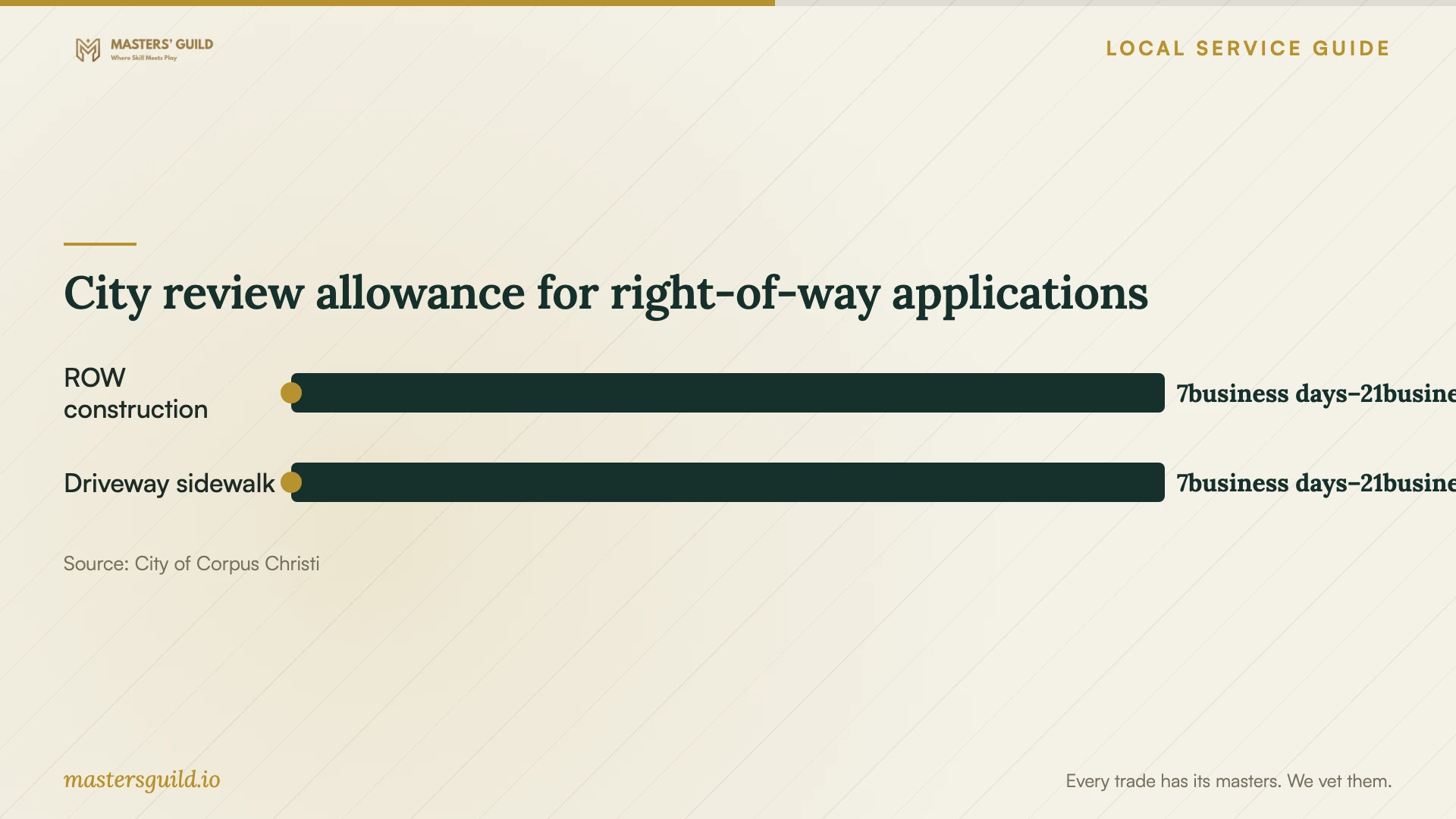
Arrange concrete work by asking contractors to inspect your property and quote the same scope, including preparation, drainage, removal, finish, cleanup, and permit responsibilities. For street-side work, resolve the right-of-way boundary before accepting a start date: Corpus Christi requires permits and licenses for activities in that public area and publishes a typical application review and approval range of 7 to 21 business days, depending on complexity. [1]
Define the repair or replacement scope
Start the site visit with your intended use: vehicle parking, a patio, entrance steps, or a walking route. Show each bidder the same damage, thresholds, access constraints, and places where you have observed pooling. For an existing slab, request an explanation of the problem and the proposed treatment before choosing crack repair, leveling, or replacement.
Include the adjoining sidewalk when inspecting a driveway or entrance. The city states that property owners must maintain sidewalks under city ordinance. Ask the contractor to distinguish private concrete from sidewalk work in the proposal, so you can see which repairs you are buying and which approval questions remain. [2]
Public Works describes the right of way as public land that includes streets, sidewalks, and the area behind the curb to property lines. Boundaries vary by location, and the city assigns you responsibility for identifying whether your activity affects that area. Have the contractor mark the proposed work limits before you approve demolition or a driveway extension. [1]
Compare bids with approval duties included
Request a written breakdown for removal, disposal, excavation, base preparation, concrete specifications, reinforcement, joints, finish, and restoration. Ask bidders to explain their proposed thickness and its suitability for your intended use. Keep optional decorative finishes separate so you can compare the underlying work.
For work affecting the right of way, Public Works lists a ROW Construction Permit Application and a Driveway Sidewalk Permit Application. Ask each bidder to identify the applicable route and state who will prepare documents, submit the application, pay fees, and coordinate required review. Include those duties in the quoted scope rather than leaving them for the crew's arrival. [1]
The city's development guidance states that all development requires a permit. Describe private patio, slab, repair, or foundation work to Development Services and ask officials to classify your specific proposal. Use that answer to settle the contractor's approval duties and exclusions before signing. Request proof of insurance, references for similar work, and written warranty terms. [4]
Resolve drainage and fill before choosing a design
Ask the contractor to explain the proposed finished elevations and where water will go. Point out garage entrances, downspouts, existing drains, and observed pooling. Request a sketch if the drainage route is unclear, and identify which drainage changes the price includes.
For a design involving fill or raised elevations, confirm the property's flood-zone requirements before comparing final prices. The city allows fill in Zone A and prohibits it in Zone V. Within a regulatory floodway, the city restricts encroachments unless a hydrologic and hydraulic analysis verifies no increase in flood levels during the base flood discharge; additional flood-hazard requirements apply. Ask officials whether your proposed work needs that review before accepting the design. [4]
The Floodplain Management Division offers site visits concerning flooding, drainage, and sewer problems, along with advice about development and renovation. Use that assistance to clarify a disputed drainage route or fill proposal before asking contractors to price the final scope. Do not treat the Zone A fill allowance as approval of your particular project. [4]
Include excavation and cleanup contingencies
Ask where the crew will contain concrete truck washout and how it will control loose soil near street inlets. The city identifies washout as a construction runoff pollutant and explains that sediment can obstruct storm drains and increase flooding potential. Include containment, disposal, and cleanup responsibilities in the bid so you can review the arrangements before pouring. [3]
Resolve groundwater pumping before excavation. The city requires its Storm Water Pollution Prevention Team to authorize groundwater discharge into the municipal separate storm sewer system. If a bidder proposes pumping toward a street inlet, ask them to identify the discharge destination and address authorization before you accept that method. [3]
Agree on how the contractor will notify you of unexpected site conditions and price additional work. Require your approval of the changed scope and price before the crew proceeds. Include restoration of disturbed landscaping and access areas in the completion discussion.
Set a conditional schedule and household access plan
Public Works publishes a typical review and approval window of 7 to 21 business days for correctly submitted right-of-way permit applications, depending on complexity. Ask the contractor to distinguish submission, approval, demolition, preparation, and pouring dates. Keep delivery and work arrangements conditional on the approvals your project requires. [1]
Plan alternative parking and a household walking route with the contractor. Request a weather contingency and written instructions for curing care, surface protection, walking, furniture placement, and vehicle use. Agree on who will provide the required care and when you can resume each activity.
Before final payment, walk through the agreed scope with the contractor. Review cleanup, restoration, and any concerns about the completed surface. Record follow-up work and retain the contract, approval records, warranty, and care instructions.
City review allowance for right-of-way applications
Local details that affect your job
Submit street-side applications to Public Works
Public Works directs applicants to submit the applicable completed ROW Construction or Driveway Sidewalk application and accompanying documents to [email protected]. The department lists (361) 826-3547 for contact. Ask your contractor to identify the submission responsibility and share the approval record. [1]
Budget for adjoining sidewalk maintenance
The city assigns sidewalk maintenance responsibility to property owners under city ordinance. Include the adjoining sidewalk in the inspection and request a separate repair scope if your main proposal covers a private driveway or patio. [2]
Get property-specific floodplain advice
Floodplain Management offers site visits and advice concerning flooding, drainage, sewer problems, development, and renovation. Call (361) 826-1875 to discuss fill or elevation changes before choosing a design. The city prohibits fill in Zone V. [4]
Match the proposal to its next planning step
| Proposal or concern | Next step | Resolve in the bid or schedule |
|---|---|---|
| Driveway approach or street-side sidewalk | Confirm the right-of-way boundary and application with Public Works | Submission duties and approval before dependent work |
| Damaged adjoining sidewalk | Include it in the contractor's inspection | Repair scope for the owner's maintenance responsibility |
| Added fill or raised elevations | Discuss the property and design with Floodplain Management | Applicable zone and floodway restrictions before final pricing |
| Groundwater pumping to a street inlet | Address discharge authorization with the Storm Water Pollution Prevention Team | Discharge destination and authorization before pumping |
| New private patio or slab | Ask Development Services to classify the proposed work | Applicable approvals and who will secure them |
Your hiring checklist
- Photograph damage, pooling, thresholds, and access constraints.
- Give bidders the same intended use, dimensions, and finish request.
- Confirm work boundaries and applicable approvals before demolition.
- Request written preparation, concrete, joint, drainage, and restoration scope.
- Name the person responsible for applications, fees, and approval records.
- Document washout containment and any groundwater discharge contingency.
- Agree on payments, change approvals, warranty terms, and exclusions.
- Arrange parking, household access, curing care, and a completion walkthrough.
Frequently Asked Questions
How much should I budget?
Use written bids based on a property inspection. Give contractors the same scope and request separate prices for optional finishes. Compare preparation, drainage, disposal, restoration, and approval duties alongside the total. Agree on how you will approve and pay for additional work.
How long should I allow for street-side approval?
Public Works gives a typical review and approval range of 7 to 21 business days for correctly submitted right-of-way applications, depending on complexity. Use that range when discussing a conditional start date, and confirm the approval status before committing to dependent work. [1]
Can I accept a fill proposal if my property is in Zone A?
The city allows fill in Zone A, but you still need project-specific review of applicable requirements, including floodway restrictions. Ask Floodplain Management to review your address and proposal before accepting the design. The city prohibits fill in Zone V. [4]
What should the cleanup scope cover?
Request a washout containment location, soil-control measures, disposal arrangements, and restoration responsibilities. The city identifies concrete truck washout and sediment as construction runoff concerns. Have the contractor explain these arrangements before work begins. [3]
Sources and scope
This guide combines the sources below with practical planning guidance. Figures apply to the stated geography and period; request a written quote for your property.