
Local service guide
Carpet Cleaning in Corpus Christi: Hiring Guide
Arrange Carpet Cleaning in Corpus Christi by choosing a cleaner who gives you a written scope, a complete price, and drying instructions suited to your home. Confirm wastewater collection and disposal before booking. Describe any leaks, lingering dampness, visible mold, or musty odor so the provider can address moisture problems before proposing routine cleaning. [1] [3]
Compare the work and the complete price
Get written quotes for your home's scope. Give each cleaner the room dimensions, stair count, carpet type if known, and furniture you want moved. Include photographs of stains and explain their cause if you know it. Have the provider explain whether it charges by room, measured area, or a fixed job, including how it handles oversized rooms.
Request prices for optional odor treatment, carpet protection, furniture moving, and access charges. Check for a minimum visit charge. Before accepting the offer, agree that the cleaner will explain any proposed addition and get your approval before proceeding. Discuss liability insurance, who will perform the work, and how the company handles damage or a stain that returns.
Understand Texas billing distinctions
The Texas Comptroller's carpet-cleaning publication generally classifies residential cleaning, protective chemical applications, and odor-control chemicals as taxable. It directs providers to collect 6.25 percent state sales tax plus applicable local tax on taxable charges. Confirm the tax treatment and total for your job. The publication carries an October 2003 date; its retrieval date does not establish a recent revision. [2]
For qualifying property damage in an area that the Governor of Texas or the President declares a disaster area, the publication describes an exemption for carpet-cleaning labor. The provider must bill labor apart from materials, and the customer must complete an exemption certificate stating that a disaster damaged the property. Materials and waste removal remain taxable. Do not assume that a household leak qualifies. [2]
Outside that exemption, the publication distinguishes nontaxable residential water extraction and carpet repairs from taxable cleaning, deodorizing, chemical treatments, and hauling away ruined carpet or pad. Request reasonable, distinct line items when a restoration job combines those services. The Comptroller explains that a combined charge can trigger taxation of the lump sum under its stated conditions. [2]
Plan access and drying around your household
Have the cleaner explain how the proposed method fits your carpet's care instructions. Identify any products before the visit, especially if you want to decline optional treatments. Give the provider your deadline for using a bedroom or living area, then agree on a realistic appointment and drying plan. Confirm who supplies fans or other equipment and when you can return furniture.
TDLR recommends air conditioning or dehumidification during humid months and indoor humidity no higher than 50 percent as mold-prevention measures. Discuss suitable drying arrangements with the cleaner rather than adopting a fixed drying time from another household. The guidance does not establish how long a particular cleaning method takes to dry. [3]
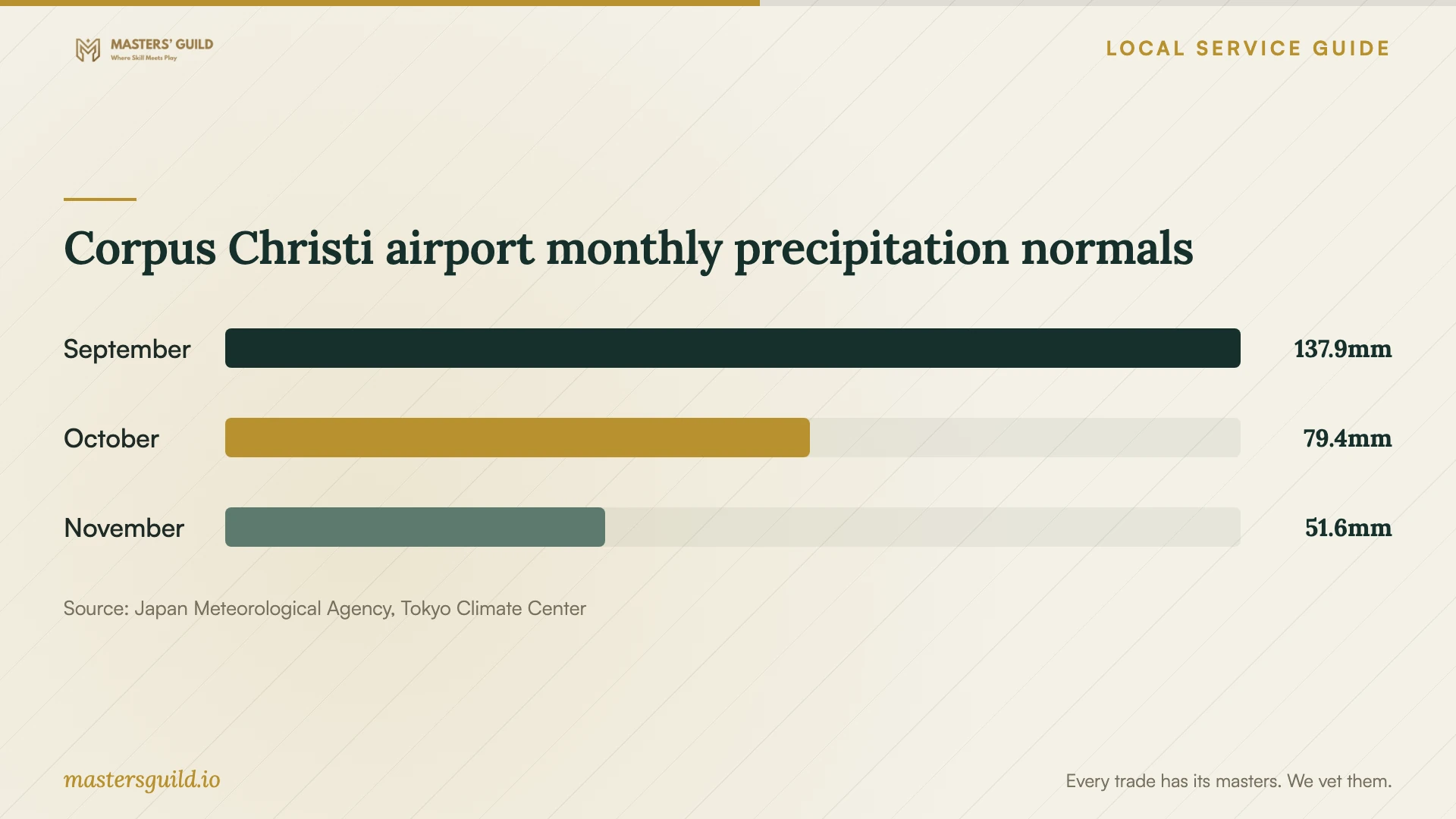
The airport normals table lists September precipitation at 137.9 mm, October at 79.4 mm, and November at 51.6 mm. Use the chart to discuss rain contingencies for equipment access and entry protection. Check the appointment forecast before the visit; these station normals do not predict that day's weather or your indoor conditions. [4]
Choose a separate scope for damp or moldy carpet
Report flooding, leaks, wet padding, visible growth, and musty odors before accepting a proposal. TDLR recommends inspecting a home when visible mold or a musty odor is present, fixing the underlying moisture problem, and keeping the home dry. It advises removing and discarding moldy porous materials, including carpet, because mold growth is difficult to clean from them. [3]
If the provider proposes mold assessment or remediation, request its licensing status and an explanation of any claimed exemption. TDLR regulates these activities, with exemptions that depend on project and property circumstances. Have the provider distinguish cleaning, extraction, removal, and mold work in the agreement. For a rental home, TDLR advises notifying the landlord about moisture problems or mold and keeping a written record. [3]
Corpus Christi airport monthly precipitation normals
Local details that affect your job
Keep extraction wastewater out of local storm drains
Corpus Christi explains that stormwater reaches its bays and estuaries without treatment and instructs residents not to dump anything into storm drains. Before the cleaner brings extraction equipment, confirm how it captures wastewater and where it will dispose of it. Decline a plan to empty a tank into a street inlet. The city directs reports of illegal dumping to 311; its guidance does not identify an approved carpet-cleaning disposal point. [1]
Itemize restoration work under Texas guidance
For a home here, request separate residential extraction and repair charges when the provider also proposes cleaning or disposal. The Comptroller generally treats extraction and repairs as nontaxable and cleaning and ruined-carpet disposal as taxable. If the damage may qualify for the natural-disaster exemption, resolve eligibility and exemption documentation before billing, with labor apart from materials. Materials and waste removal remain taxable under that exemption. [2]
Match the appointment to the problem
| Your situation | Next step | Resolve before booking |
|---|---|---|
| Routine soil or isolated stains | Request cleaning for named rooms and problem areas. | Included work, exclusions, complete price, and follow-up terms. |
| Pet odor | Have the cleaner inspect the affected area and explain the treatment. | Expected result, treatment boundaries, and optional charges. |
| Wet carpet after a household leak | Discuss extraction and drying while addressing the moisture source. | Itemized extraction, repair, and cleaning charges; any exemption eligibility. |
| Visible mold or musty odor | Discuss inspection, moisture correction, and possible carpet removal. | Mold-work scope, licensing status, and any claimed exemption. |
| Extraction equipment at the home | Confirm wastewater collection and disposal. | Keep wastewater out of storm drains under city guidance. |
Your hiring checklist
- Photograph problem areas and prepare room dimensions and a stair count.
- Locate carpet care instructions and disclose previous treatments.
- Record the agreed work, optional treatments, and complete price.
- Set an approval requirement for additions before work starts.
- Arrange parking, hose access, and protection for entryways.
- Clear small belongings and plan a place for children and pets.
- Keep the provider's drying and follow-up instructions with the invoice.
Frequently Asked Questions
Does Texas charge sales tax on home carpet cleaning?
The Comptroller generally lists it as taxable, with 6.25 percent state tax plus applicable local tax. Its publication describes a qualifying natural-disaster exemption that requires labor billing apart from materials and a customer exemption certificate. Materials and waste removal remain taxable. Have the provider explain the treatment on your invoice. [2]
What should I do if the carpet stays damp?
Contact the provider and describe where you still find dampness. TDLR recommends identifying moisture problems and drying affected areas. If you rent, notify your landlord and retain a written record. Discuss inspection if you notice visible mold or a musty odor. [3]
Should I approve deodorizing for a musty carpet?
Have the provider investigate the moisture concern before you approve treatment. TDLR recommends inspecting a home with a musty odor and correcting the moisture source. It advises removing moldy porous carpet, so agree on the appropriate scope before buying deodorizing. [3]
Sources and scope
This guide combines the sources below with practical planning guidance. Figures apply to the stated geography and period; request a written quote for your property.