
Local service guide
Pressure washing in Columbus, OH: Plan and Hire
Arrange pressure washing in Columbus by asking each contractor for a surface-specific cleaning plan, a written price, and a wash-water disposal plan before you book. Send photos of the areas you want cleaned and any damaged finishes. For historic masonry, ask a preservation professional to assess the proposed method and test area. Franklin County conservation guidance gives you another reason to inspect the work plan: stormwater can carry driveway pollutants into streams without treatment. [1] [3]
Define the job before requesting prices
List each area you want cleaned: driveway, front steps, patio, siding, or a masonry wall. Include approximate dimensions and photos taken from close up and across the yard. Mark the stains you want the contractor to address, and ask them to separate general cleaning from any proposed stain treatment.
Ask for a total price with the scope, exclusions, and payment terms in writing. Have the contractor identify any extra charges for moving furniture, accessing an upper wall, bringing water, or collecting wash water. Compare estimates only after you have given each provider the same job description. These sources do not establish a verified local price range, so use written site-specific quotes to set your budget.
Choose a method for the material
Ask the contractor to name the material, cleaning product, application method, and rinsing method for each surface. If they propose a soft wash, ask them to explain what that means for your job, including the product and how they will protect nearby finishes. Request the relevant manufacturer instructions rather than accepting a method name as the whole explanation.
For historic brick or stone, GSA recommends professional assessment, inconspicuous test patches, and the gentlest effective cleaning method. Its procedure also calls for evaluating protection of surrounding materials and collection of cleaning effluent. GSA presents these specifications as a reference for qualified preservation professionals; they do not establish a universal pressure setting for your house. [3]
Point out cracked joints, loose coatings, and openings during the walk-through. Ask the contractor to document existing damage and identify anything you should repair before cleaning. For historic masonry, GSA calls for sealing or covering cracks and openings and making the building watertight before cleaning. [3]
Agree on runoff handling before work starts
Walk from the cleaning area toward the street with the contractor. Identify curb inlets, driveway drains, and the route water takes across your property. Franklin Soil and Water Conservation District explains that runoff from roofs, driveways, sidewalks, and parking lots reaches storm drains and can carry pollutants into waterways without treatment. Ask how the contractor will keep debris and cleaning waste out of that route. [1]
For an oily driveway, ask how the contractor will collect contamination and determine an acceptable disposal method. In its vehicle and equipment washing guidance, the district describes berms and vacuum capture to avoid direct storm-drain discharges. That guidance concerns vehicle and equipment washing, so ask the provider to confirm the approach and disposal permissions for your pavement-cleaning job. Do not assume that access to a sanitary drain authorizes disposal. [2]
Set a weather plan and prepare access
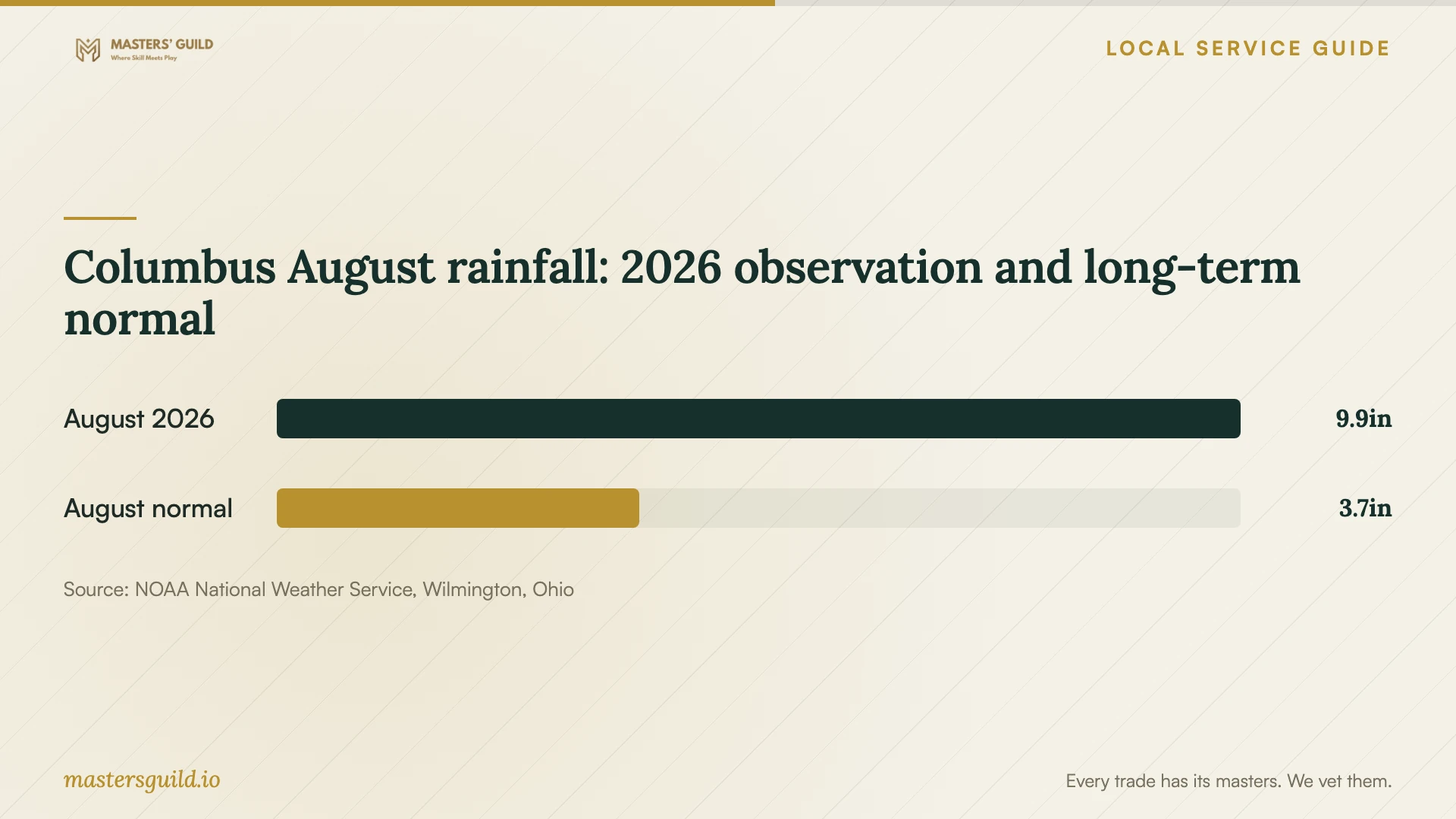
Agree on who checks the forecast, when the contractor will confirm the appointment, and how you will arrange a replacement date. The rainfall comparison below illustrates one wet month in Columbus. It does not predict conditions on your booking date or establish a best season for cleaning. [4]
Historic masonry needs a project-specific weather decision. GSA's procedure calls for postponing work when rain, snow, or below-freezing temperatures are expected within the next 24 hours, alongside other air and surface temperature conditions. Ask your preservation professional to apply the relevant requirements to your building. [3]
Before arrival, agree on parking, hose routing, water access, and areas you will keep clear. Move the items you agreed to remove and arrange another entrance if the crew will work across your front steps. Keep children and pets away from the work area. At completion, walk through the agreed scope with the contractor and ask for care instructions before replacing furniture or using the cleaned areas.
Columbus August rainfall: 2026 observation and long-term normal
Local details that affect your job
Franklin County driveway preparation
Franklin Soil and Water Conservation District's resident guidance recommends sweeping driveways instead of hosing them down and keeping leaves, trash, and automotive fluids out of storm drains. Before a Columbus driveway wash, remove loose debris and identify any fluid spills for the contractor. Include debris removal and wash-water handling in the quote rather than leaving those decisions until the crew starts spraying. [1]
Get drainage help before adding wash water
If water already pools near your home, discuss drainage before scheduling cleaning. Franklin Soil and Water Conservation District advises residents to seek help when prolonged standing water kills vegetation or water elevations threaten structures. It suggests contacting the local municipal service department and offers referral help through its office at 614-486-9613. Photograph the pooling area and ask for drainage guidance before approving a washing plan that sends water toward it. [1]
What to resolve before booking
| Your situation | Next step | Ask the contractor |
|---|---|---|
| General driveway or patio cleaning | Define the area and desired result | Which stains and cleanup tasks does the total include? |
| Oily pavement near a drain | Request a collection and disposal plan | How will you keep contaminated wash water out of the storm drain? |
| Historic brick or stone | Consult a preservation professional and approve a test area | How will you select the gentlest effective method? |
| Pooling water near the house | Seek drainage guidance before scheduling | Where will wash water travel, and how will you contain it? |
| Historic masonry with unsettled weather | Have the specialist assess forecast and surface conditions | What conditions will trigger postponement? |
Your hiring checklist
- Send surface photos, approximate dimensions, and close-ups of stains or damage.
- Request a written total with treatments, exclusions, cleanup, and payment terms.
- Ask for evidence of insurance and who will perform the work.
- Agree on the cleaning method and any test area before full treatment.
- Ask the contractor to explain collection and disposal of wash water.
- Confirm water access, hose routing, parking, and items you need to move.
- Agree on weather cancellation and a replacement appointment.
- Complete a final walk-through and request care instructions.
Frequently Asked Questions
How much should I budget for the job?
Request written quotes for the same measured scope. Ask providers to separate general washing, stain treatment, access costs, and wash-water collection. The sources used here do not establish Columbus service prices, so a site-specific estimate is the basis for your budget.
Can a contractor wash debris into the street drain?
Ask for a plan that keeps cleaning waste out of storm drains. Franklin Soil and Water Conservation District explains that stormwater can carry pollutants into streams without treatment and recommends sweeping driveways instead of hosing debris away. [1]
Should I book ordinary pressure washing for historic brick?
Start with a preservation professional's assessment. GSA recommends testing inconspicuous areas and choosing the gentlest effective method for historic masonry. Ask the specialist to approve the proposed treatment before you authorize full cleaning. [3]
What should I do about standing water beside my home?
Resolve the water route before scheduling washing. Franklin Soil and Water Conservation District recommends seeking help when water threatens structures or prolonged standing water kills vegetation. Contact your municipal service department or ask the district for a referral. [1]
Sources and scope
This guide combines the sources below with practical planning guidance. Figures apply to the stated geography and period; request a written quote for your property.