
Local service guide
Pest Control Services in Columbus, OH
Arrange Pest Control Services by asking for pest identification, a written treatment plan, and a total price that lists preparation and follow-up visits. For mosquito concerns within Columbus city limits, start with 311: Franklin County Public Health directs city residents there rather than to its county mosquito program. For a private treatment quote, describe where you see activity and ask the contractor to explain what they will inspect before recommending treatment. [1]
Describe the problem before choosing a treatment
Give the contractor observations rather than a guessed diagnosis. Record the rooms or outdoor areas involved, when you noticed activity, and what you have tried. Send clear photographs if you can take them without disturbing a nest or handling an unknown pest. Ask whether the contractor needs an inspection before giving a firm quote.
For an indoor problem, identify the affected rooms and ask whether the proposed scope includes adjacent spaces, entry points, or monitoring. For a yard problem, describe standing water and the areas where bites occur. Ask the contractor to separate pest identification from the choice of treatment so you can understand the reason for each proposed step.
Franklin County Public Health treats pest identification as central to integrated pest management. Its mosquito program combines surveillance, education, prevention, and control. Use that regional approach as a prompt when reviewing a private mosquito proposal: ask what the contractor found and how each proposed action addresses it. [2]
Check the public mosquito reporting route
Columbus city residents should report mosquito concerns through 311. Franklin County Public Health lists Columbus among communities that do not participate in its mosquito management program, and it gives the same 311 route for Worthington. Check the jurisdiction of the property instead of assuming a Columbus mailing address establishes county-program eligibility. [1]
For residents within its participating service areas, the county program accepts online requests and calls to 614-525-2483. It states a response goal of 24 to 48 hours, which may involve a site visit or a telephone call. Treat that as a county-program goal, not a promised Columbus response time or a guarantee of treatment. [1]
The county hotline's contractor answers Monday through Friday from 9:00 am to 4:00 pm. Outside those hours, callers can leave voicemail for a return call the next business day. Include the property location and a description of the concern so the inspector can ask useful follow-up questions. [1]
Ask what a mosquito treatment will address
Ask the contractor to walk through water sources before quoting a spray package. The county management plan identifies preventing mosquitoes from laying eggs in standing water as its most effective control approach. County staff inspect known breeding sites and use larvicides to control mosquitoes during development. [2]
Request separate descriptions of water-source work and treatment aimed at flying mosquitoes. Ask who will handle any drainage or maintenance work, which areas the technician will treat, and what you need to do before and after the visit. If you have a garden, beehives, pets, or play areas, ask for instructions specific to the proposed products and application.
Within its own program, Franklin County Public Health bases truck spraying on surveillance thresholds, including West Nile virus findings and high mosquito numbers. It does not spray whole areas by truck based on complaints alone. A service report therefore should not form the basis of a plan that assumes neighborhood spraying will follow. [2]
Compare written quotes and prepare for the visit
Ask each contractor to price the same problem and list the work included. Request the inspection charge, initial treatment price, any recurring charges, and the cost of visits outside the agreement. Ask them to distinguish a one-time job from a continuing service contract and explain cancellation terms before you choose.
Request current credential information relevant to the proposed work and proof of insurance. Ask who will perform the treatment and who will answer questions afterward. Before accepting a guarantee, read its duration, covered pests, retreatment conditions, and exclusions. Keep the written proposal and treatment instructions together.
Get preparation instructions before the appointment. Ask about access to rooms or yard areas, moving possessions, protecting food, and arrangements for children and animals. Request any departure and return instructions in writing. Agree on how the contractor will document findings and how you should report continued activity.
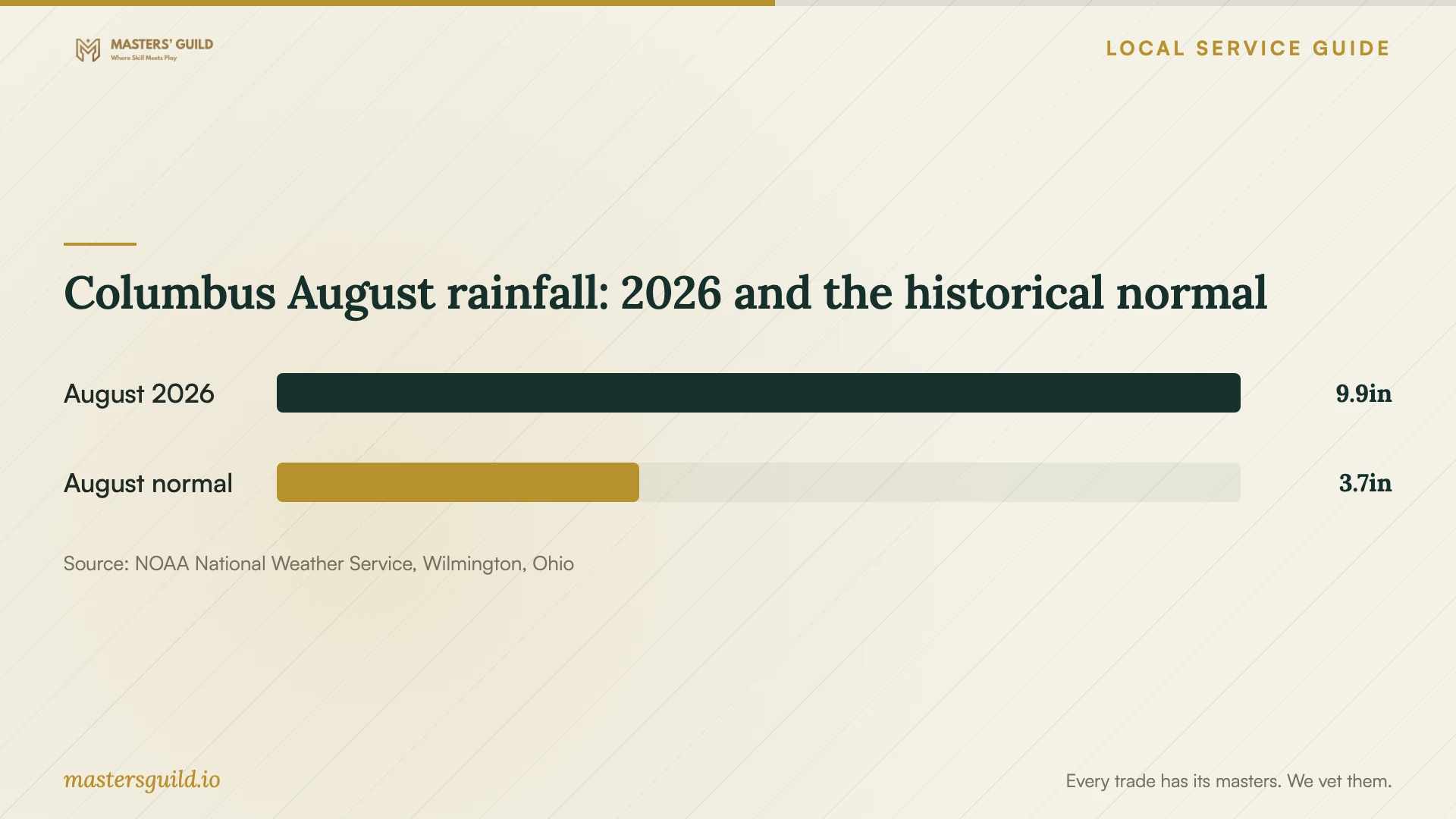
Columbus August rainfall: 2026 and the historical normal
Local details that affect your job
City and county mosquito requests follow different routes
Franklin County Public Health directs Columbus and Worthington mosquito requests to Columbus 311. Its county form and 614-525-2483 hotline serve participating areas. Confirm the property's jurisdiction before submitting a report, and do not apply the county's 24-to-48-hour response goal to a city request. [1]
A county complaint does not trigger area spraying
Franklin County Public Health uses surveillance thresholds to decide whether to spray an area by truck; complaints alone do not trigger that action. If your property falls within its program, request inspection assistance and ask about breeding sources rather than relying on a report to produce area spraying. Ask a private contractor to explain its own treatment criteria. [2]
Choose the next step for your pest concern
| Situation | Next step | Clarify before proceeding |
|---|---|---|
| Mosquito concern within Columbus | Report through Columbus 311 | Describe the location and concern; ask what assistance applies. |
| Mosquito concern within Worthington | Use Columbus 311, as the county directs | Provide the property's location. |
| Mosquito concern in a county participating area | Use the county form or 614-525-2483 | Confirm coverage; the response goal may mean a call or site visit. |
| Expecting county truck spraying after a complaint | Ask about inspection and surveillance findings | The county uses action thresholds, rather than complaints alone. |
| Indoor pest or private yard treatment | Request identification and a written quote | Compare preparation, covered areas, follow-up, and total charges. |
Your hiring checklist
- Record where you see pests, when activity occurs, and any previous treatment.
- Confirm the property's jurisdiction before choosing a public mosquito reporting route.
- Ask the contractor to identify the pest and explain the inspection findings.
- Request a written scope with treatment areas, exclusions, and follow-up terms.
- Compare total charges and read recurring-service cancellation conditions.
- Request relevant credentials, insurance information, and the technician's contact route.
- Get preparation, departure, and return instructions before the visit.
- Agree on a review date and how to report continued activity.
Frequently Asked Questions
Should I call the county mosquito hotline for a Columbus property?
For a property within Columbus city limits, use Columbus 311. Franklin County Public Health lists the city as a non-participating community and directs its residents to that route. Confirm jurisdiction if you are unsure which public program covers the property. [1]
Will a mosquito complaint result in neighborhood spraying?
Within the Franklin County Public Health program, complaints alone do not trigger whole-area truck spraying. The county uses surveillance thresholds, including West Nile virus findings and high mosquito numbers. Ask about inspection assistance and the conditions that apply to your location. [2]
What should a pest-control quote include?
Request the identified pest, inspection findings, treatment areas, proposed methods, preparation instructions, initial price, recurring charges, and follow-up terms. Ask the contractor to explain exclusions and retreatment conditions. Compare proposals that cover the same work before choosing one.
Does the rainfall chart show my yard needs mosquito spraying?
No. The National Weather Service reported 9.94 inches of Columbus precipitation in August 2026, compared with a 3.74-inch August normal. Those totals do not establish standing water or mosquito activity at your property. Use them as context for asking about water sources, then base treatment decisions on inspection findings. [3] [2]
Sources and scope
This guide combines the sources below with practical planning guidance. Figures apply to the stated geography and period; request a written quote for your property.