
Local service guide
mold removal in Columbus, OH: Plan cleanup and repairs
For mold removal in Columbus, OH, choose an experienced contractor and request a scope covering cleanup and the moisture problem. EPA says homeowners can handle many patches smaller than about 10 square feet, but contaminated-water damage calls for a professional. For basement moisture, check Blueprint Columbus drainage assistance alongside cleanup planning; eligibility depends on your project area and basement layout. [1] [2] [3]
Decide whether home cleanup fits the damage
EPA says homeowners can handle mold covering less than about 10 square feet in most cases. Size is one consideration. For extensive water damage or a larger affected area, consult its broader remediation guidance. Call a professional with contaminated-water experience for sewage-related damage, and consult a health professional before cleanup if you have health concerns. [3]
For hard surfaces, EPA recommends scrubbing with detergent and water and drying the surface completely. Moldy carpet and ceiling tiles may need disposal because growth within porous materials can resist cleaning. Clean and dry surfaces before painting or caulking. [3]
Photograph the visible damage without disturbing materials. Describe the rooms, surface materials, approximate affected area and any known leak or flooding when requesting an assessment. Ask the contractor to identify what they can assess from those observations and what needs further investigation.
Compare cleanup scopes before comparing prices
Ask for references from previous mold-cleanup jobs and contact them. EPA recommends hiring a contractor with mold-cleanup experience and asking them to follow EPA, ACGIH, IICRC or other professional or government guidance. Ask the contractor to name the guidance they use and explain their approach to your affected materials. [3]
Request separate descriptions for investigation, cleaning, removal, drying, moisture repairs and rebuilding. Ask who performs each task and which costs the quote excludes. Agree on how you will approve additional work before the contractor opens walls or expands the affected area.
EPA recommends fixing plumbing leaks and other water problems as soon as possible and drying affected items completely. Ask who will handle the moisture repair and how you will confirm its completion before replacing finishes. For recurring bathroom mold, EPA recommends increasing ventilation and cleaning frequency. [3]
Discuss access, room use and cleanup arrangements before work starts. Request completion photographs, a record of removed materials and a description of moisture repairs. Use the same requested scope for each bidder so you can compare exclusions and responsibilities.
Check drainage assistance without delaying cleanup
Blueprint Columbus installs sump pumps for qualifying homes in active project areas to reduce rainwater entering sanitary sewers. The city selects the installer. The program provides installation without direct homeowner costs, a battery backup and a one-year warranty. Homeowners maintain the pump after installation. [1]
Ask Blueprint staff to confirm your address and project area before including assistance in your repair plan. The city says a sump pump can improve drainage but does not guarantee a dry basement or stop seepage through windows and walls. Ask your remediator and drainage contractor to explain which moisture pathways their proposed work addresses. [1]
Keep active cleanup and the program application on separate schedules. EPA urges prompt action on mold and water problems, while Blueprint warns that contractor contact may take several months. Ask your cleanup contractor for a plan to address current moisture while you await an eligibility decision. [2] [3]
Discuss basement access before planning installation
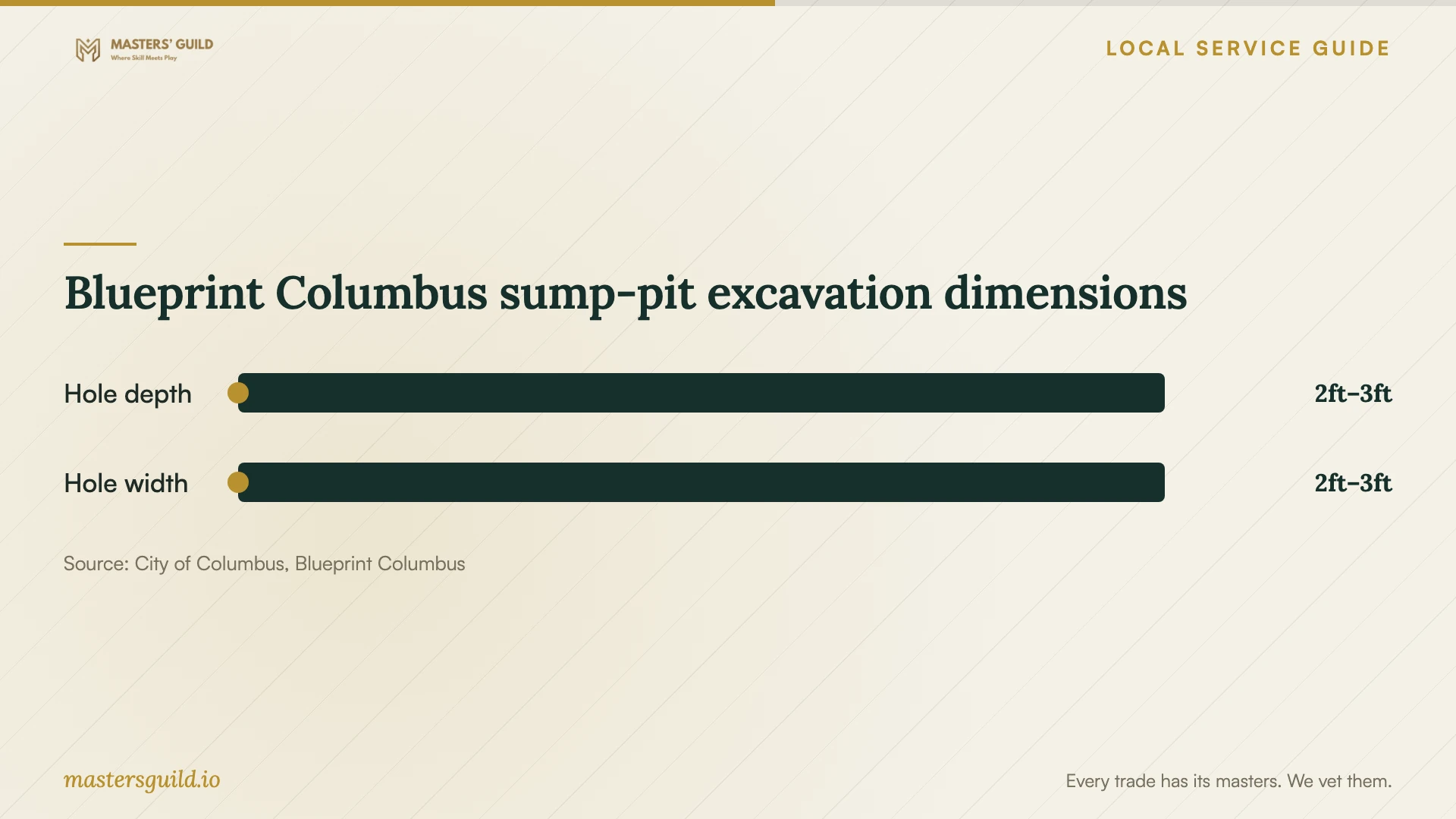
Blueprint describes digging a hole in the basement floor measuring 2–3 feet deep and 2–3 feet wide for the sump pit. The chart shows those published construction dimensions. Use them to ask about the proposed location and nearby finishes; ask the installer how much additional working space the crew needs. [1]
Describe finished rooms, stored belongings and access routes when contacting the program. Ask staff what you should move before an assessment. Avoid removing finishes to pursue eligibility until staff explain whether your basement layout qualifies and where they would locate the pump.
Blueprint Columbus sump-pit excavation dimensions
Local details that affect your job
Clintonville 1 applicants must confirm waitlist status
Blueprint’s October 2026 notice says it has concluded the voluntary sump-pump program in Clintonville 1. Staff will still contact homeowners on the waitlist as of October 2, 2026, to schedule an inspection. Check the program’s project-area map and ask staff to confirm your status before planning around assistance. The notice says other Blueprint project areas are unaffected by this closure. [1]
Basement finishes can rule out program installation
Blueprint restricts applications to single-family or duplex properties and excludes finished basements because of construction requirements. Staff can investigate partially finished basements, with eligibility depending on the proposed pump location. Crews need clear access for assessment and installation. Describe your layout when contacting Blueprint at 614.645.1253 and ask staff to confirm eligibility before altering finishes. [1] [2]
Choose the next step for the damage you can identify
| Situation | Next step | Planning question |
|---|---|---|
| Hard-surface patch smaller than about 10 square feet | Consider EPA home-cleanup guidance, taking other concerns into account. | Can you address the water problem and dry the cleaned surface completely? |
| More than 10 square feet or extensive water damage | Consult EPA’s broader remediation guidance and consider an experienced contractor. | How will the contractor assess the full affected area? |
| Sewage or other contaminated water | Call a professional experienced in contaminated-water cleanup. | Can the contractor provide references for this type of damage? |
| Known or suspected HVAC contamination | Do not run the HVAC system; consult EPA duct-cleaning guidance before further action. | Who will assess the system before you resume operation? |
| Moldy carpet or ceiling tiles | Ask whether the porous materials need removal and disposal. | Does the quote include removal, disposal and replacement? |
Your hiring checklist
- Photograph visible damage and note rooms, materials and approximate affected area.
- Describe known leaks, flooding, sewer backups and recurring dampness.
- Request mold-cleanup references and contact them.
- Ask for separate scopes covering cleanup, moisture repairs and rebuilding.
- Confirm exclusions and agree on approval for additional work.
- Check your Blueprint project area, waitlist status and basement eligibility.
- Agree on access arrangements, completion records and follow-up responsibilities.
Frequently Asked Questions
Can I clean a small patch myself?
EPA says homeowners can handle many patches smaller than about 10 square feet. Also consider the extent of water damage, suspected HVAC contamination and health concerns. Sewage-related damage calls for a professional with contaminated-water experience. [3]
Can I choose Blueprint’s sump-pump installer?
The city selects and contracts with the installer. Ask Blueprint staff how its planned installation relates to any separate cleanup or drainage work you arrange with your own contractor. [1]
Will a sump pump resolve existing basement mold?
Blueprint says its pump can improve drainage but does not guarantee a dry basement or stop window and wall seepage. Arrange assessment of the moisture source and cleanup of existing mold alongside your drainage planning. [1] [3]
What should a cleanup quote explain?
Request a description of materials the contractor will clean or remove, responsibility for moisture repairs, excluded costs and approval arrangements for additional work. EPA also recommends checking mold-cleanup references and asking which professional or government guidance the contractor follows. [3]
Sources and scope
This guide combines the sources below with practical planning guidance. Figures apply to the stated geography and period; request a written quote for your property.