
Local service guide
Lawn mowing in Columbus, OH: Plan Your Service
Arrange lawn mowing in Columbus by asking for a written quote that defines the cutting height, visit schedule, trimming, cleanup and clipping disposal. Agree on how the provider handles rain delays and overgrown grass before booking. For Franklin County homeowners who want clippings removed, check the disposal destination and eligibility rather than assuming the contractor can use a free residential drop-off. [2]
Define the work before comparing quotes
Send each provider the same description: the areas to mow, gate access, slopes, obstacles and current grass height. Include photos of the front and back lawns and any narrow passages. Ask the provider to confirm equipment access before you accept a recurring plan.
Request separate prices for the first visit and ongoing maintenance. Ask whether the quote includes trimming around fences and beds, edging along pavement, clearing clippings from hard surfaces and taking material away. Keep leaf cleanup and other garden work separate unless you want them included.
Compare the total for the same scope, including any disposal charge. Ask about skipped visits, cancellation notice, payment timing and how the provider seeks approval for extra work. Request proof of insurance and agree on whom to contact if equipment damages a fence, irrigation head or other property.
Set the cutting height and visit frequency
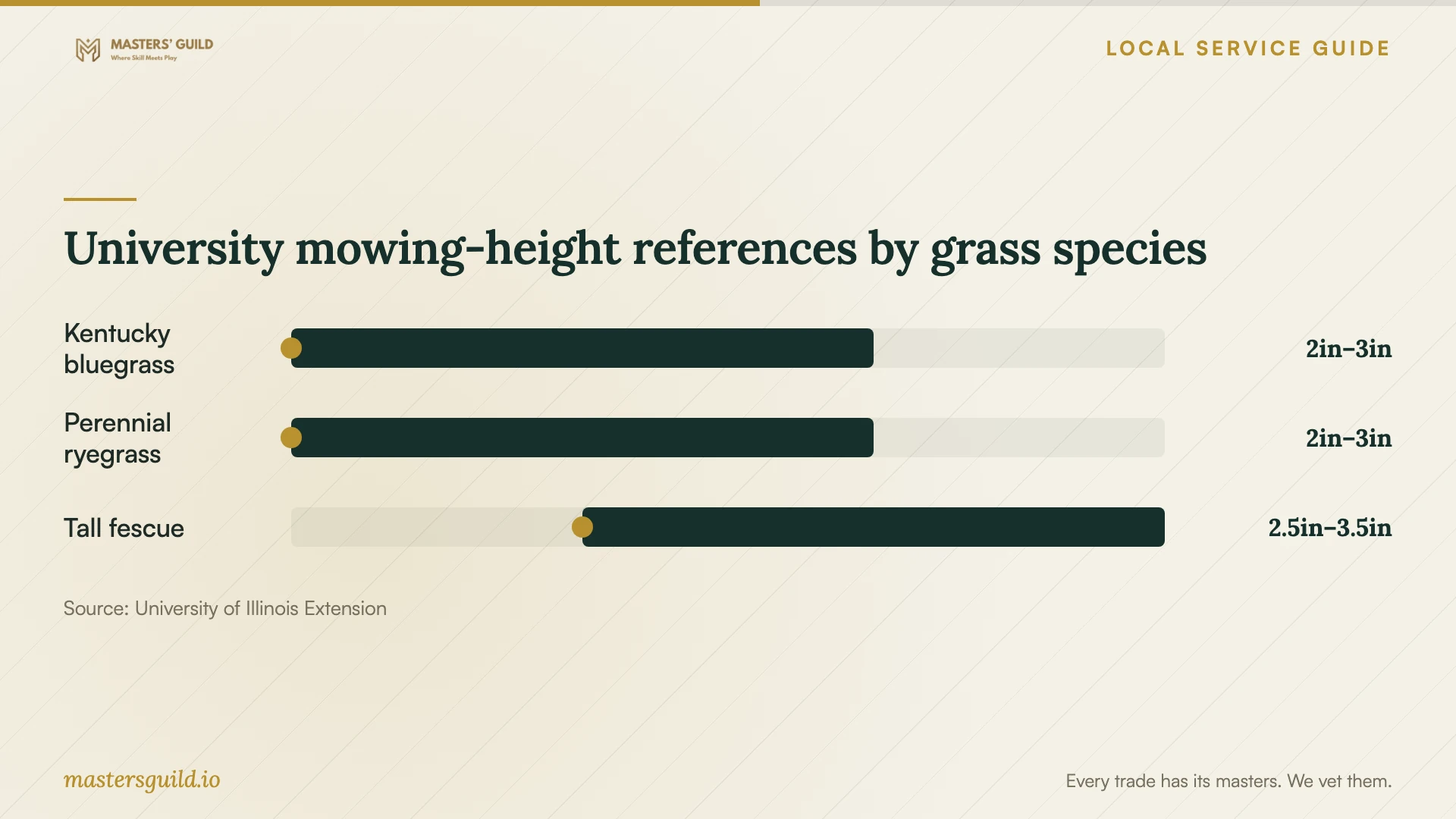
Ask the provider to identify your grass before choosing a mower setting. Illinois Extension lists different cutting-height ranges for Kentucky bluegrass, perennial ryegrass and tall fescue. Use the chart as a starting reference for that conversation, rather than selecting a setting from the shortest-looking lawn nearby. [1]
Illinois Extension recommends mowing according to growth and removing no more than one-third of the leaf in a single cutting. Its guidance notes that spring growth can require more than one mowing a week. Ask a provider offering a fixed weekly or biweekly plan how they handle growth that exceeds the agreed schedule. [1]
For an overgrown lawn, ask the provider to explain the proposed recovery cuts before work begins. Agree on the intended finished height, whether another visit is needed and how they will handle excess clippings. Avoid giving a blanket instruction to cut everything as short as possible.
Agree on rain delays and the final visits
Illinois Extension advises against mowing wet grass and recommends sharp mower blades. Ask how the crew decides to postpone a visit, how they notify you and when they offer a replacement appointment. Clarify whether you pay for a visit the crew skips. [1]
The National Weather Service publishes a Columbus monthly climate reference for the 1991–2020 normal period. Those historical normals are background information, not a forecast for your appointment. Use the current conditions at your property to discuss postponements, and ask for an adjustable end-of-season arrangement rather than choosing a final visit from a climate average. [3]
For the final cuts, ask the provider to maintain the agreed height without scalping. Illinois Extension says the first and last mowing can be slightly shorter, though that change is not typically necessary. Keep fall leaf removal as a separate instruction so both parties understand the remaining work. [1]
Choose whether to leave or remove clippings
Consider leaving clippings when the provider follows the one-third rule. Illinois Extension says those clippings can filter back into the lawn, decompose and recycle nutrients without causing thatch. It also cautions that mulching mowers perform poorly when grass is wet or too tall. [1]
If you want removal, specify whether the provider will prepare clippings for your community's collection or haul them to an accepting facility. SWACO lists grass clippings as accepted yard waste but says its Com-Til option handles woody debris only. Ask the provider to name the destination before you approve hauling. [2]
University mowing-height references by grass species
Local details that affect your job
Franklin County residential drop-off has eligibility limits
SWACO identifies participating Ohio Mulch facilities as a free yard-waste drop-off option for Franklin County residents. Its page warns that Kurtz Bros. may charge or decline residential material, and it limits the Com-Til option to woody debris. Before paying for clipping removal, ask the mower to confirm the destination, acceptance rules and any charge. The published residential benefit does not establish that a contractor's load qualifies for free disposal. [2]
Prepare clippings for your community's collection
SWACO says most local communities offer residential curbside yard-waste collection and directs residents to confirm their community's collection day and details. Its guidance calls for biodegradable paper bags or a container marked yard waste, and it rejects plastic bags. If the mowing crew will leave clippings for collection, agree on the container, placement and preparation responsibility before the visit. Confirm your address's collection arrangements before choosing this option. [2]
Choose the arrangement for your lawn
| Situation | Arrangement to discuss | Detail to confirm |
|---|---|---|
| Grass grows rapidly between visits | Adjust the visit interval to growth | Keep each cut within the one-third rule |
| Grass is wet on the scheduled day | Postpone mowing | Agree on notification and a replacement appointment |
| You want clippings left on the lawn | Leave clippings while following the one-third rule | Confirm how the crew will handle excess clippings |
| You want curbside collection | Prepare material under your community's rules | Confirm collection details and use paper bags or a marked container |
| You want clippings hauled away | Specify an accepting yard-waste destination | Check eligibility and fees; Com-Til accepts woody debris only |
Your hiring checklist
- Photograph the areas to mow and describe gate access, slopes and obstacles.
- Ask the provider to confirm the grass type and proposed cutting height.
- Get separate written prices for the first visit and recurring maintenance.
- Define trimming, edging, pavement cleanup and clipping handling.
- Agree on postponement notices, replacement visits and skipped-visit billing.
- Confirm disposal eligibility and charges if you want clippings hauled away.
- Clear toys and pet waste, secure pets and identify objects the crew should avoid.
- Request proof of insurance and record the damage-reporting contact.
Frequently Asked Questions
Should I choose weekly or biweekly mowing?
Choose an interval that lets the provider follow the one-third rule. Illinois Extension recommends mowing according to growth, which can require more than one cut a week in spring. Ask how the provider adjusts visits when your grass grows faster or slower than the booked interval. [1]
Do I need to pay for bagging every visit?
Discuss leaving clippings first. Illinois Extension says clippings can remain when mowing follows the one-third rule; they decompose and do not cause thatch. If you prefer removal, ask for a separate price and a clear disposal plan. [1]
Can the provider take grass clippings to Com-Til?
SWACO describes the Com-Til drop-off option as woody-debris only. Ask the provider to choose a destination that accepts grass clippings and confirm charges and eligibility before hauling. [2]
What should I check after the first visit?
Walk the lawn with the agreed scope in hand. Check the cut height, trimming, pavement cleanup and clipping handling. Photograph any missed areas or damage and contact the provider before the next visit. Use that discussion to confirm instructions for recurring work.
Sources and scope
This guide combines the sources below with practical planning guidance. Figures apply to the stated geography and period; request a written quote for your property.