
Local service guide
House Cleaning in Columbus, OH: Plan Your Visit
Arrange House Cleaning in Columbus, OH by sending cleaners the same room list, photographs of problem areas and a written list of tasks before requesting quotes. Specify appliance interiors, bathroom buildup and move-out requirements. Ask each cleaner to confirm exclusions, supplies, access arrangements and the total charge. Plan unwanted cleaning-product disposal as a separate task, using SWACO’s Franklin County residential program where eligible. [2]
Choose the tasks before choosing the cleaner
Describe the result you want: upkeep of occupied rooms, attention to accumulated grime, or an empty home prepared for handover. Ask the provider to translate its package name into a room-by-room task list. Include floors, kitchen surfaces, toilets, tubs and the specific areas you want dusted.
Name appliance interiors, cabinet interiors, interior windows and baseboards as separate requests. Ask whether the cleaner will move furniture or reach high fixtures. For a move-out visit, send the landlord’s cleaning instructions and confirm whether you must empty cupboards and remove belongings before arrival.
Send photographs of the areas that need the most attention. Mention delicate finishes, pets, fragrance preferences and products you want the cleaner to avoid. Ask the provider to explain any limits on stain removal before you approve the visit.
Compare quotes and agree on access
Request a written total for the agreed tasks and ask whether the provider charges by the visit or by time. For an hourly quote, ask how many cleaners will attend, how the provider counts their hours and whether you can set a spending limit. Confirm any additional charges before booking.
Ask about liability coverage, responsibility for damaged belongings and the process for reporting missed work. Agree on the arrival window, cancellation terms and payment timing. If you plan repeat visits, request separate quotes for the first appointment and subsequent appointments with their respective task lists.
Explain where the crew can park, how they will enter and whether they need a building access code or elevator reservation. Choose a secure method for sharing entry instructions. Clear the surfaces you want cleaned, put valuables away and arrange a place for pets before the crew arrives.
Discuss bathroom buildup without assuming local water hardness
USGS describes water hardness as a property that causes residue when water interacts with soap and scale when water evaporates. Calcium and magnesium account for most of this hardness. If you see residue on shower glass or faucets, ask the cleaner to inspect it and explain the proposed treatment. [1]
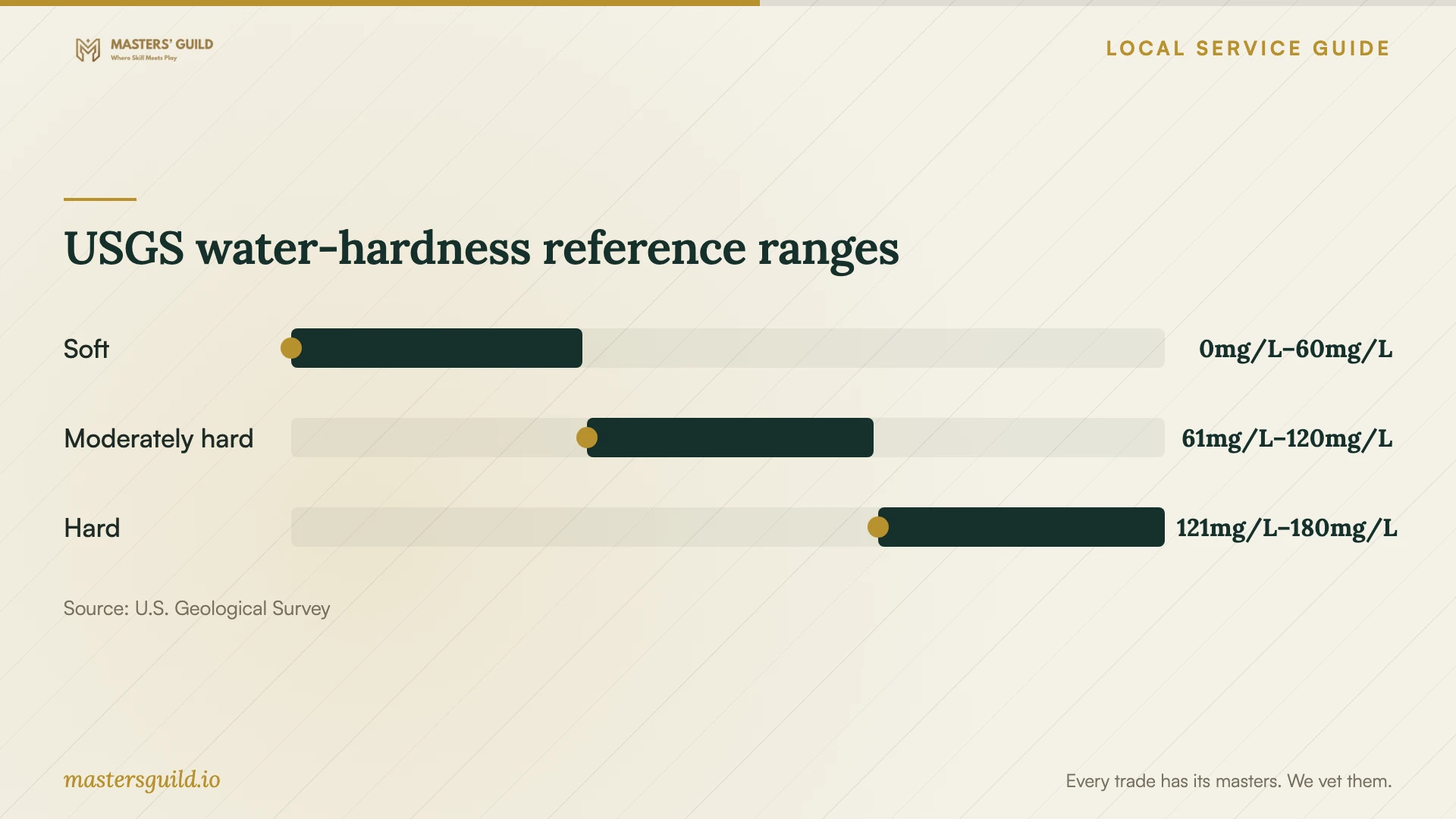
Use the reference chart to understand a hardness result you already have. The chart contains USGS classification ranges, not measurements of Columbus water. It does not establish your household’s hardness, identify a particular stain or predict the price of removing buildup. [1]
Tell the cleaner whether the affected surface is stone, tile, glass or a coated fixture. Ask them to check the manufacturer’s care instructions and agree on a small test area before treating a visible finish. Keep mineral-residue removal separate from requests to address mold.
Separate routine cleaning from mold and water-damage work
EPA says homeowners can handle mold areas smaller than about 10 square feet in most cases, subject to its cleanup guidance and exceptions. For larger areas or extensive water damage, EPA directs readers to its remediation guidance. Do not treat that size threshold as a guarantee that a house cleaner can undertake the work. [3]
If you hire someone for mold cleanup, EPA advises checking references and confirming experience with that work. EPA calls for a professional experienced in contaminated-water damage when sewage or other contaminated water caused the problem. Describe the moisture source when asking about service suitability. [3]
EPA advises fixing leaks, drying items and cleaning mold from hard surfaces with detergent and water before drying them. It also notes that mold can leave staining or cosmetic damage. Ask the provider to distinguish cleaning from repair or replacement, and address the water problem before arranging ongoing upkeep. [3]
Plan unwanted cleaning-product disposal
Set aside unwanted products before a deep or move-out clean and keep them out of the ordinary rubbish you ask the cleaner to remove. SWACO lists household cleaners, bleach, acids and caustics among accepted household hazardous waste items. Ask who will transport those products rather than assuming the cleaning quote includes disposal. [2]
Check the local drop-off details below before scheduling your trip. Tell the facility what you intend to bring if you are unsure about acceptance. Distinguish household products from business waste when discussing eligibility. [2]
USGS water-hardness reference ranges
Local details that affect your job
Franklin County eligibility changes the disposal plan
SWACO offers its household hazardous waste disposal service to Franklin County residents and lists household cleaners and bleach as accepted items. The residential program excludes businesses. Confirm your household’s county before relying on this option; for business waste, SWACO directs businesses to contact EEI at 614-294-1300 about collection or acceptance costs. [2]
Coordinate the cleaning date with the Columbus drop-off schedule
SWACO lists the household hazardous waste facility at 645 E. 8th Avenue, Columbus, Ohio 43201, at E. 8th and Essex Avenue. Published hours are Monday through Friday, 9 AM to 5 PM, and the first Saturday of the month, 9 AM to 2 PM, excluding holidays. For a weekend move-out, arrange a separate disposal trip around that schedule. Call 614-294-1300 to confirm arrangements before travelling. [2]
Choose the right next step for your cleaning job
| Situation | Next step | Confirm before booking |
|---|---|---|
| Occupied home needing upkeep | Request a room-by-room maintenance task list. | Surfaces included, supplies, access and total charge. |
| Empty home awaiting handover | Send the handover requirements and request an itemized scope. | Cabinet and appliance interiors, belongings removal and completion deadline. |
| Shower residue or faucet scale | Ask for an inspection and a surface-compatible treatment plan. | USGS links hardness with soap residue and scale; this does not identify your stain. |
| Mold after sewage damage | Contact a professional experienced in contaminated-water damage, as EPA advises. | Relevant cleanup experience and references. |
| Unwanted household cleaners | Check eligibility for SWACO’s Franklin County residential disposal program. | Accepted products, drop-off hours and who will transport them. |
Your hiring checklist
- Send the same room list and photographs to each provider.
- List appliance interiors, windows, baseboards and other requested extras.
- Confirm the total charge, time limit and approval process for additional work.
- Ask about liability coverage, damage reporting and missed-task follow-up.
- Agree on parking, entry, pets and any building access arrangements.
- Disclose mold, leaks or contaminated-water damage before booking.
- Separate unwanted chemicals and arrange an eligible disposal route.
- Walk through the agreed task list with the cleaner before final payment.
Frequently Asked Questions
How should I compare house-cleaning prices?
Give each provider the same task list and photographs. Ask for a total that identifies included work, exclusions and additional charges. For hourly work, confirm crew size, how the provider counts time and your spending limit. Compare the promised work before choosing a quote.
Can I include unwanted cleaning chemicals in a move-out clean?
Ask the provider whether it offers transport or disposal and confirm the destination. SWACO accepts household cleaners and bleach through its Franklin County residential program, which excludes business waste. Arrange disposal as a separate agreed task. [2]
Can a cleaner restore a mold-stained surface?
Ask the provider to assess it before promising a result. EPA notes that mold may cause staining and cosmetic damage, so cleanup may not restore an item’s original appearance. Confirm mold-cleanup experience and references if you hire someone for that work. [3]
Does the hardness chart describe my Columbus tap water?
No. It reproduces USGS reference categories for water hardness. The supplied source contains no measurement for your address or Columbus water supply. Use an actual household or supplier result before assigning your water to a category. [1]
Sources and scope
This guide combines the sources below with practical planning guidance. Figures apply to the stated geography and period; request a written quote for your property.