
Local service guide
Plan gardening in Columbus: Hiring and Soil Testing
Arrange gardening in Columbus by asking for a written scope that separates cleanup, planting, materials, disposal and follow-up care. Agree on who will obtain a soil test before approving lime or fertilizer purchases. Budget for the full job without reimbursement: Community Backyards states that its 2026 program is closed and asks residents to return on Earth Day 2027. [1] [3]
Define the garden work before requesting quotes
Choose the result you want: tidy existing beds, restore an overgrown area, replace selected plants or prepare a new bed. Mark plants you want to keep and photograph anything you cannot identify. Ask the gardener to identify those plants before proposing removal.
Describe access along with garden size. Include gate width, steps, the route for bringing in materials and a place for collecting debris. Ask the gardener to separate labor, plants, mulch, soil amendments and hauling in the quote. Agree on whether removal includes roots and who will handle the cuttings.
For recurring care, request a task list for each visit. Identify the beds that need weeding and the plants you want the gardener to maintain. Set an approval process for additional purchases or treatments, and agree on your watering responsibilities between appointments.
Arrange soil testing before buying amendments
Discuss testing when you request bed preparation or planting. Ohio State University Extension's Franklin County office offers soil testing for gardens and home lawns. The report includes chemical analysis and lime and fertilizer recommendations for the crop you specify. [1]
Extension lists kits at $15 each and says it sells them in the office because of delivery problems. You pay postage to send your sample to Penn State, where the laboratory performs the analysis. Follow the kit instructions and Extension's parcel-post guidance. [1]
Assign kit pickup, sample collection and mailing before the gardener orders amendments. Share the report and ask how proposed purchases relate to its recommendations. Extension's page contradicts itself about accepting cash, so confirm payment arrangements before visiting. [1]
Budget without assuming a conservation rebate
The Community Backyards homepage retrieved on October 10, 2026 states that the 2026 program is closed and asks residents to return on Earth Day 2027. It also retains conflicting language about an open course and remaining compost-bin funding. Use the closure notice for planning and ask the program team about an existing voucher or unfinished reimbursement. [3]
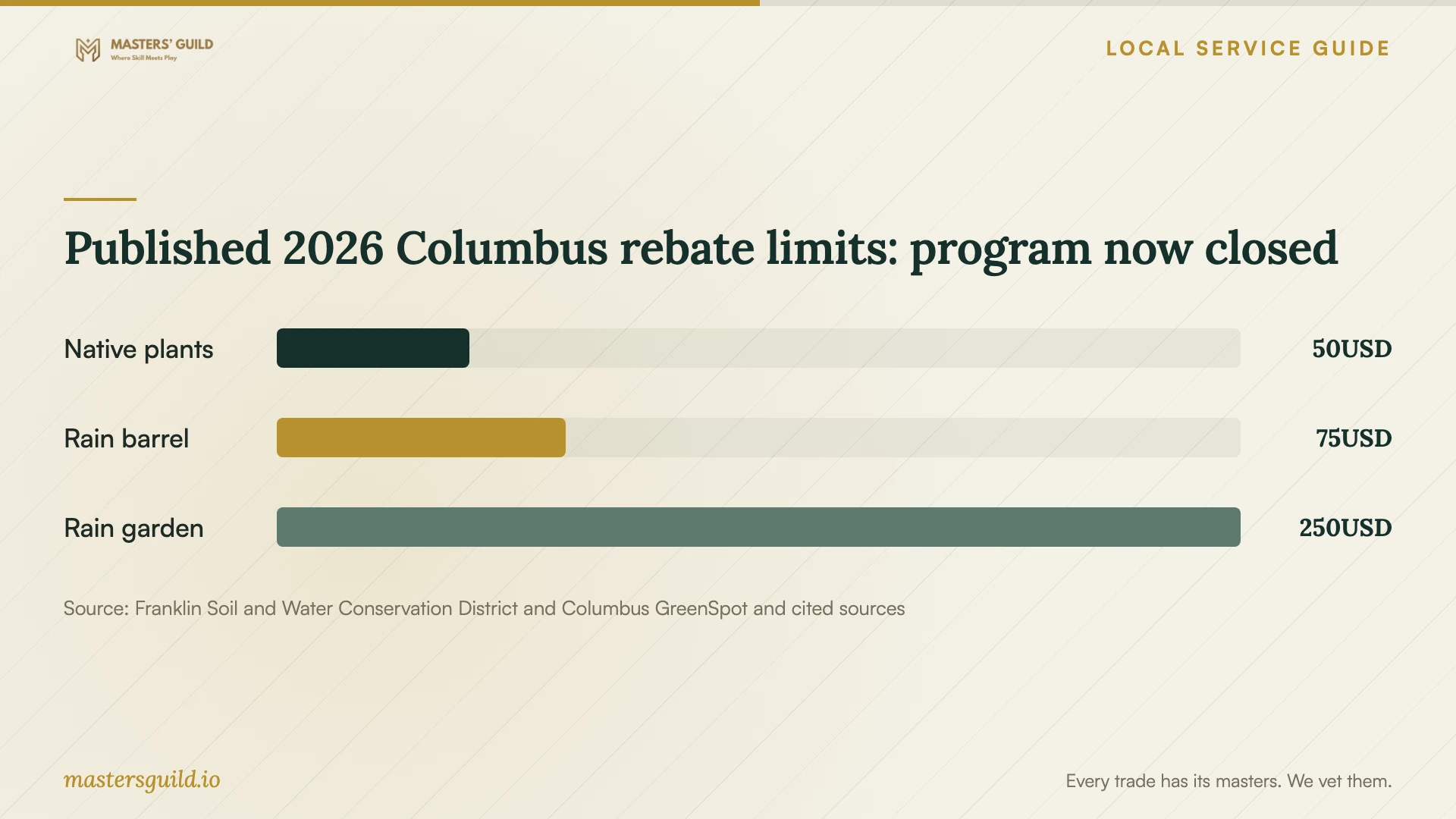
The published 2026 Columbus table lists maximum rebates of $50 for eligible native plants, $75 for a rain barrel and $250 for a rain garden. These figures describe incentives, not gardening labor or installation prices. Community Backyards allows one rebate per household per year and warns that amounts and availability can change. [2] [3]
Request a quote you can afford without reimbursement. Ask the gardener to separate essential cleanup from optional planting or conservation purchases. Approve each part against your budget, and avoid committing to purchases on the assumption that next year's program will cover them.
Check plant eligibility and rain-garden application rules
For a project you hope to connect with a future plant rebate, ask the gardener to record plant names, quantities and planting locations before shopping. Franklin Soil and Water's published rules exclude annuals, vegetables, herbs, aquatics and seeds. They require living plants planted in the ground and exclude plants on the program's invasive list. Confirm the applicable year's rules before purchasing. [2]
The footnote to the 2026 rebate table says rain-garden incentives require an additional application, have very limited availability and direct applicants to their voucher for instructions. Elsewhere on the page, the participating-community list says 2025, while the detailed site-visit and installation procedures lack a clear current-year designation. Ask Franklin Soil and Water to confirm those details before commissioning rebate-dependent work. [2]
Ask the gardener for a proposed location, incoming water route, planting plan and maintenance responsibilities. Before authorizing excavation or purchases, ask program staff about application availability, site assessment, approval timing and eligible expenses. Make the work agreement conditional on any program approval you intend to pursue.
Agree on completion and follow-up care
Write down the finished result: retained plants, cleared bed edges, installed plants, material placement and debris removal. Discuss how the gardener will protect plants you marked to keep. Request proof of liability insurance and agree on responsibility for damage.
Walk the garden with the gardener at handover. Collect plant names, receipts and written watering instructions. Ask what any plant-replacement agreement covers and which care tasks you must perform. For ongoing maintenance, decide how to report problems between visits and approve changes to the task list.
Published 2026 Columbus rebate limits: program now closed
Local details that affect your job
Arrange an Extension kit pickup
Franklin County Extension lists its office at 2548 Carmack Road in Columbus and sells soil-test kits in the office only. Each kit costs $15 before sample postage. Call 614-866-6900 to confirm pickup and payment arrangements because the page gives conflicting cash-payment instructions. Decide whether you or the gardener will collect and mail the sample. [1]
Verify the household tax district
Community Backyards bases eligibility on your household's tax district, which can differ from your mailing address or school district. Staff verify it with the Franklin County Auditor and list eligible items on your voucher. Its homepage states that the 2026 program is closed. Confirm future eligibility and funding before ordering materials in anticipation of reimbursement. [2] [3]
Choose the work scope for your garden
| Your goal | Ask the gardener for | Your next step |
|---|---|---|
| Tidy existing beds | Weeding, selective trimming and a debris-removal plan | Mark retained plants and agree on the finished appearance. |
| Prepare a planting bed | Sample collection and proposed amendments tied to the soil report | Arrange an Extension kit; the listed fee is $15 plus sample postage. |
| Replace selected plants | A named plant list, installation quote and watering instructions | Budget without reimbursement; Community Backyards states that its 2026 program is closed. |
| Plan a rain garden | A proposed location and quote conditional on any intended program approval | The 2026 table requires an additional application and refers applicants to voucher instructions. Ask staff to confirm detailed procedures. |
| Maintain beds over time | A visit schedule, task list and approval process for extra work | Assign watering and decide how to report problems between visits. |
Your hiring checklist
- Photograph and measure the beds, then mark plants you want to keep.
- Describe gate access, steps, water availability and routes for materials.
- Request separate amounts for labor, materials, hauling and follow-up care.
- Assign soil-kit pickup, sample collection, mailing and report review.
- Record proposed plant names and quantities before approving purchases.
- Confirm applicable incentive rules before committing to rebate-dependent work.
- Agree on completion criteria, watering responsibilities and replacement terms.
Frequently Asked Questions
How much should I budget for a gardener?
Request a written quote separating labor, materials and disposal. Franklin County Extension publishes a soil-test fee, while Community Backyards publishes conservation incentives. Those amounts are not gardening labor rates. Give each gardener the same scope and ask how you will approve additional charges. [1] [2]
Can I claim a Community Backyards rebate now?
The homepage retrieved on October 10, 2026 states that the 2026 program is closed and asks residents to return on Earth Day 2027. It retains conflicting open-course language. Contact the program team about an existing voucher, and confirm future funding and eligibility before purchasing. [3]
Should I test the soil before arranging planting?
Discuss testing before approving amendments. Franklin County Extension's garden soil report includes chemical analysis and lime and fertilizer recommendations for the crop you specify. Agree on who will obtain the kit, collect the sample and mail it. [1]
How do I confirm rain-garden rebate approval steps?
The 2026 table requires an additional application and refers applicants to voucher instructions. The participating-community list says 2025, and the detailed procedures lack a clear current-year designation. Ask Franklin Soil and Water to confirm site-review, approval and installation requirements before commissioning rebate-dependent work. [2]
Sources and scope
This guide combines the sources below with practical planning guidance. Figures apply to the stated geography and period; request a written quote for your property.