
Local service guide
Commercial Building Cleaning in Columbus, OH
Arrange Commercial Building Cleaning in Columbus with a walkthrough and a written task schedule before choosing a contractor. Give bidders the same rooms, surfaces, visit frequency, access hours, and reopening deadline. Request separate prices for recurring visits, the initial clean, floor treatments, and off-site waste removal so you can compare the work you will receive.
Define tasks and acceptable results
Walk through the premises with the person preparing the quote. Show them restrooms, break rooms, stairs, storage areas, and restricted rooms. Identify floor materials and surfaces that need special care. Ask the bidder to record the cleanable area and any assumptions about furniture moving or access to occupied desks.
Assign tasks by room and frequency. You might request restroom cleaning and designated bin emptying on each visit, with separate schedules for ledges and interior glass. Describe the result you expect, such as fixtures without visible residue and floors ready for opening. Require written exclusions so you can resolve gaps before the first visit.
Get a quote you can budget around
Obtain a site-specific cleaning quote. Ask for the recurring charge, number of included visits, initial-clean price, and optional services. Identify who purchases liners, soap, paper products, and chemicals. Have bidders itemize taxes, parking, transport, and disposal charges rather than leaving you to infer what the total includes.
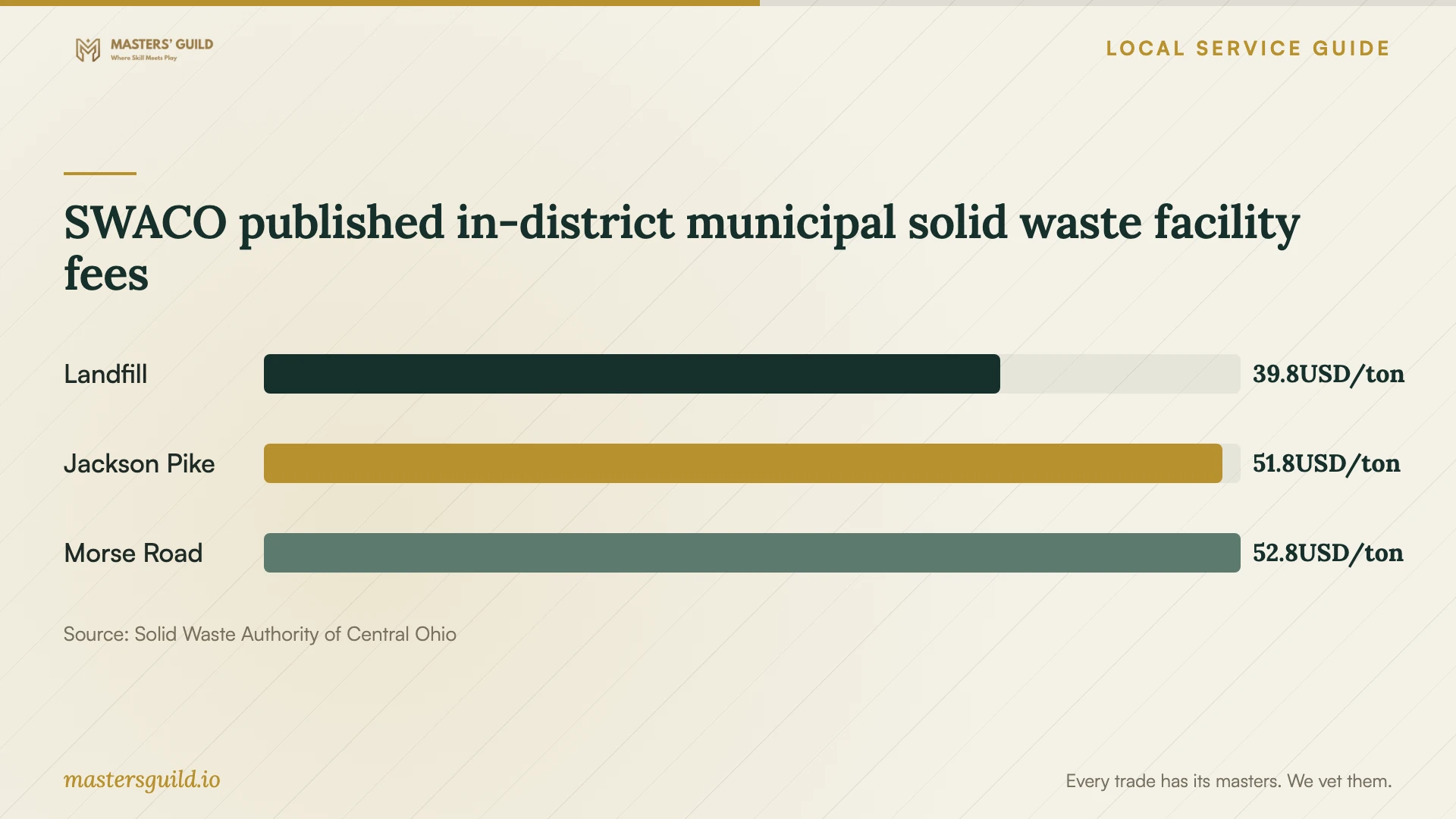
For hauling through SWACO, distinguish facility charges from the contractor’s labor and transport price. SWACO publishes separate in-district and out-of-district fee tables. Confirm rate eligibility with SWACO or your hauler before using the chart below to review a disposal allowance. [1]
Ask how the contractor prices extra visits, missed access, and work beyond the agreed scope. For periodic carpet extraction or floor finishing, request a separate proposal that names the surface, preparation, furniture responsibilities, and time before you can reopen.
Arrange access and service continuity
Set a cleaning window that fits your business hours. Show the crew where to unload, obtain water, and store equipment. Record who issues access codes, handles alarms, and locks up. Name a contact who can answer questions during the visit, and agree on coverage when the assigned cleaner cannot attend.
Ask for insurance documentation, references from comparable premises, and a named supervisor. Discuss employee screening and subcontractor access. If you run a medical or dental practice, have your practice manager approve treatment-area tasks, equipment boundaries, and waste responsibilities before accepting an office-cleaning scope.
Discuss a wet-weather entryway plan and the price of additional visits. The National Weather Service’s preliminary Columbus airport record reports 8.55 inches of precipitation in July 2017. That historical month illustrates a reason to plan for wet conditions; it does not forecast this year’s weather or determine your cleaning frequency. Base the schedule on observed traffic and floor conditions. [4]
Assign waste responsibilities before cleanup
State whether the cleaner moves bagged waste to your building’s containers or removes it from the property. For renovation cleanup, name the contractor responsible for debris hauling and ask for an authorized destination. Keep debris removal, final dust cleaning, and any return visit after trades finish as separate quoted tasks.
Create a material list before a bulk cleanout. Mark furniture and equipment you want retained, and photograph items approved for removal. Tell the crew which containers hold trash, recycling, or food scraps. For leftover chemicals, identify who will arrange acceptance and approve the disposal charge before the crew moves them.
Inspect the first visit and agree on corrections
Inspect the first clean against your task schedule. Record missed work by room and send it to the supervisor through the agreed reporting channel. Set a correction window and require approval before extra work. Discuss damage reporting and how the contractor will document completion when you are absent.
Review cancellation notice, holiday visits, and price-change terms before signing a recurring agreement. Ask how you can change frequency when occupancy or opening hours change. Keep a copy of the approved scope so a replacement crew has the same instructions.
SWACO published in-district municipal solid waste facility fees
Local details that affect your job
SWACO’s renovation-debris restriction
Since September 29, 2025, SWACO has excluded construction and demolition debris from its transfer stations and directed customers using its disposal system to the Franklin County Sanitary Landfill. This facility policy does not establish an exclusive destination for all Columbus renovation waste. Ask your hauler to confirm an authorized outlet and the applicable rate category. [1]
Commercial chemical disposal needs a separate arrangement
SWACO’s residential hazardous-waste program does not serve businesses. Its guidance directs Franklin County businesses to EEI at 614-294-1300 to inquire about collection or acceptance costs. Assign that inquiry before including leftover cleaning chemicals in a removal scope. [2]
Get help finding outlets for difficult materials
SWACO’s Business Team offers free technical assistance for materials including film wrap, Styrofoam, pallets, and office furniture. Call 614-782-9447 to discuss reuse or recycling options before approving a bulk cleanout. Confirm acceptance and collection charges with the chosen outlet; technical assistance does not promise free hauling. [3]
Match the proposal to your premises
| Your job | Scope to request | Resolve before signing |
|---|---|---|
| Recurring office or shop cleaning | Tasks by room and visit frequency | Consumables, access, and correction process |
| Carpet or hard-floor treatment | Separate surface-specific proposal | Furniture moving and reopening time |
| Renovation cleanup | Debris hauling and final cleaning as separate tasks | Authorized destination; SWACO transfer stations exclude construction and demolition debris |
| Leftover hazardous materials | Commercial acceptance or collection arrangement | SWACO’s residential hazardous-waste program excludes businesses |
| Furniture or packaging cleanout | Sorting and removal by material | Ask SWACO’s Business Team about free diversion technical assistance |
Your hiring checklist
- Prepare a room list with tasks, visit frequency, exclusions, and expected results.
- Identify floor materials, equipment boundaries, and restricted spaces during the walkthrough.
- Request separate prices for recurring visits, the initial clean, and optional treatments.
- Assign responsibility for supplies, consumables, sorting, and off-site waste removal.
- Review insurance documentation, comparable references, and supervisor contact details.
- Record access procedures, lockup duties, and the reopening deadline.
- Confirm waste acceptance, the destination, and applicable disposal charges with the hauler.
- Agree on inspection, corrections, extra-work approval, and cancellation terms.
Frequently Asked Questions
How much should I budget for cleaning?
Request a site-specific quote for your rooms, task list, and schedule. Compare the recurring total and separate charges for the initial clean, consumables, floor treatments, and hauling. Treat disposal facility fees as one component of waste removal rather than a cleaning price.
Does post-construction cleaning include hauling?
Have the bidder state whether hauling is included and identify who performs it. Ask for the destination, acceptance confirmation, and disposal charges in writing. For SWACO disposal, customers must take construction and demolition debris to its landfill because its transfer stations do not accept that material. [1]
How often should I schedule visits?
Start with a task schedule based on occupancy, restroom use, opening hours, and your inspection standards. Agree on a review after the first visits. Request a price for additional entryway cleaning so you can adjust service when weather or customer traffic warrants it.
Sources and scope
This guide combines the sources below with practical planning guidance. Figures apply to the stated geography and period; request a written quote for your property.