
Local service guide
Window Cleaning in Columbus, GA: Plan Your Job
For Window Cleaning in Columbus, GA, choose a provider who gives you a written scope, explains access to upper windows, and describes how the crew will handle wash water. Send photos and request separate prices for glass, screens, tracks, and stain treatment. Before agreeing to exterior work, check the water-use notice for your appointment date.
Define the work before comparing prices
Create a window list by room or side of the house. Include glass doors, skylights, divided panes, and windows above porches. Mark which surfaces you want cleaned. Give bidders the same list and photos so you can compare their proposed work without guessing what each total includes.
Ask for separate line items for screen removal and washing, track cleaning, and stain treatment. Identify paint specks, adhesive, cloudy areas, and marks that remain after you wipe accessible glass. Ask the cleaner to inspect those areas and explain the proposed treatment before you approve extra work.
The supplied sources do not establish a local window-cleaning price range. Use written bids for your property to set the budget. Request the total payable amount, any minimum charge, and the price of optional work. Agree that the crew will obtain your approval before adding services.
Check water-use rules for the appointment
Georgia EPD reports an April 27, 2026 statewide Level 1 drought declaration and an August 14 decision to maintain that level. At Level 1, public water systems must run a public information campaign about drought and conservation. The retrieved page does not confirm a separate October decision for Columbus. [1] [2]
Do not assume that landscape watering hours set the hours for window cleaning. Georgia's non-drought rule applies the 4 p.m. to 10 a.m. schedule to plant irrigation and states that this paragraph does not limit outdoor uses for other purposes. Check the applicable drought declaration and water-system notice before scheduling. [2]
At Level 2, Georgia prohibits non-commercial washing or pressure washing of buildings except for immediate fire protection. The rules exempt commercial pressure washing and other activities essential to daily business from their outdoor water-use restrictions. They do not name window cleaning as a separate exemption. Ask your water supplier how your proposed method fits if restrictions change. [2]
Ask where the wash water will go
For exterior work, show the bidder nearby street drains and any route water could take off the property. Ask which cleaning products the crew plans to use, how they will prevent runoff into drains, and where they will dispose of collected water. Include the agreed approach in the scope.
A Columbus council agenda document introduced in October 2015 proposes prohibiting discharge into the separate storm drainage system of building-exterior cleaning wastewater containing soap, detergent, degreaser, solvent, or another harmful cleaning substance. The document leaves adoption information blank. Use it to raise a specific runoff question with the bidder and city Engineering Department, rather than treating it as proof of today's law. [3]
Ask the provider to explain the difference between its water-use plan and its wastewater-disposal plan. Georgia's commercial outdoor water-use exemptions concern water-use restrictions; they do not establish permission to discharge cleaning wastewater into a Columbus storm drain. [2] [3]
Agree on access, weather, and the final inspection
Ask how the crew will reach each upper window and request proof of insurance for the planned work. Show them sloped ground, locked gates, enclosed porches, and fragile landscaping. Choose a provider who can describe the equipment and access arrangement before the visit. Keep your own work to glass you can reach from a stable floor or ground surface.
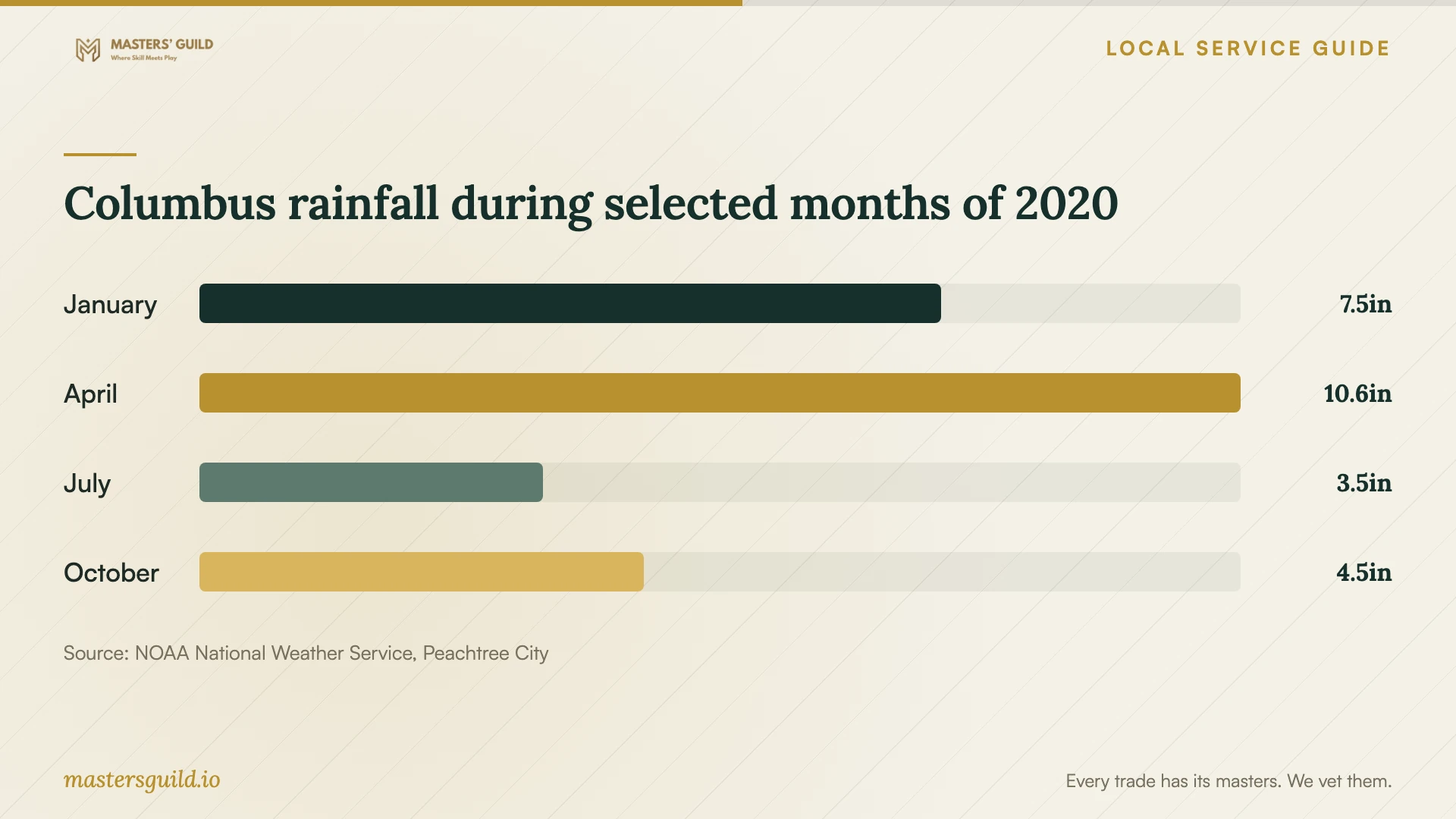
Agree on weather cancellation and rescheduling terms. The National Weather Service recorded 69.09 inches of rain in Columbus during 2020, its fifth-wettest year on record. That historical observation supports keeping flexibility in the appointment, but it cannot predict weather on your cleaning date. [4]
Before arrival, move small objects from sills, provide the agreed access, and secure pets away from work areas. Photograph existing damage you want the crew to acknowledge. At completion, inspect the agreed glass surfaces, check that screens are back in place, and identify any remaining marks before settling the job.
Columbus rainfall during selected months of 2020
Local details that affect your job
State drought rules affect the DIY decision
For a Columbus appointment, check Georgia EPD's declaration and your water supplier's notice before choosing DIY exterior washing. The retrieved EPD page reports statewide Level 1 maintained in August 2026. If officials move the area to Level 2, the state restriction on non-commercial building washing becomes relevant; commercial exemptions require attention to the actual activity. Confirm how window washing fits before relying on an exemption. [1] [2]
A nearby storm drain needs a disposal conversation
Columbus's 2015 council agenda proposal addresses detergent-containing building-exterior wastewater entering the separate storm drainage system. If runoff from your windows could reach a street drain, ask the bidder for a containment and disposal plan and ask city Engineering to confirm current requirements. The historical proposal does not verify adoption or current code wording. [3]
Choose the scope that fits your property
| Your situation | Scope to request | Resolve before booking |
|---|---|---|
| Accessible glass with routine dirt | Selected windows or a ground-floor visit | Decide which surfaces you will clean yourself |
| Upper windows or difficult access | A provider's access assessment | Equipment, insurance, and access through gates or porches |
| Screens, tracks, or visible residue | Itemized work beyond glass washing | Included tasks, treatment method, and approval for extras |
| Exterior washing during higher drought restrictions | A method reviewed against the applicable notice | Georgia Level 2 restricts non-commercial building washing; confirm the activity and any exemption |
| Wash water could reach a street drain | A containment and disposal plan | Confirm current city requirements; the 2015 agenda proposal is historical evidence |
Your hiring checklist
- Send the same window list and access photos to each bidder.
- Specify interior glass, exterior glass, screens, and tracks.
- Request separate approval and pricing for stain or residue treatment.
- Ask for proof of insurance and the upper-window access plan.
- Check the applicable water-use notice before exterior work.
- Agree on runoff handling near street drains.
- Confirm weather rescheduling terms and the total payable price.
- Inspect the completed scope and screen placement with the crew.
Frequently Asked Questions
How much should I budget?
Get written prices for your window list and access conditions. The supplied evidence does not establish a Columbus price range. Compare total payable amounts and ask bidders to separate screens, tracks, stain treatment, and other optional work.
Must window cleaning happen before 10 a.m.?
Georgia's non-drought 4 p.m. to 10 a.m. schedule concerns plant irrigation. The rule states that this paragraph does not limit outdoor water uses for other purposes. Check drought declarations and water-system notices for the appointment rather than applying irrigation hours to window washing. [2]
Does hiring a professional settle the drought question?
Ask about the actual method. Georgia exempts commercial pressure washing and other activities essential to daily business from its outdoor water-use restrictions, but does not name window cleaning as a separate exemption. Confirm applicability with your water supplier if higher restrictions apply. [2]
Should screens and tracks be included?
Include them if you want the crew to clean them, and ask the bidder to state the tasks in writing. Specify who removes and replaces screens. Ask the crew to flag damaged screens before handling them.
Sources and scope
This guide combines the sources below with practical planning guidance. Figures apply to the stated geography and period; request a written quote for your property.