
Local service guide
Pressure Washing in Columbus, GA: Hiring Guide
Arrange Pressure Washing in Columbus, GA by asking for a written scope that names each surface, the cleaning method, stain-treatment expectations, and wash-water disposal. For a house built before 1978, Georgia EPD says a hired contractor must hold RRP certification and use lead-safe practices. Resolve that requirement before accepting an exterior-washing quote. [2]
Define the job before comparing quotes
Give each contractor the same description: driveway, front walk, patio, siding, or another named surface. Add approximate dimensions, photos, access restrictions, and the areas you want left untouched. Ask whether the quoted work includes steps, porch ceilings, trim, furniture moving, or cleanup. Keep roof work as a separate scope so you can assess the proposed method and access plan.
Describe the result you want. For an oil-marked driveway, ask the contractor to distinguish general cleaning from stain treatment and explain any limits before you book. For painted siding, state whether you want maintenance cleaning or preparation for repainting. Request a test area and agree on the finish you will inspect after the surface dries.
Ask for an itemized total that includes treatment products, wash-water handling, access equipment, and cleanup. Request proof of insurance and ask how the contractor handles accidental damage. Compare the proposed work and exclusions alongside the price; avoid accepting an unexplained package that combines surfaces you have not discussed.
Check older painted exteriors before booking
Georgia EPD says houses built before 1978 may contain lead-based paint, with particular concern for houses built before 1950. Its pressure-washing guidance allows homeowners to wash those exteriors at a low pressure setting while maintaining wastewater containment and proper disposal. EPD says contractors hired for this work must hold RRP certification and use lead-safe work practices. [2]
For an older painted house, request the contractor's RRP certification and a written explanation of wastewater containment and paint-chip cleanup. Georgia EPD states that leaving paint chips on the ground violates Georgia solid-waste rules. Include cleanup in the agreed price and identify who will inspect the ground before the crew leaves. [2]
If you want a lead assessment before deciding on the work, Georgia EPD directs homeowners to hire a Georgia-certified lead inspector or risk assessor. Share any existing reports with the washing contractor. If you do not know the construction year, establish it before approving work on painted surfaces. [2]
Agree on wash-water handling
Walk the property with the contractor and point out street drains, drainage channels, and the route water takes from the driveway. Ask which cleaning products they propose, how they will collect wastewater, and where they intend to dispose of it. Get that explanation before work begins, especially if the job includes oil stains or painted surfaces.
A Columbus council agenda document introduced in October 2015 contains proposed stormwater provisions addressing exterior-washing wastewater with soap, detergent, degreaser, solvent, or other harmful cleaning substances. The document leaves adoption details blank, so it does not establish the current rule. Use it to frame a specific question for the city's Engineering Department about the planned discharge and disposal method. [4]
The city's current illicit-discharge page explains that stormwater staff investigate pollution reports and check storm-system discharge points for pollutants. Residents can report dumping, pollution, or spills through 311 or 706-653-4000. If you see a spill during the job, record the location and what you observed for that report. [1]
Prepare the property and agree on scheduling
Before the appointment, agree on water access, parking, hose routes, and entry through gates. Ask the contractor what you should move or protect, including vehicles, planters, outdoor furniture, and items near the work area. Identify loose paint, damaged trim, open joints, and other existing defects in photos that both parties can review.
Ask how the contractor will protect nearby plants, fixtures, and openings. Agree on when you can use the cleaned area again and how you will inspect the result. For any planned painting or sealing, ask the person doing that later work to specify the drying requirements rather than choosing a fixed interval yourself.
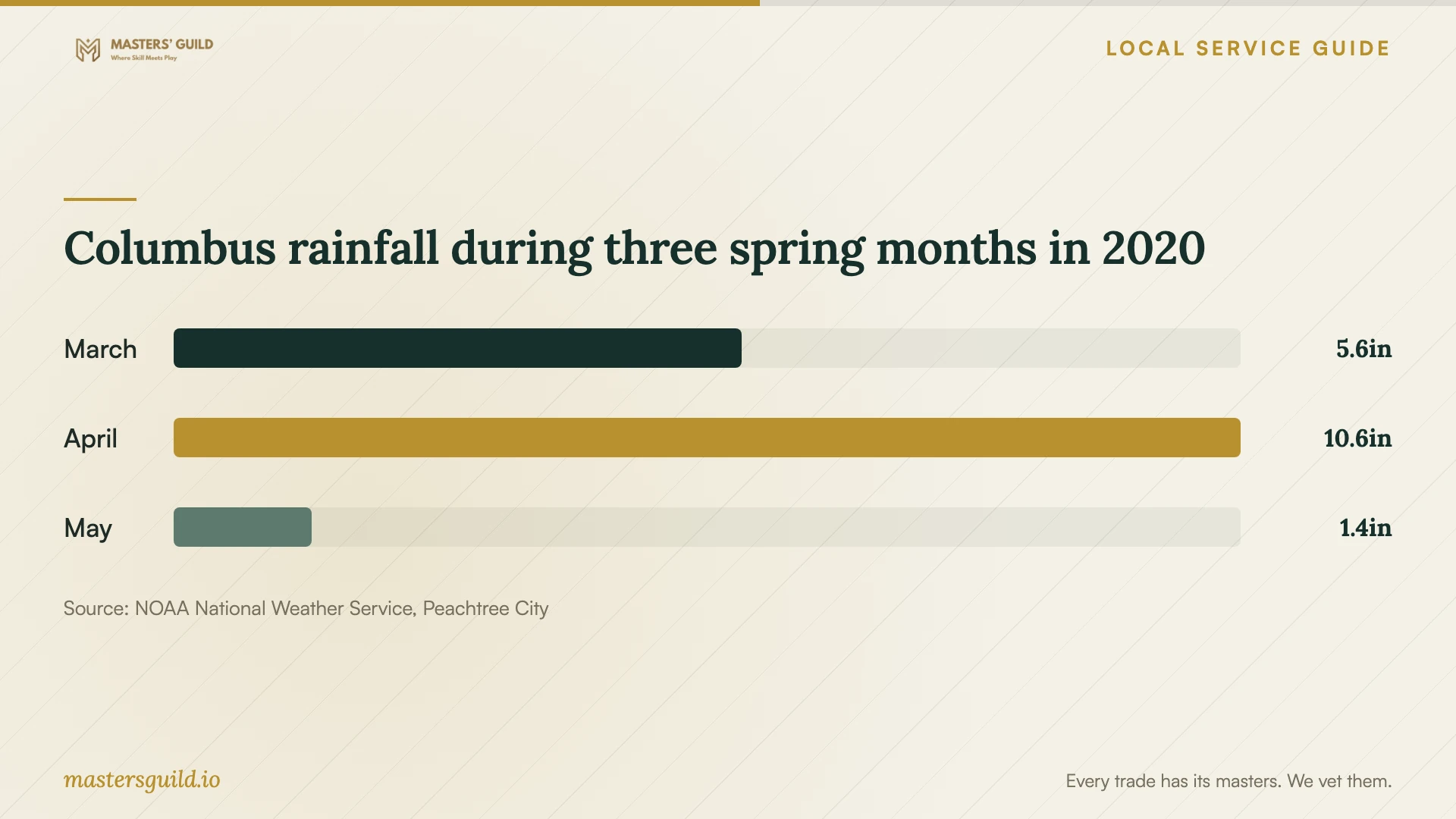
Choose an appointment with an agreed weather contingency. The National Weather Service recorded 10.57 inches of rain in Columbus during April 2020, compared with 1.37 inches during May that year. Those historical observations illustrate why a contractor should explain postponements and runoff controls; they do not identify the best booking month or predict this year's weather. [3]
Columbus rainfall during three spring months in 2020
Local details that affect your job
Georgia requirements affect older-home contractor selection
For a Columbus home built before 1978, follow Georgia EPD's exterior pressure-washing guidance: ask a hired contractor for RRP certification and lead-safe work practices. Require a containment and disposal plan in the scope. EPD also identifies paint chips left on the ground as a Georgia solid-waste violation, so inspect cleanup before closing out the job. [2]
Use Columbus's pollution-reporting route
Columbus directs residents to call 311 or 706-653-4000 for dumping, pollution, or spills. The Citizen Service Center forwards reports to the appropriate department, and a stormwater inspector investigates pollution complaints. Use this route if you observe a spill or suspected polluted discharge during exterior cleaning. [1]
Confirm discharge rules for the proposed method
The city's historical council agenda text singles out detergent-bearing exterior wash water and contaminated pavement wash water in proposed discharge restrictions. Because the fetched document does not establish adoption, ask Engineering to confirm the current requirements for your contractor's proposed method. Do not assume that a drain near the work area provides an approved disposal route. [4]
Choose the next step for your job
| Situation | Next step | Include in the scope |
|---|---|---|
| Painted exterior on a pre-1978 home | Request RRP certification under Georgia EPD guidance. | Lead-safe practices, wastewater containment, disposal, and paint-chip cleanup. |
| Driveway with oil marks | Ask for separate cleaning and stain-treatment expectations. | Test area, treatment limits, and wash-water handling. |
| Wash water could reach a street drain | Ask Engineering to confirm the current requirements for the proposed disposal method. | Collection method and agreed disposal destination. |
| Dumping, pollution, or a spill during work | Report it to 311 or 706-653-4000. | Record the location and observations for the city. |
Your hiring checklist
- Send the same surface list, dimensions, photos, and desired result to each contractor.
- Establish the home's construction year before approving painted-exterior work.
- Ask for the cleaning method and a test area for each surface.
- Get wastewater containment, disposal, and cleanup in the written scope.
- Request insurance documentation and any certification discussed for the job.
- Agree on access, preparation, weather postponements, and inspection after drying.
Frequently Asked Questions
Can I pressure wash a house built before 1978?
Georgia EPD describes pressure washing as restricted rather than prohibited. It allows homeowners to use a low pressure setting with wastewater containment and proper disposal. For hired contractors, EPD requires RRP certification and lead-safe practices. Discuss the painted surfaces and cleanup plan before booking. [2]
How should I compare pressure-washing prices?
Request quotes for the same surfaces, dimensions, cleaning goals, and cleanup tasks. Ask contractors to itemize stain treatment, access equipment, and wastewater handling. Confirm exclusions and the total payable before choosing an offer.
Who handles pollution reports in Columbus?
Call the Citizen Service Center at 311 or 706-653-4000 to report dumping, pollution, or spills. The city forwards the report to the appropriate department, and a stormwater inspector investigates pollution complaints. [1]
Should I choose a particular month for washing?
Agree on a weather contingency and check conditions near the appointment. The climate chart uses observed rainfall from 2020. It cannot predict your appointment's weather or establish current contractor availability. [3]
Sources and scope
This guide combines the sources below with practical planning guidance. Figures apply to the stated geography and period; request a written quote for your property.