
Local service guide
Plumbing Services in Columbus, GA: Hiring Guide
Arrange Plumbing Services in Columbus, GA by describing the affected fixtures, asking who will handle permit questions, and getting a written scope before approving repairs. For standing water outside, identify whether you need a plumber or a city drainage response: Columbus Public Works handles city-owned stormwater systems and identifies Columbus Water Works as responsible for drinking-water and sewer lines. Ask the contractor or utility to confirm responsibility for the specific pipe before authorizing excavation. [3]
Describe the problem before booking
Tell the plumber which fixtures you cannot use, when you noticed the problem and whether it affects one room or several. Send photographs of visible leaks, the area beneath the fixture and any equipment label. For a drain problem, describe what happens when you run another nearby fixture. Report observations rather than choosing a repair method before the plumber investigates.
For water escaping from a fixture, close its accessible shutoff valve if you can reach and operate it safely. Keep clear of water near electrical equipment. Ask the dispatcher what you should stop using while you wait, whether the visit includes diagnosis, and how the plumber will obtain your approval for repair costs.
Confirm permits before scheduling alterations
Columbus Inspections & Code enforces the state-adopted construction codes, including plumbing codes. Its staff examine plans, process applications, issue permits and schedule inspections. Ask the department whether your specific repair or alteration requires a permit or inspection. Describe the fixtures, pipes and connections you plan to change before agreeing on a start date. [1]
The city's permit directory lists plumbing and gas-piping forms separately. For a water-heater replacement involving gas connections, ask the contractor which applications cover the full scope. Put responsibility for applications, fees and inspection appointments in the quote, and ask whether the proposed schedule includes time for required inspections. [2]
Compare credentials and written quotes
The city requires a general business license for businesses operating in Columbus and Muscogee County. Its business-license guidance also says state-regulated professions must provide their state license when applying locally. Ask the plumbing company for its legal business name, applicable Georgia trade credentials and evidence of insurance. Include both business registration and trade credentials in your hiring check. [4]
Request a quote that separates the diagnostic visit, labor, parts and any proposed permit charges. For fixture replacement, name the model and identify who supplies it. For concealed work, ask who opens the wall and who restores it. Agree on how the plumber will document a changed scope and obtain your approval before doing additional work.
For a recurring drain problem, ask what the plumber needs to investigate before recommending pipe replacement. If the proposal includes excavation, request the location, extent of digging, restoration work and exclusions in writing. Compare the proposed investigation and repair across bids rather than comparing totals for different jobs.
Route outdoor drainage problems to the right contact
Columbus Public Works' Rainwater Division handles city-owned stormwater pipes, inlets and open ditches. The division excludes drinking-water and sewer lines from its responsibilities and identifies Columbus Water Works as the responsible organization for those systems. It also says owners maintain driveway pipes and driveways. [3]
Before booking drain cleaning for outdoor standing water, photograph the location and describe whether you see water at a street inlet, driveway pipe or plumbing fixture. Ask the city or contractor to identify the system and ownership. For a stormwater blockage or cave-in, the Rainwater page directs residents to the Citizens Service Center at (706) 653-4000, Monday through Friday, 7:00 a.m. to 5:30 p.m. [3]
Specify replacement fixtures without assuming savings
Ask the plumber to record the replacement fixture's model and rated flow, along with compatibility and installation details. EPA says WaterSense-labeled products meet its efficiency and performance specifications through independent third-party certification. Kitchen faucets cannot earn that label; EPA recommends a kitchen-faucet flow rate of 1.8 gallons per minute or less. [5]
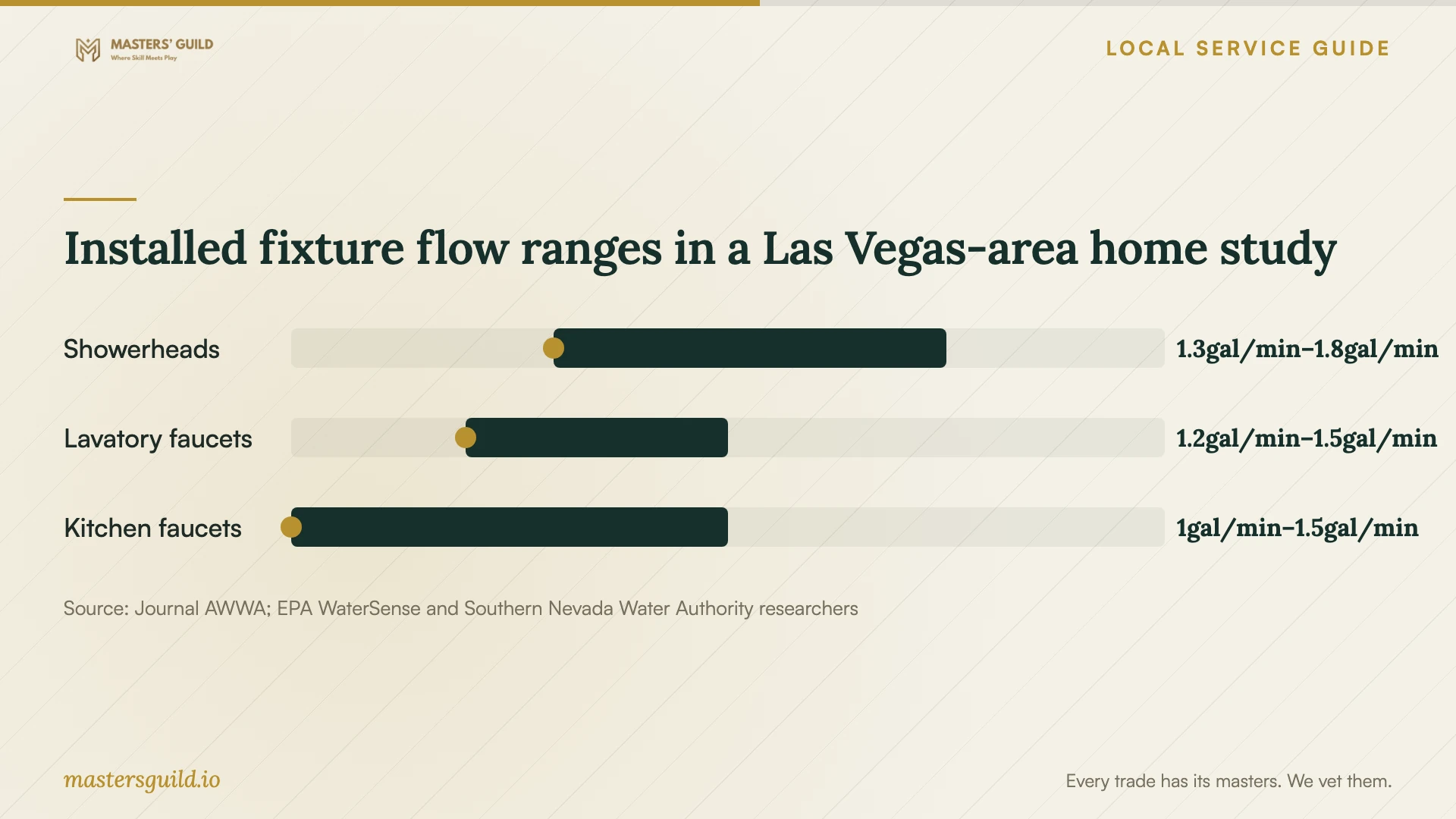
The chart gives installed fixture specifications from a study of 160 WaterSense-labeled homes in the Las Vegas region. Use it to discuss flow rates when comparing products. The researchers studied whole homes, including outdoor water use, so their findings do not establish how much a fixture replacement will save in your household. [6]
Installed fixture flow ranges in a Las Vegas-area home study
Local details that affect your job
Use the correct submission route
Under the city's notice effective January 1, 2026, staff still accept plumbing permit submissions in person. New residential and commercial plans must go through the online portal. For a bathroom alteration or larger project, ask which submission route applies to the complete scope. Contact Inspections & Code at (706) 225-4126 or visit 1111 1st Avenue, third floor, during its Monday through Friday hours of 8:00 a.m. to 5:00 p.m. [1] [2]
Check driveway-pipe ownership before paying for work
The Rainwater Division says driveway pipes and driveways belong to private owners, while the division maintains city-owned stormwater systems. If your blockage sits beneath a driveway or beside a street inlet, establish ownership before approving excavation. Ask who will authorize the work and restore the affected surface. [3]
Choose your next step by the affected system
| Situation | Next step | Clarify before approval |
|---|---|---|
| Leak at an indoor fixture | Arrange a plumbing assessment | Diagnostic charge, repair scope and safe interim shutoff |
| Bathroom alteration | Discuss the scope with Inspections & Code and the plumber | Applicable approvals, submission route and inspection scheduling |
| Water-heater work with gas connections | Discuss plumbing and gas-piping applications | Who handles each part of the proposed work |
| Blocked city stormwater inlet | Contact the Citizens Service Center | Whether the affected inlet belongs to the city |
| Blocked driveway pipe | Confirm private ownership and arrange the appropriate assessment | Excavation approval and driveway restoration |
Your hiring checklist
- Photograph the affected fixtures and accessible pipework; write down when the problem occurs.
- Describe everything you plan to replace or relocate before asking about permits.
- Request the company's legal name, applicable trade credentials and insurance documentation.
- Ask what the diagnostic charge covers and when you will receive a repair price.
- Compare quotes using the same fixture models, access work and restoration scope.
- Assign responsibility for any applications and inspection appointments in writing.
- Agree on written approval for additional work and request completion records.
Frequently Asked Questions
Does a small plumbing repair need a permit?
Ask Inspections & Code whether your specific repair requires a permit or inspection. Contact the department at (706) 225-4126 and describe the work before scheduling it. Ask the plumber to include responsibility for any required application and inspection in the written scope. [1]
Can I submit a plumbing permit in person?
Yes. The city's notice effective January 1, 2026 includes plumbing permits among submissions staff accept in person. New residential and commercial plans require the online portal, so confirm the route if your plumbing work forms part of a larger project. [2]
Who should I contact about water collecting near the street?
Ask whether the problem involves a city stormwater system, a private driveway pipe or a drinking-water or sewer line. The Rainwater Division handles city-owned stormwater systems and directs stormwater blockage reports to (706) 653-4000. It identifies Columbus Water Works as responsible for drinking-water and sewer lines. [3]
Should a replacement kitchen faucet have a WaterSense label?
Kitchen faucets are ineligible for the WaterSense label. EPA recommends 1.8 gallons per minute or less for that category. Ask for the exact model and flow specification, and discuss whether it suits your sink and intended use. [5]
Sources and scope
This guide combines the sources below with practical planning guidance. Figures apply to the stated geography and period; request a written quote for your property.