
Local service guide
Columbus, GA mold removal: Hiring and Repair Planning
For mold removal in Columbus, hire an experienced remediation contractor when you suspect hidden growth, have contaminated-water damage, or need help assessing extensive damage. Ask for a written scope that covers cleanup and the moisture problem. EPA says homeowners can handle many patches smaller than about 10 square feet, but cleanup remains incomplete until you fix the water source. [4]
Choose the right cleanup scope
Start with the water history: a plumbing leak, roof leak, condensation or flood. Tell the contractor when you first noticed dampness, which rooms smell moldy and whether earlier cleanup failed. EPA warns that mold often returns when homeowners clean it without correcting the water problem. [4]
For a small patch on a hard surface, EPA recommends detergent and water followed by complete drying. Moldy porous materials such as carpet or ceiling tiles may need disposal. Before attempting cleanup, review exposure precautions, including gloves, goggles and a properly fitting N-95 respirator. Consult a health professional if you have health concerns. [4]
Use an experienced professional for sewage or other contaminated-water damage. If you know or suspect that mold has contaminated the HVAC system, EPA advises against running it because it could spread mold throughout the building. Ask the contractor how they will investigate the system before you restart it. [4]
Request a quote you can compare
Ask the contractor to describe the rooms and materials included, how they will investigate concealed damage, which materials they plan to clean or remove, and how they will protect adjoining spaces. Request separate line items for investigation, cleanup, disposal, moisture-source repairs and rebuilding. Ask who will perform each part.
Give competing contractors the same photographs and water history. Ask whether their price includes access openings, drying equipment, contents handling and repair of removed finishes. Agree on how they will document additional damage and obtain your approval for added work. Use those answers to compare the scope behind each total.
EPA recommends checking references and confirming experience with mold cleanup. Georgia DPH says its indoor-air-quality branch offers information but does not provide indoor mold services, and that mold inspection, testing and remediation practices have no enforceable state or federal standards. Ask anyone claiming government approval to identify the agency and the exact credential. [3] [4]
Decide whether testing serves a purpose
When you can see mold, EPA says sampling is unnecessary in most cases. EPA has set no federal mold or mold-spore limits, so a sample cannot demonstrate compliance with a federal mold standard. Ask a proposed tester to explain the question they will investigate and how the results would change the work. [4]
A moldy smell without visible growth can justify investigating concealed areas. EPA identifies possible locations behind drywall, beneath carpet and around leaking pipes, and warns that disturbing concealed growth can release spores. Describe the smell and previous water damage rather than opening suspect walls yourself. [4]
EPA says surface sampling can help assess cleaning in some situations and recommends professionals with experience designing sampling protocols and interpreting results. Agree on the purpose, sampling locations and interpretation before adding testing to the contract. [4]
Plan repairs and check the finished work
Ask for a work sequence that identifies when the contractor will stop the water intrusion, remove damaged materials, dry the area and restore finishes. Request the expected start date, equipment duration and any limits on room access. Have the contractor explain which conditions could change the schedule.
EPA considers moisture correction essential to completion and says visible mold and moldy odors should be absent after cleanup. Revisit the affected area after the work to check for renewed moisture or growth. Do not paint or caulk over mold; EPA advises cleaning and drying the surface before painting. [4]
For prevention, EPA recommends drying wet materials within 24 to 48 hours, maintaining gutters and keeping air-conditioning drain lines clear. It recommends indoor relative humidity below 60 percent, ideally 30 to 50 percent. Ask your contractor which moisture-control steps fit the cause they found in your home. [4]
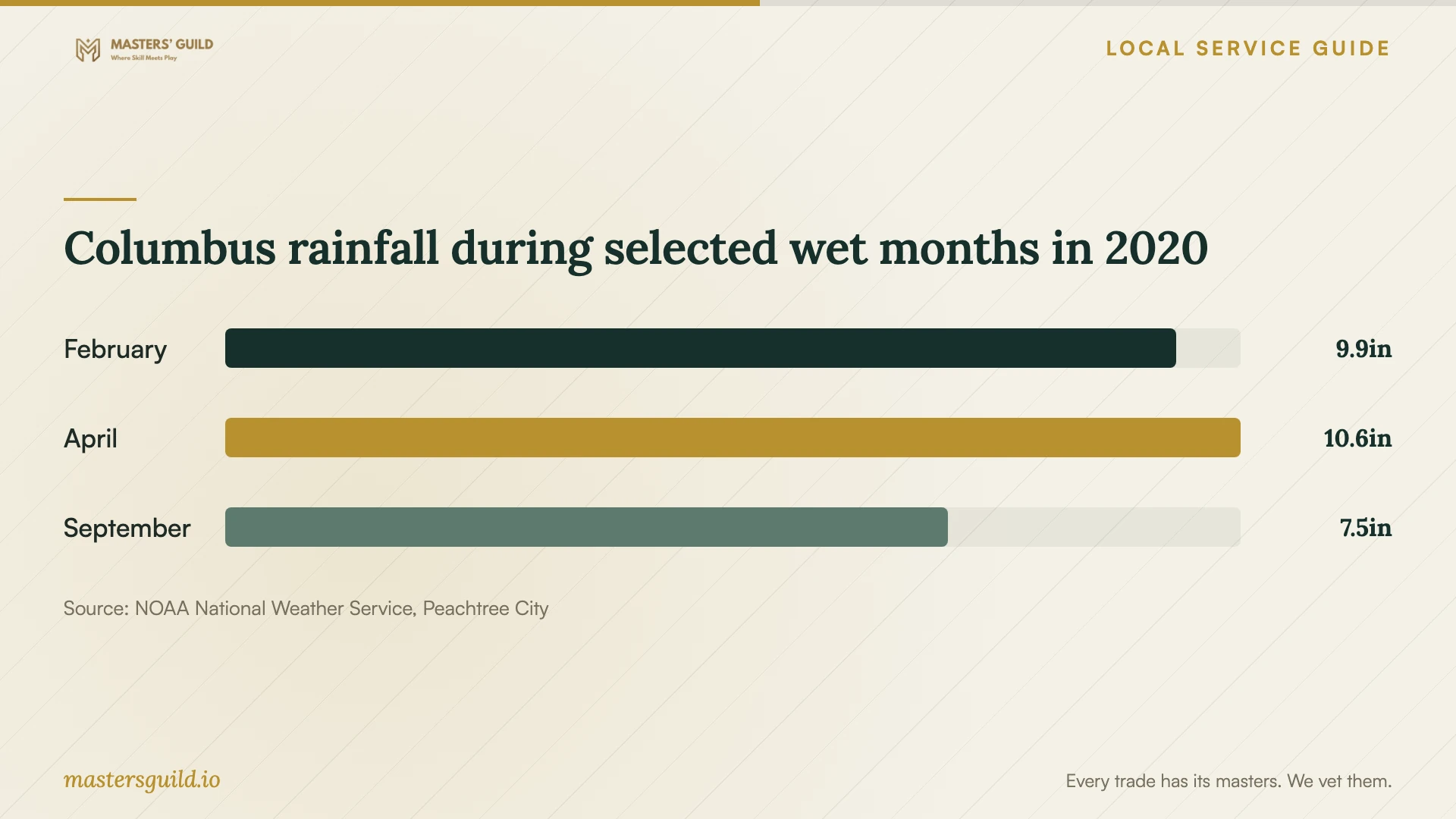
Columbus rainfall during selected wet months in 2020
Local details that affect your job
Rental complaints have a Columbus inspection route
If you rent and your landlord has not addressed leaks or damp conditions, report the problem to the owner or manager and keep photographs and correspondence. Columbus Property Maintenance accepts rental-condition complaints at 706-225-4126. A qualified inspector visits and checks conditions against the International Property Maintenance Code, then initiates action when the property falls below minimum standards. Georgia DPH cautions that local housing codes generally do not enforce mold-specific standards, so describe the leak and dwelling conditions rather than requesting a mold clearance certificate. [1] [3] [4]
Flood-zone rebuilding needs local coordination
Columbus Engineering identifies past flooding along waterways including Bull Creek and the Chattahoochee River. Its floodplain page directs residents to the city address map and the layer labeled Flood Plane; staff offer mapping help at 706-225-4441. Before commissioning flood-related rebuilding, check your property's mapped status. The city instructs residents to contact Inspections and Codes for permits for development in flood zones. Ask the department how that requirement applies to your repair scope before approving reconstruction. [2]
Choose your next step
| Situation | Next step | Reason |
|---|---|---|
| Small hard-surface patch under about 10 square feet | Consider EPA's homeowner cleanup guidance and fix the moisture source. | EPA says homeowners can handle many patches of this size. |
| Sewage or other contaminated-water damage | Hire a professional experienced in contaminated-water restoration. | EPA recommends professional help for this damage. |
| Moldy smell with no visible source | Ask an experienced professional to investigate concealed areas. | Disturbing hidden growth can release spores. |
| Unresolved rental leaks or dwelling conditions | Report the problem to the landlord and consider a Columbus property-maintenance inspection. | City inspectors assess minimum housing standards. |
| Flood-zone reconstruction | Confirm the repair and permit scope with Columbus Inspections and Codes. | The city requires permits for development in flood zones. |
Your hiring checklist
- Photograph affected surfaces and record when the leak, odor or dampness began.
- Describe previous repairs and provide access information for the attic, crawl space or affected rooms.
- Ask each contractor to identify the moisture source and who will repair it.
- Request an itemized scope with cleanup, disposal, drying, rebuilding and exclusions.
- Check mold-cleanup references and ask for proof of insurance.
- Agree on written approval for added work and on access restrictions during cleanup.
- Request photographs, repair documentation and an explanation of completion checks.
Frequently Asked Questions
How much should I budget for cleanup?
Use a site-specific written quote. Ask contractors to price the same affected areas and separate cleanup from leak repair and rebuilding. Confirm allowances for concealed damage, disposal and equipment before comparing totals.
Does Georgia DPH inspect mold in my home?
Georgia DPH says its indoor-air-quality branch provides educational information and does not offer services for indoor mold growth. Its Environmental Health Section regulates tourist accommodations, while homeowners and renters follow different assistance routes. [3]
Can a contractor guarantee a home contains no mold spores?
EPA says removing all indoor mold and mold spores is impossible. Ask for moisture correction, removal of visible growth and documented completion checks rather than a promise of zero spores. [4]
Sources and scope
This guide combines the sources below with practical planning guidance. Figures apply to the stated geography and period; request a written quote for your property.