
Local service guide
Lighting installation in Columbus, GA
Arrange Lighting installation in Columbus, GA by giving an electrical contractor your fixture models, locations, ceiling heights, and proposed switch changes. Ask for a written scope and confirm permit responsibilities with Inspections and Code before scheduling. For exterior changes at a designated historic property, resolve the city’s Certificate of Appropriateness requirement before construction. [1] [2]
Define the work before comparing quotes
Give each contractor the same room-by-room list. Identify lights you want replaced, lights you want added, and switches you want moved or changed. Include fixture model numbers, installation instructions, dimensions, and weight. Take photos from floor level of the existing fixtures, switches, and surrounding ceiling or wall.
Ask the contractor to inspect existing wiring and mounting support before committing to a replacement-only scope. For pendants, mark your intended position relative to the table or counter. For recessed lights, discuss layout and access before buying a set. Ask who will patch and paint any openings.
Request separate amounts for fixtures, installation labor, wiring and controls, access equipment, permit handling, and repairs. Have the contractor explain how they will price conditions discovered after opening the ceiling. Compare the total agreed scope rather than a per-light figure that leaves out work you need.
Choose a contractor whose license fits the work
Ask for the responsible contractor’s Georgia electrical license number and class, and confirm its current status before hiring. Georgia restricts Class I electrical contractors to single-phase installations with no more than 200 amperes at the service drop or service lateral. Class II electrical contractor licenses are unrestricted. [3]
Do not choose the license class from the number of lights alone. Ask the contractor to confirm that their license covers your home’s electrical service and proposed work. Request proof of insurance and identify who will supervise the installation, handle paperwork, and return if you find a problem. [3]
Confirm permits and exterior review before scheduling
Contact Columbus Inspections and Code with a specific description: replacing an existing fixture, adding a lighting location, extending wiring, or changing a circuit. The city’s permits page lists an electrical permit but does not identify a fixture-replacement exemption. Ask the department to confirm the requirements for your scope and any inspection steps. [1]
For a designated historic property, ask Planning about exterior lighting that changes the building’s materials or appearance. The city requires a Certificate of Appropriateness before construction for those changes. Bring fixture images and proposed mounting locations to the discussion, and avoid committing to an installation date until you understand the review route. [2]
Select brightness and controls together
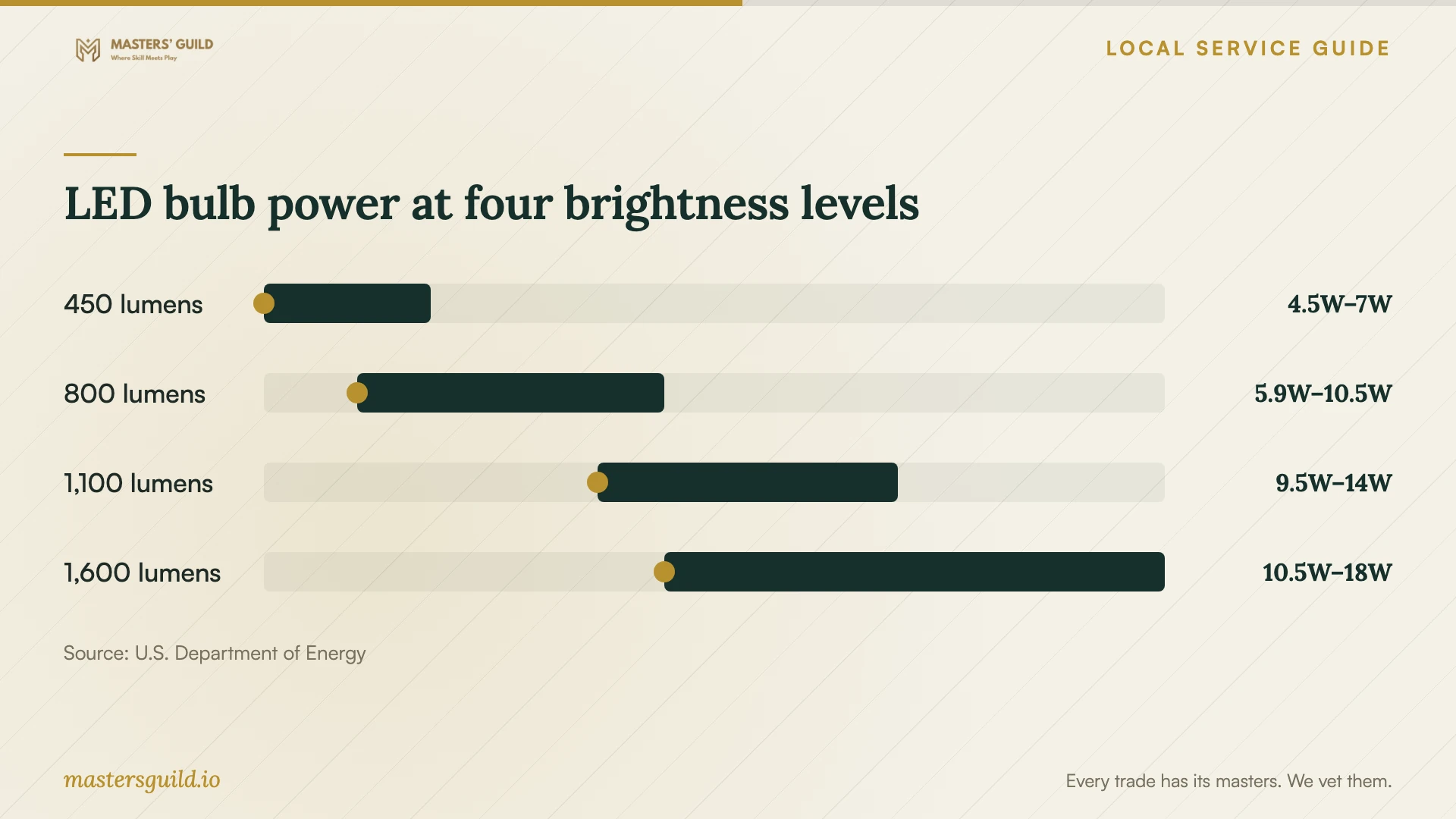
Use lumens to compare brightness and watts to compare power input. The Department of Energy’s national reference table pairs an 800-lumen output with 60 watts for an incandescent bulb and 5.9 to 10.5 watts for an LED. Those figures describe bulb power, not installation cost or a household bill. [4]
Check the product specifications for both dimming capability and compatibility with your proposed dimmer. DOE also advises checking whether an LED bulb suits a fully enclosed fixture because heat buildup can affect performance and life expectancy. Send the bulb, fixture, and dimmer specifications to the contractor together. [4]
Choose light appearance before ordering matching fixtures. DOE lists 2,700 K as warm and 3,000 K as soft, with both used in homes. Try your preferred color temperature in the room, then record it in the purchase list so you can discuss any substitutions before installation. [4]
Prepare for installation and check the result
Agree on arrival time, access arrangements, power interruption, and furniture protection. Clear the working area and keep fixture packaging, instructions, and purchase records available. Ask the contractor how they will handle missing parts or a fixture that does not fit the agreed location.
Before final acceptance, operate each switch and control with the contractor present. Check pendant positions, dimming behavior, motion settings, and the appearance of the light in the room. Record any corrections, ask for product warranty information, and obtain the permit and inspection records applicable to your project.
LED bulb power at four brightness levels
Local details that affect your job
Electrical permit submission remains available in person
Under the city’s policy effective January 1, 2026, electrical permits remain among the submissions Inspections and Code accepts in person; new residential and commercial plans must use the online portal. For a lighting project, confirm the required submission with the department at 706-225-4126 or at 1111 1st Avenue, 3rd Floor. Name the person responsible for submitting it in your agreement. [1]
Historic exterior review can affect your installation date
For exterior materials or appearance changes at a designated historic property, obtain a Certificate of Appropriateness before construction. The city lists October 19, 2026 as the application deadline for its November 9, 2026 BHAR meeting, with applications due before 5:00 p.m. The applicant or representative must attend for the board to hear the case. Ask Planning which review applies to your exterior lights before choosing a start date. [2]
Match the quote request to your project
| Project | Ask before hiring | Planning decision |
|---|---|---|
| Existing fixture replacement | Will you inspect wiring and mounting support? | Request a defined replacement scope and confirm permit requirements with the city. |
| New light or switch location | Which wiring, access, and surface repairs will you include? | Agree on the layout and repair responsibilities before buying fixtures. |
| Dimmable LED installation | Do the bulb and dimmer specifications confirm compatibility? | Choose the controls and lamps together. |
| Designated historic exterior | Does the proposed appearance change need review? | Resolve the Certificate of Appropriateness before construction. |
| Home with a larger electrical service | Does your license class cover this installation? | Class I covers single-phase installations that do not exceed 200 amperes at the service drop or service lateral; Class II is unrestricted. |
Your hiring checklist
- List each fixture location and distinguish replacements from additions.
- Send model numbers, dimensions, weights, and installation instructions.
- Confirm the contractor’s license status, class, insurance, and supervision arrangements.
- Ask Inspections and Code about your exact scope and assign permit responsibilities.
- Check designated historic status before committing to exterior changes.
- Confirm bulb brightness, color temperature, dimmer compatibility, and fixture suitability.
- Agree on surface repairs, change pricing, power interruption, and final checks.
Frequently Asked Questions
Does replacing a ceiling light require a Columbus permit?
The city’s permits page lists an electrical permit but does not state a replacement-fixture exemption. Describe the exact work to Inspections and Code and ask for a determination before scheduling. Include any wiring or switch changes in that description. [1]
Can historic review apply to a new porch light?
Yes, if the work changes exterior materials or appearance at a designated historic property, the city requires a Certificate of Appropriateness before construction. Ask Planning about your fixture and mounting proposal rather than assuming a small change needs no review. [2]
How should I compare installation quotes?
Give contractors the same fixture list and layout. Ask each to identify included wiring, mounting support, controls, permit handling, access equipment, and surface repairs. Require an explanation of how they will price additional work before accepting an offer.
Can I keep my existing dimmer with new LEDs?
Check compatibility before deciding. DOE advises confirming that LEDs support dimming and work with the dimming system. Give the contractor the existing dimmer model and proposed bulb or fixture specifications. [4]
Sources and scope
This guide combines the sources below with practical planning guidance. Figures apply to the stated geography and period; request a written quote for your property.