
Local service guide
Plan lawn mowing in Columbus, GA
Arrange lawn mowing in Columbus, GA by asking providers to identify your grass, propose a cutting height and explain their clipping plan before you agree to recurring visits. UGA’s Georgia guidance lists mowing intervals that vary by grass species, so choose a schedule around growth rather than assuming a two-week plan fits. Ask for a written quote covering mowing, trimming, edging, cleanup and any hauling. For collected clippings, Columbus requires loose yard waste in the green rolling cart, without bags or household garbage. [1] [3]
Choose a schedule after identifying the grass
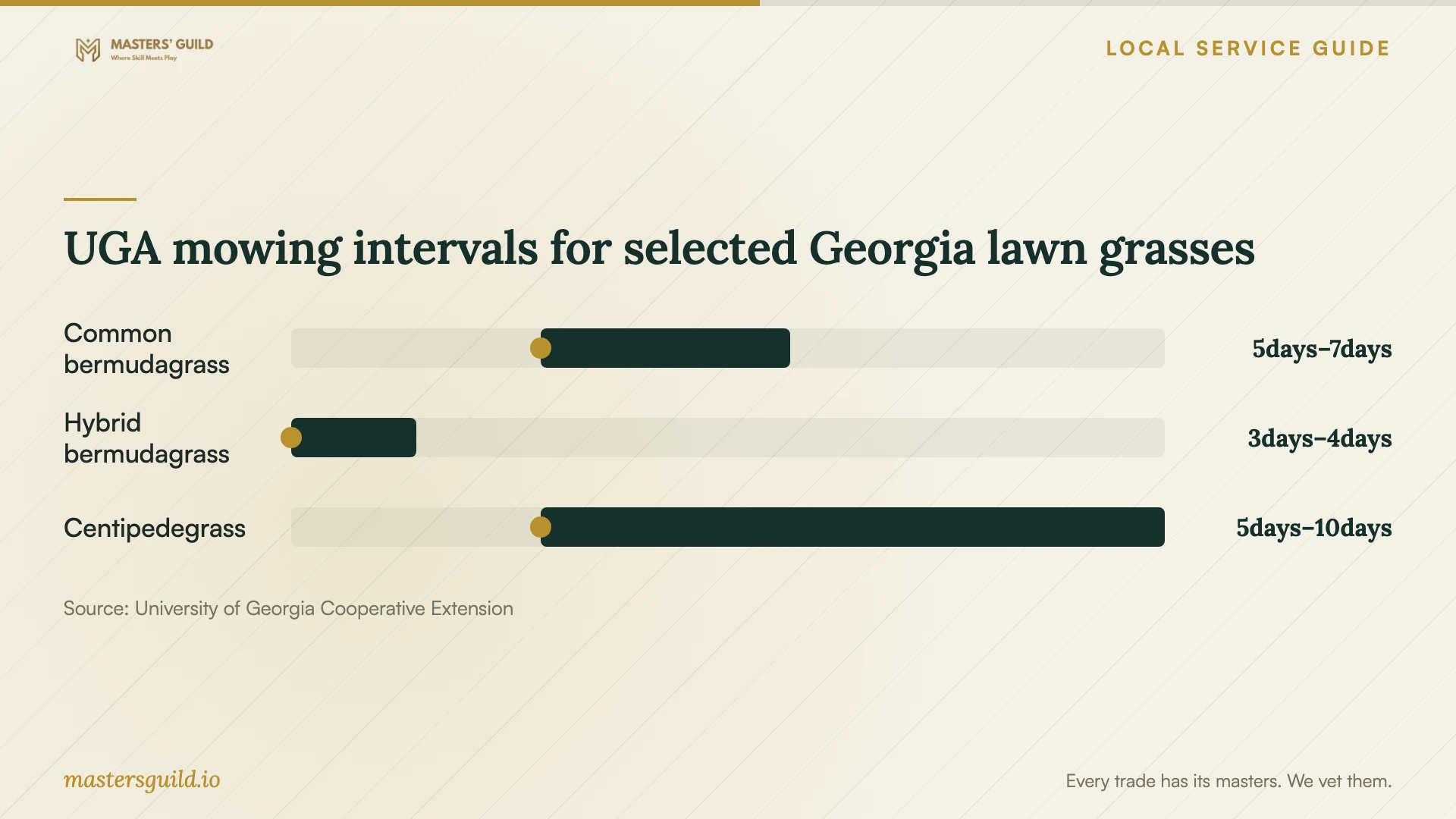
Ask the provider to identify your grass before proposing a recurring schedule. In its Georgia residential turfgrass table, UGA lists common bermudagrass at 1–2 inches with mowing every 5–7 days, hybrid bermudagrass at 0.5–1.5 inches every 3–4 days, and centipedegrass at 1–2 inches every 5–10 days. Use these statewide recommendations as a starting point for discussing your yard’s care. [3]
Use those intervals to question a fixed weekly or biweekly offer. UGA advises frequent mowing during vigorous growth to prevent scalping, which can thin turf and allow weeds to establish. Ask the crew how it will adjust visits when growth changes and who must approve an extra visit. [3]
For an October booking, ask the provider to inspect current growth before setting the remaining season’s visits. Agree on a way to pause or reduce service, a rain-rescheduling process and permission requirements for additional charges. Keep the cutting height and clipping instructions in the written agreement.
Compare quotes for the same work
Request a per-visit quote with a separate price for the first cut if the yard needs extra work. Give each provider the same photos, lawn boundaries and access details. Ask them to list mowing, trimming around obstacles, edging along pavement and cleanup of hard surfaces as separate inclusions or exclusions.
Specify the gate opening, steps, slopes and areas where you want equipment kept out. Mark irrigation heads and identify delicate beds. Ask who moves outdoor furniture and whether the crew needs access to the green cart. Request proof of liability insurance and ask how the provider handles property damage.
Agree on the total charge before work starts, including any bagging, hauling or disposal costs. Compare recurring offers over the same period using each provider’s proposed number of visits. Ask about cancellation terms, missed visits and charges for work you did not approve. Obtain property-specific quotes.
Choose a clipping plan
For routine maintenance, ask whether the crew can return clippings to the lawn. UGA describes grasscycling as leaving clippings after mowing so they decompose and return nutrients to the soil. It recommends cutting at the appropriate height with a sharp blade, mowing dry grass and removing no more than one-third of the plant height. [4]
Ask the crew to disperse clumps instead of leaving piles across the lawn. UGA recommends distributing clippings that remain on top of the grass with a rake or blower. If the lawn has grown too tall between visits, UGA advises raising the height for the first cut and lowering it through subsequent mowings. [4]
Discuss collection if annual bluegrass is producing seedheads. UGA says removing clippings at that stage can reduce the spread of viable seed. Ask the provider to explain its reason for collecting clippings and identify the destination before you approve the added work. [3]
Prepare for the first visit and inspect the result
Send photos of the whole lawn and close-ups of tall patches, narrow access and obstacles. Remove toys and pet waste, secure pets and unlock the agreed gate. Show the crew the property boundary and any shared areas where it needs separate permission to work.
After the first visit, walk the yard with the provider if possible. Check the areas you agreed to mow, the trimming around beds and the cleanup along paths. Discuss any scalp marks, clumps or missed strips before confirming recurring service. Keep a photo record and write down any change to the height, schedule or scope.
UGA mowing intervals for selected Georgia lawn grasses
Local details that affect your job
Use the green cart without bags
Columbus collects leaves, grass clippings, pine needles and similar yard debris once a week. The city requires yard waste in the green rolling cart, free of bags and household garbage, with the cart at the curb on or before collection day. Bulk waste and yard waste share a collection day. If your crew collects clippings, tell it to empty them loose into the green cart and agree who places the cart at the curb. Check your address’s collection day before arranging a cleanup. [1]
Separate grass from woody cleanup debris
Columbus lists grass clippings and leaves among Granite Bluff’s acceptable materials, but it directs limbs, stumps, trees, shrubs and land-clearing debris to Pine Grove. At Pine Grove, the city prohibits mixed loads and separation at the site, and contractors must show proof of the Muscogee County job location, such as a work order or invoice. Ask a cleanup provider to identify the destination for each material and keep the loads separate. Call Granite Bluff to confirm current Saturday access before arranging a weekend haul. [2]
Choose the scope for your lawn
| Your situation | Work to request | Point to confirm |
|---|---|---|
| Routine mowing with suitable grass conditions | Return clippings and disperse clumps | UGA recommends dry grass, sharp blades and no more than one-third height removal. |
| Grass has grown too tall between visits | A staged cut with follow-up mowing | UGA advises a higher first cut, followed by gradual lowering. |
| You want clippings collected | Collection into the green cart or quoted hauling | Columbus excludes bags and household garbage from yard waste in the green cart. |
| Cleanup includes branches and shrubs | Separate grass and woody-debris handling | Granite Bluff accepts grass and leaves; Pine Grove handles the listed woody debris. |
| Annual bluegrass has seedheads | Discuss collecting the clippings | UGA says removal can reduce the spread of viable seed. |
Your hiring checklist
- Send the same lawn photos and work boundaries to each provider.
- Ask the provider to identify the grass and write down the proposed cutting height.
- Agree on the visit schedule, rain delays and approval for extra visits.
- List mowing, trimming, edging and hard-surface cleanup in the quote.
- Choose a clipping plan and specify who handles cart placement or hauling.
- Request proof of liability insurance and a property-damage contact.
- Clear access, secure pets and mark irrigation heads before arrival.
- Inspect the first cut and confirm any changes before recurring service.
Frequently Asked Questions
Should I book weekly or biweekly mowing?
Ask the provider to identify the grass and assess its growth first. UGA’s Georgia table lists 5–7 days for common bermudagrass, 3–4 days for hybrid bermudagrass and 5–10 days for centipedegrass. A fixed two-week plan falls outside those published intervals. Agree on adjustments as growth changes. [3]
Does the crew need to bag the clippings?
Discuss returning clippings to the lawn when the crew can follow UGA’s grasscycling guidance. If you choose collection for city pickup, the crew must empty the clippings loose into the green rolling cart. Columbus does not allow bags or household garbage with that yard waste. [1] [4]
Can a provider cut an overgrown lawn short in one visit?
Ask for a staged cutting plan. UGA recommends raising the mowing height for the first cut when grass has grown too tall, then lowering it through subsequent mowings. Request a separate first-visit price and agree on the follow-up work before the crew starts. [4]
What should a hauling quote include?
Ask for loading, transport, disposal and final cleanup in the written scope. Confirm how the provider will separate grass from woody debris. Columbus lists grass and leaves at Granite Bluff and directs the listed woody materials to Pine Grove, where contractors must provide proof of the job location. [2]
Sources and scope
This guide combines the sources below with practical planning guidance. Figures apply to the stated geography and period; request a written quote for your property.