
Local service guide
Gardening in Columbus, GA: Plan and Hire
For Gardening in Columbus, GA, ask for a written scope that separates cleanup, planting, ongoing care and debris removal. Decide whether you want hand weeding or pesticide treatment before comparing offers. Columbus provides weekly yard-waste collection with specific sorting rules, and Georgia requires both commercial applicator and pesticide contractor licenses for paid pesticide applications on another person's property. Confirm those details before accepting a quote. [1] [2]
Define the work before comparing quotes
Start with a walk-through or photographs of the beds, paths and shrubs you want the gardener to handle. Mark plants to keep and areas to leave alone. Specify hand weeding, edging, planting, mulch placement and pruning as separate tasks. For an overgrown bed, ask the gardener to identify existing plants before you authorize removal.
Request an itemized quote showing labor, plants, mulch, delivery and hauling. For hourly work, agree on a spending limit and the point at which the gardener must contact you. For a fixed quote, write down the finish you expect: which beds will be weeded, which plants will be installed and where the debris will go.
For repeat visits, agree on tasks and a schedule you can review after the first cleanup. Ask who will water new plants between visits and who will purchase replacement plants. Compare offers using the same task list rather than comparing a maintenance visit with a complete bed renovation.
Arrange debris removal around city collection
Columbus collects leaves, grass clippings, pine needles and similar yard debris once a week. The city requires this material in the green rolling cart, free of bags and household garbage. It allows tree and shrub trimmings from pruning together at the curb. Ask the gardener to separate these materials during cleanup. [1]
Choose between preparing eligible debris for city collection and paying for hauling. Confirm your address's collection day using the city's collection information, then agree on where the gardener will leave material. For a large cleanup or contractor-generated load, confirm collection eligibility and placement requirements with the city before relying on curbside pickup; the supplied guidance does not establish a contractor-debris allowance or volume limit. [1]
Keep bed demolition separate from garden waste. Columbus excludes construction and demolition materials from curbside pickup, including bricks, stone, cement chunks, sand and gravel. If the job includes removing masonry edging or gravel, require a disposal plan in the quote. [1]
Plan planting around the site and soil
For a vegetable garden, UGA recommends a well-drained site with at least 8 to 10 hours of daily sunlight near a water supply. Ask the gardener to assess the proposed location before you approve plants or bed preparation. Treat this as vegetable-garden guidance, rather than a sunlight requirement for every ornamental plant. [4]
UGA recommends a soil test through the county Extension office several months before vegetable planting to determine lime and fertilizer needs. Muscogee County Extension provides soil-testing resources and home-garden guidance. Use that route when planning a new vegetable bed, and ask about testing before authorizing amendments for an existing bed. [3] [4]
Ask the gardener to specify the mulch material and intended depth for your planting. For vegetable gardens, UGA recommends enough mulch to leave 2 to 4 inches after settling. Its watering guidance depends on rainfall and soil texture, so agree on who will check moisture and adjust watering between visits rather than accepting an unexplained calendar schedule. [4]
Separate plant diagnosis from pesticide treatment
Ask the gardener to explain the suspected weed, insect or disease problem before proposing a treatment. UGA directs vegetable gardeners to their county Extension agent for pest identification and recommended control measures. Photograph affected plants and record what you have already applied so you can discuss the problem with the gardener or Extension. [4]
Georgia requires both a Commercial Applicator License and a Pesticide Contractor License for paid applications of any pesticide on another person's property. This includes general-use products. Ask for the business's contractor credential and the commercial applicator credential, then use the license-search routes on the Department of Agriculture's Agricultural Pest Control page. [2]
If you prefer hand weeding, state that in the scope. If you approve pesticide treatment, ask the provider to identify the product, target problem and application area, and explain the label directions you must follow afterward. Keep treatment charges separate so you can decide whether to authorize them.
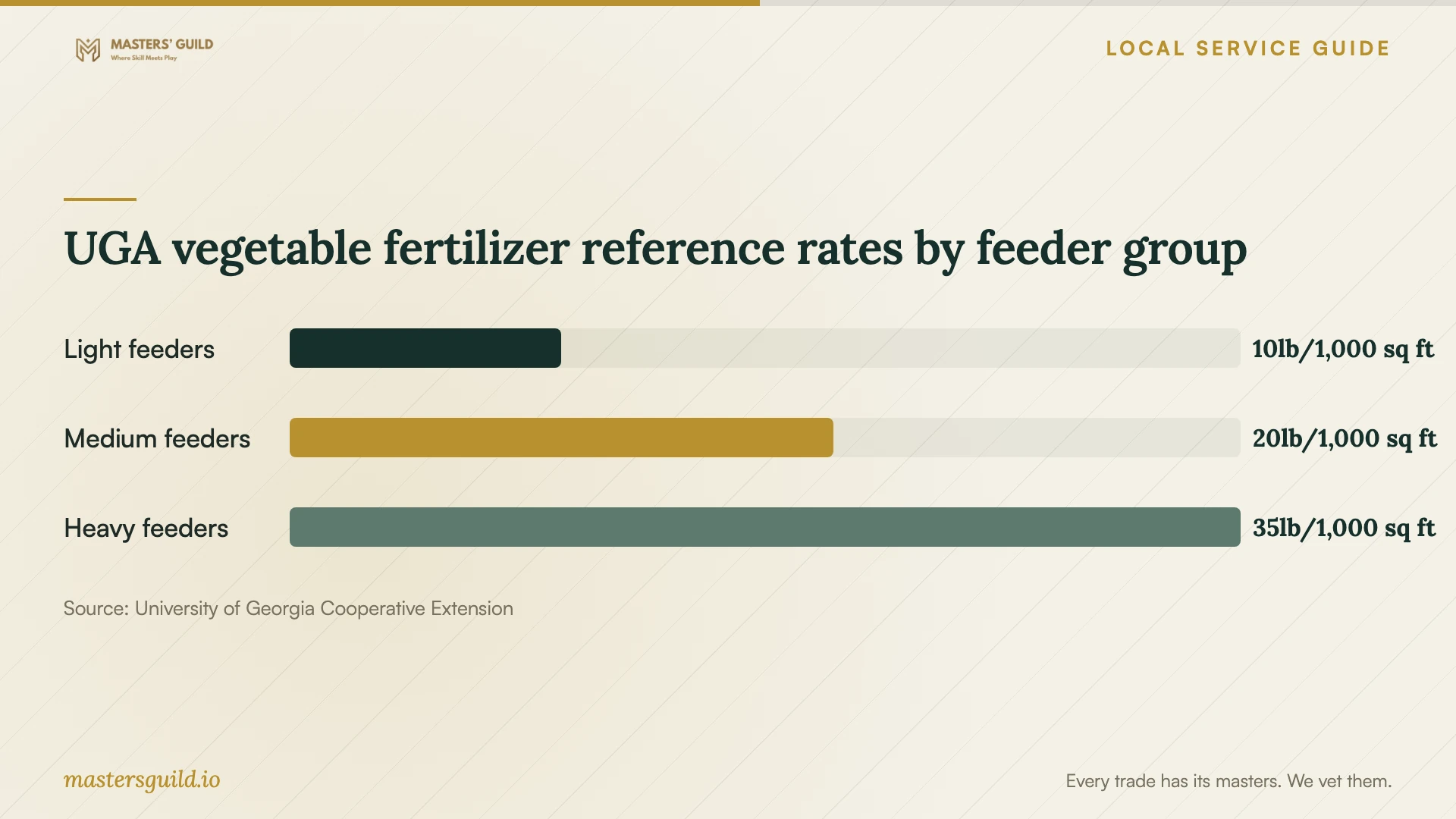
UGA vegetable fertilizer reference rates by feeder group
Local details that affect your job
Green-cart sorting changes the cleanup plan
Columbus requires loose leaves, clippings and pine needles in the green rolling cart without bags or household garbage, while pruning trimmings can go together at the curb. Ask for sorting and placement in the cleanup quote. Confirm eligibility with the city if you intend to leave a large or contractor-generated load for collection. [1]
A local route for soil and plant questions
Muscogee County Extension lists its office at 1111 1st Avenue, 1st Floor, Columbus, GA 31901, with telephone 706-225-4200. Its Agriculture and Natural Resources page provides soil-testing and pest-management resources. Call before collecting samples to ask about submission instructions and the help available for your garden problem. [3]
Choose the scope that matches your garden
| Your situation | Scope to request | Before approving |
|---|---|---|
| Overgrown beds with plants you want to keep | Plant identification, hand weeding and a defined cleanup | Mark keepers and agree on disposal |
| Leaves, clippings and pruning debris | Separate loose debris from pruning trimmings | Confirm green-cart space and city collection eligibility |
| New vegetable bed | Site assessment and soil-test-based preparation | Check sunlight, drainage and water access using UGA guidance |
| Proposed paid pesticide treatment | A separate treatment scope and price | Verify commercial applicator and pesticide contractor licenses |
| Removal of masonry edging or gravel | Removal with a disposal plan | Columbus excludes these materials from curbside collection |
Your hiring checklist
- Send photographs and approximate bed dimensions, and mark plants to keep.
- Specify hand weeding or request a separate pesticide-treatment proposal.
- Ask for separate labor, material, delivery and debris-removal charges.
- Agree on a spending limit and approval process for added work.
- Choose curbside preparation or hauling, and confirm city collection eligibility if needed.
- Record plant choices, mulch material and the intended finish.
- Assign watering between visits and review the completed work against the scope.
Frequently Asked Questions
Can the gardener bag leaves for city pickup?
Columbus requires leaves and similar yard debris in the green rolling cart without bags or household garbage. Ask the gardener to follow that rule if you plan to use municipal collection. Confirm eligibility before leaving a large or contractor-generated load. [1]
Does a store-bought weed killer require pesticide credentials?
Georgia requires both commercial applicator and pesticide contractor licenses when someone applies any pesticide to another person's property for a fee. The state includes general-use products in that requirement, so ask for both credentials. [2]
Should I buy fertilizer before the gardener arrives?
Ask the gardener to review the planting plan and soil-test results first. UGA recommends testing several months before vegetable planting and applying fertilizer according to the results. Muscogee County Extension provides a local starting point for soil-testing questions. [3] [4]
How should I compare gardening prices?
Give each gardener the same task list and ask for separate labor, materials and hauling charges. Compare the first cleanup separately from ongoing visits. For hourly offers, agree on a budget cap; for fixed offers, define the completed work in writing.
Sources and scope
This guide combines the sources below with practical planning guidance. Figures apply to the stated geography and period; request a written quote for your property.