
Local service guide
Commercial Building Cleaning in Columbus, GA
Arrange Commercial Building Cleaning in Columbus, GA by requesting a walkthrough and a written quote that separates recurring tasks, floor care and waste hauling. Check the provider’s business credentials and insurance, agree on access hours, and identify where the crew will put waste. Columbus limits commercial curbside service to one 96-gallon cart and requires private dumpster service when a business needs more containers. [2]
Define the cleaning scope before comparing prices
Walk the building with each bidder. Identify the restrooms, break areas, entrances, offices and storage rooms you want cleaned, and mark restricted areas. Specify whether cleaners may move desk items or should work only on cleared surfaces. Give each bidder the same instructions.
Group tasks by when you want the crew to perform them: each visit, on a separate schedule, or during an initial deep clean. Describe vacuuming, mopping, restroom cleaning and bin emptying. Request separate prices for carpet extraction, floor stripping or finishing and interior glass. Assign responsibility for buying restroom supplies and checking stock.
For medical or dental premises, give bidders your facility’s cleaning protocols and ask how they will follow them. Exclude sharps, clinical waste and specialist work from the routine scope unless you have agreed on a documented handling arrangement. Ask the bidder to describe the tasks behind any promise to sanitize.
Verify business credentials and insurance
Columbus requires a general business license for businesses operating in Columbus and Muscogee County. The city subjects out-of-state businesses with no Georgia office that work here to occupation tax. It also directs businesses without a Georgia location to obtain a business license from the Georgia municipality where they conduct the most business. Ask an Alabama-based bidder to identify its applicable Georgia credential. [1]
Request the company’s legal business name and current general liability insurance documentation. Ask who employs the people entering your premises, whether the company uses subcontractors, and who handles damage reports. If a bidder advertises bonding, ask what the bond covers and how you would make a claim.
Georgia requires most employers with three or more full-time, part-time or seasonal employees to have workers’ compensation insurance. Corporate officers and LLC members count toward that threshold even when they exempt themselves from coverage. Use the State Board of Workers’ Compensation verification resource to check the business. If you cannot locate a record, ask the provider and the board to clarify its status. [4]
Plan access and inspect the first visits
Choose a cleaning window around your opening hours and the rooms staff need to use. Name the people responsible for unlocking the building, managing alarm access and checking doors after the crew leaves. Give the cleaner a contact for access problems and instructions for reporting leaks, damage or an unsecured area.
Before the first visit, clear the surfaces you want cleaned and secure confidential documents. Show the crew the approved supply storage area, water access and waste location. Agree on how the supervisor will inspect the work and how you will report missed tasks.
Review the first visits against your written task list. Record which tasks need correction and which areas need a different schedule. Agree on who may approve extra work, how the cleaner will price it, and how you can change or end the arrangement.
Arrange waste handling before the crew starts
Columbus provides commercial curbside collection for one 96-gallon cart and requires businesses needing more containers to use private dumpster service. The city does not provide off-right-of-way service. Show bidders your collection arrangement and specify whether the crew must move waste to a curbside cart, a shared dumpster or another approved location. [2]
For renovation cleanup, request a separate hauling plan. Columbus excludes construction waste from curbside pickup and directs it to Pine Grove Landfill. Pine Grove requires contractors to show proof of their Muscogee County job location, such as a work order or invoice. It prohibits mixed loads and separation at the site. Agree on sorting before the hauler loads the vehicle. [2] [3]
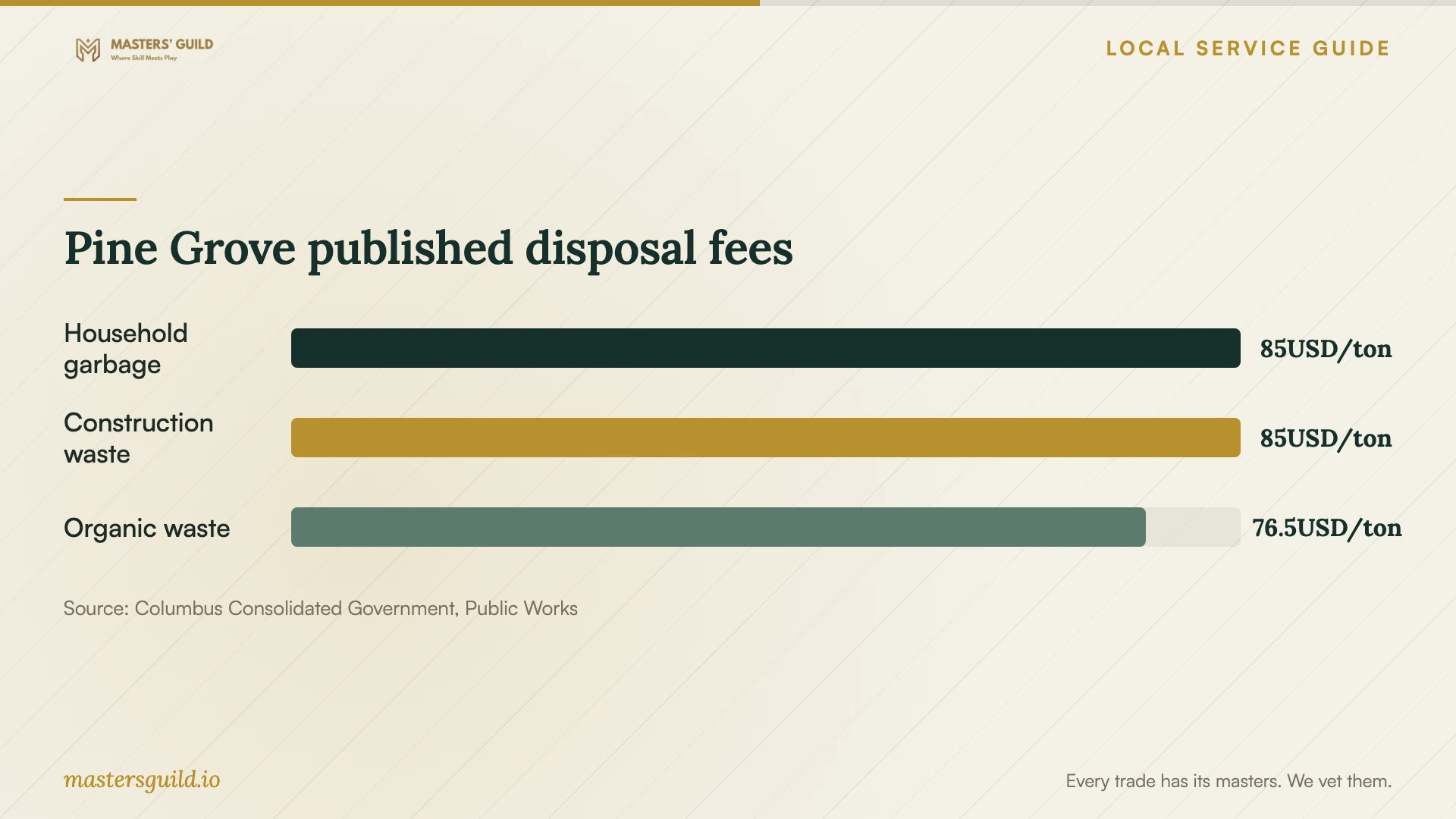
Ask the hauler to name the disposal destination and itemize loading, transport and disposal charges. Pine Grove publishes per-ton disposal fees; those fees do not establish commercial cleaning rates. Columbus also excludes hazardous waste from pickup. Identify leftover chemicals and questionable materials before agreeing on removal, and ask the provider to confirm an accepted disposal route. [2] [3]
Pine Grove published disposal fees
Local details that affect your job
Check credentials for a bidder based in Alabama
Columbus subjects businesses based outside Georgia with no Georgia office that operate here to occupation tax. The city directs those businesses to obtain a license from the Georgia municipality where they conduct the most business. Ask the bidder which credential applies to your job; its Alabama address alone does not answer that question. [1]
Check collection capacity before a cleanout
The city’s commercial curbside service covers one 96-gallon cart. Businesses needing more containers must use private dumpster service, and the city does not provide off-right-of-way collection. Before adding a stockroom cleanout, identify the waste destination and ask for a hauling price if your existing arrangement cannot accommodate it. [2]
Give the renovation hauler job documentation
Pine Grove requires contractors to show proof of where they are working in Muscogee County. It prohibits mixed loads and sorting at the landfill. Provide a work order or invoice and agree on separate loads for accepted material categories before loading begins. [3]
Choose the scope and prepare the job
| Your situation | Include in the quote | Prepare before work |
|---|---|---|
| Recurring office or shop cleaning | Rooms, tasks, frequency, supplies and access hours | Name the contact who checks work and reports missed tasks |
| Carpet or hard-floor treatment | Treatment method, products and return-to-use instructions | Ask the bidder to confirm floor compatibility and fit the work around opening hours |
| Stockroom or tenant cleanout | Loading, hauling and disposal destination | Check collection capacity; Columbus requires private dumpster service when more commercial containers are needed |
| Post-renovation cleanup | Construction-debris sorting and separate hauling | Provide Pine Grove job-location documentation and separate material types before loading |
Your hiring checklist
- Prepare a room list with tasks, visit frequency and restricted areas.
- Request separate prices for the first deep clean, recurring visits and floor care.
- Ask for the legal business name, applicable credentials and current insurance documentation.
- Assign responsibility for keys, alarms, access hours and locking up.
- Show the crew the approved waste location and specify who moves waste there.
- Include cleanout loading, hauling and disposal as separate quote items.
- Agree on inspections, corrections, extra-charge approval and cancellation terms.
Frequently Asked Questions
How much should I budget for commercial cleaning?
Request a walkthrough quote and compare identical task lists. Columbus publishes waste-service rules and disposal fees, but these do not establish commercial cleaning rates. Ask bidders to separate recurring cleaning, initial catch-up work, floor treatments and hauling so you can review each part of the total. [2] [3]
Can the cleaner leave renovation debris for city collection?
Columbus excludes construction waste from curbside pickup and directs it to Pine Grove Landfill. Include hauling in the written scope. Pine Grove requires contractors to show proof of their Muscogee County job location and prohibits mixed loads and sorting at the site. [2] [3]
How do I check workers’ compensation coverage?
Use the Georgia State Board of Workers’ Compensation coverage verification resource with the provider’s legal business name. Georgia requires coverage for most employers with three or more full-time, part-time or seasonal employees. If you cannot locate a record, ask the provider for clarification and contact the board for assistance. [4]
What should the agreement say about extra work?
List included tasks, restricted areas and optional services. Require your approval before the crew adds work or charges. Agree on how you will authorize extra visits, request corrections, change the schedule and end the arrangement.
Sources and scope
This guide combines the sources below with practical planning guidance. Figures apply to the stated geography and period; request a written quote for your property.