
Local service guide
Plan carpet cleaning in Columbus, GA
For carpet cleaning in Columbus, GA, get a written scope and total price, check the cleaner’s applicable business credential, and agree on wastewater handling and drying before booking. Columbus requires a general business license for businesses operating in Columbus/Muscogee County. Describe stains, pet concerns, and any water damage when requesting the quote so the cleaner can assess the work. [1]
Get a quote for the work you need
Send each cleaner the same description: rooms and approximate dimensions, carpet type if known, stairs, visible stains, pet concerns, and furniture you want moved. Include photographs of problem areas. Specify whether you want the whole room cleaned or only the accessible carpet around furniture.
Request a total that identifies any minimum visit charge, travel charge, stain treatment, odor treatment, and furniture moving. For an advertised room package, ask the cleaner to define its room-size allowance and explain charges for larger areas. Agree on the price after inspection and before work starts.
Describe earlier stain treatments you used and identify the areas where you notice odor. Have the cleaner explain what they will inspect, which treatments they propose, and what result they will commit to in writing. Include follow-up terms for a stain that remains or an odor that returns.
Check credentials and responsibility for damage
Columbus’s Finance Department states that businesses operating in Columbus/Muscogee County need a general business license. Request the business’s legal name and applicable license or occupational tax credential. Match that name to the written quote and invoice. [1]
The city distinguishes local business licensing from state professional licensing. Use the business credential to check the company’s administrative status. For technical qualifications, ask a cleaner who advertises certification to identify the credential and the person who holds it. [1]
Request proof of liability insurance and an explanation of who handles damage to carpet, furniture, or walls. Confirm whether the business sending the quote will perform the work or send another company. Keep the scope, payment terms, and damage-reporting process with your appointment details.
Arrange access, wastewater handling, and drying
Describe parking, stairs, entry restrictions, and the distance from the vehicle to the carpet. Confirm what access the crew needs for its equipment and whether it needs your water or electricity. Agree on furniture moving and a hose route that lets household members enter and leave.
Have the crew explain where it will collect extracted wastewater and how it will dispose of it. Columbus’s Stormwater Division investigates pollution complaints and works to identify pollutant sources. Confirm the disposal arrangements before the appointment rather than leaving the crew to decide on arrival. [2]
Request a drying estimate for your carpet and the proposed method, along with instructions for ventilation, equipment use, walking on the carpet, and returning furniture. Plan the appointment around when you need the rooms again. Get a contact for help if the carpet remains damp beyond the cleaner’s estimate.
Request a separate assessment for water damage
Tell the provider about leaks, flooding, standing water, or suspected mold before accepting a routine cleaning quote. EPA’s guide for schools and commercial buildings recommends extraction, dehumidification, and fans for clean-water-damaged carpet and backing, with a drying target of 24-48 hours. It also calls for cleaning and drying the subfloor. [3]
EPA limits those water-damage guidelines to clean water. For suspected sewage or other contamination, it advises consulting an experienced professional when the people doing the work lack relevant expertise. It warns against using fans before determining that the water is clean or sanitary. Describe the water source when requesting a restoration assessment. [3]
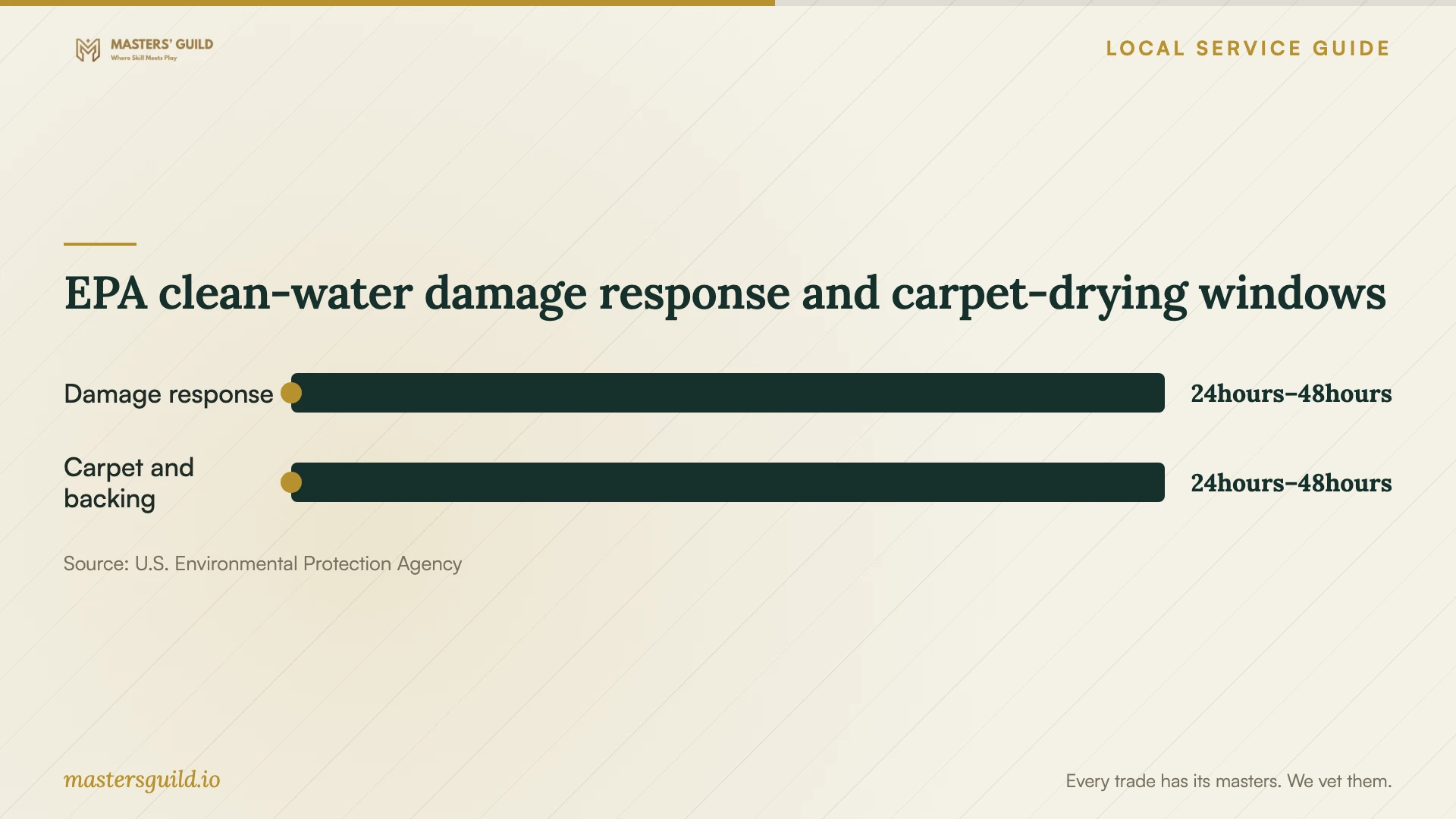
EPA’s response and carpet-drying windows overlap: its table describes action within 24-48 hours and drying carpet and backing within that period. Do not add the two windows together when arranging help. EPA cautions that drying within 48 hours does not rule out mold growth. [3]
EPA clean-water damage response and carpet-drying windows
Local details that affect your job
Check credentials for companies coming from Alabama
Columbus states that out-of-state businesses with no Georgia location or office, but doing business in Columbus/Muscogee County, are subject to its Occupation Tax. It also says those businesses must obtain a business license from the Georgia municipality where they conduct the most business. Ask a visiting cleaner which credential applies to its operation instead of assuming it must hold a Columbus-issued license. [1]
Report dumping through the city’s service center
If you observe dumping, pollution, or a spill during the job, Columbus asks residents to call 311 or (706) 653-4000. The Citizen’s Service Center routes the report to the appropriate department, and a stormwater inspector investigates complaints received by the Stormwater Division. Note the location and what you observed so you can describe the incident. [2]
Choose the appointment scope
| Your situation | Next step | Clarify before agreeing |
|---|---|---|
| Routine cleaning of dry carpet | Request a quote for a defined area. | Included rooms, furniture moving, total price, and drying instructions. |
| Pet stains or odor | Request an inspection and treatment proposal. | Treatment scope, added charges, promised result, and follow-up terms. |
| Clean-water damage | Request a drying or restoration assessment. | EPA recommends drying carpet and backing within 24-48 hours and addressing the subfloor. |
| Suspected sewage or contaminated water | Seek a professional with relevant restoration expertise. | EPA advises determining that water is clean or sanitary before using fans. |
Your hiring checklist
- Send room dimensions, stain photographs, and access details with each quote request.
- Get the total price, exclusions, and approval process for added charges.
- Match the business name on the credential, quote, and invoice.
- Confirm insurance and the process for reporting damage.
- Agree on furniture moving, parking, and equipment access.
- Confirm where the crew will collect and dispose of extracted wastewater.
- Get drying and furniture-return instructions before the crew leaves.
- Disclose leaks, flooding, suspected contamination, and earlier stain treatments.
Frequently Asked Questions
How much should I budget?
Request written quotes for your actual rooms and treatments, then compare total charges and included work. Have each cleaner identify minimum charges, travel, furniture moving, and optional treatments. Agree on how the provider will handle price changes after inspecting the carpet.
Does a business license prove cleaning expertise?
Use it as a business-credential check. Columbus requires a general business license for businesses operating in Columbus/Muscogee County and distinguishes that credential from state professional licensing. Ask the cleaner about training, carpet assessment, and responsibility for damage. [1]
Can I use the rooms immediately after cleaning?
Get instructions based on the carpet and method the cleaner will use. Agree on when you can walk on the carpet, return furniture, and resume normal use. Leave room in your schedule for the drying estimate they provide.
Does EPA’s 24-48-hour guidance apply to routine cleaning?
EPA gives that target for responding to clean-water damage in its schools and commercial buildings guide. Use your cleaner’s job-specific estimate to plan a routine home cleaning appointment. [3]
Sources and scope
This guide combines the sources below with practical planning guidance. Figures apply to the stated geography and period; request a written quote for your property.