
Local service guide
Business Plan Consulting in Columbus, GA
For Business Plan Consulting in Columbus, GA, start by deciding whether you need guidance, a finished document, or a financial model for a specific funding application. Explore the UGA SBDC’s confidential, no-cost consulting before commissioning paid work; its consultants help develop and update business plans. Hire a paid consultant against a written scope that names the deliverables, assumptions, revisions and deadline. [2]
Choose the help you need before comparing proposals
Write down who will use the plan and what decision they need to make. For internal planning, focus on customers, pricing, operating costs and cash needs. For a financing submission, obtain the recipient’s document requirements before asking a consultant to quote. Give the consultant those requirements rather than relying on a broad label such as lender-ready.
The Columbus SBDC helps owners prepare loan packages, evaluate financing options and improve lender readiness. The office states that it does not provide funding. Use that assistance to clarify your financing approach, then decide whether you want separate paid help to draft documents or build a model. [1]
Ask a prospective consultant to describe the work they would do with your information. Request a redacted sample and discuss how they would test your sales assumptions. Choose a scope that addresses your unresolved questions, such as customer demand, staffing costs or the cash needed before opening.
Explore public advisory support
The UGA SBDC provides confidential, no-cost, one-on-one consulting to Georgia small business owners who want to start or grow a business. Its stated services include business-plan development, financial analysis, specialized research and identifying sources of capital. Discuss these options before paying for overlapping work. [2]
The SBDC says it may require a Business Development Questionnaire. Established owners can call their local office for guidance on meeting a consultant. The Columbus office also directs prospective founders toward its How to Start a Business In Georgia and Writing a Business Plan courses. Confirm the intake steps and available appointments for your situation. [1] [2]
Take a short brief to the first meeting: your business idea or current operation, the intended reader of the plan, your funding goal and the decisions you have yet to make. Ask whether the assistance covers reviewing your draft, developing projections or researching the market. Record your own responsibilities before setting a submission date.
Include local opening requirements in the plan
Columbus requires a general business license for businesses operating in Columbus and Muscogee County. For businesses located there, the city describes obtaining a Certificate of Occupancy before the Business License or Occupational Tax Certificate. Ask your consultant to include this sequence in the launch schedule and to identify which costs still need confirmation. [3]
A home-based launch needs a separate planning check. The city says Inspections and Code Enforcement must approve businesses operating from a residence in Muscogee County before operation. Confirm the proposed activity with that division before treating your home as an approved operating location in the plan. [3]
The city lists additional documents for certain business types, including health-department approval for eating places and Georgia Department of Agriculture approval for grocery, convenience and meat markets. If your business falls into a listed category, confirm the applicable approvals and fees with the issuing department. Ask the consultant to distinguish confirmed requirements from assumptions. [3]
Define the paid scope and review the numbers
Request a written proposal that identifies the plan’s audience, research tasks, financial outputs and delivery format. Specify whether you want an editable document and spreadsheet, how many revision rounds the fee covers, and whether the consultant will respond to questions from your lender or investor. Set dates for your information handover, draft review and final delivery.
Bring existing financial statements if you have them, along with supplier quotes, rent assumptions, staffing plans, debt details and your proposed prices. For a startup, label estimates and explain their basis. Ask the consultant to show how they calculate revenue from customer numbers, purchase frequency and price, so you can challenge each assumption.
Before accepting the work, review a slower-sales scenario and an opening-delay scenario. Check that the written plan and spreadsheet use the same prices, staffing and opening date. Ask for a walkthrough of the model and instructions for updating it. Keep a list of unanswered questions rather than allowing the consultant to present guesses as confirmed facts.
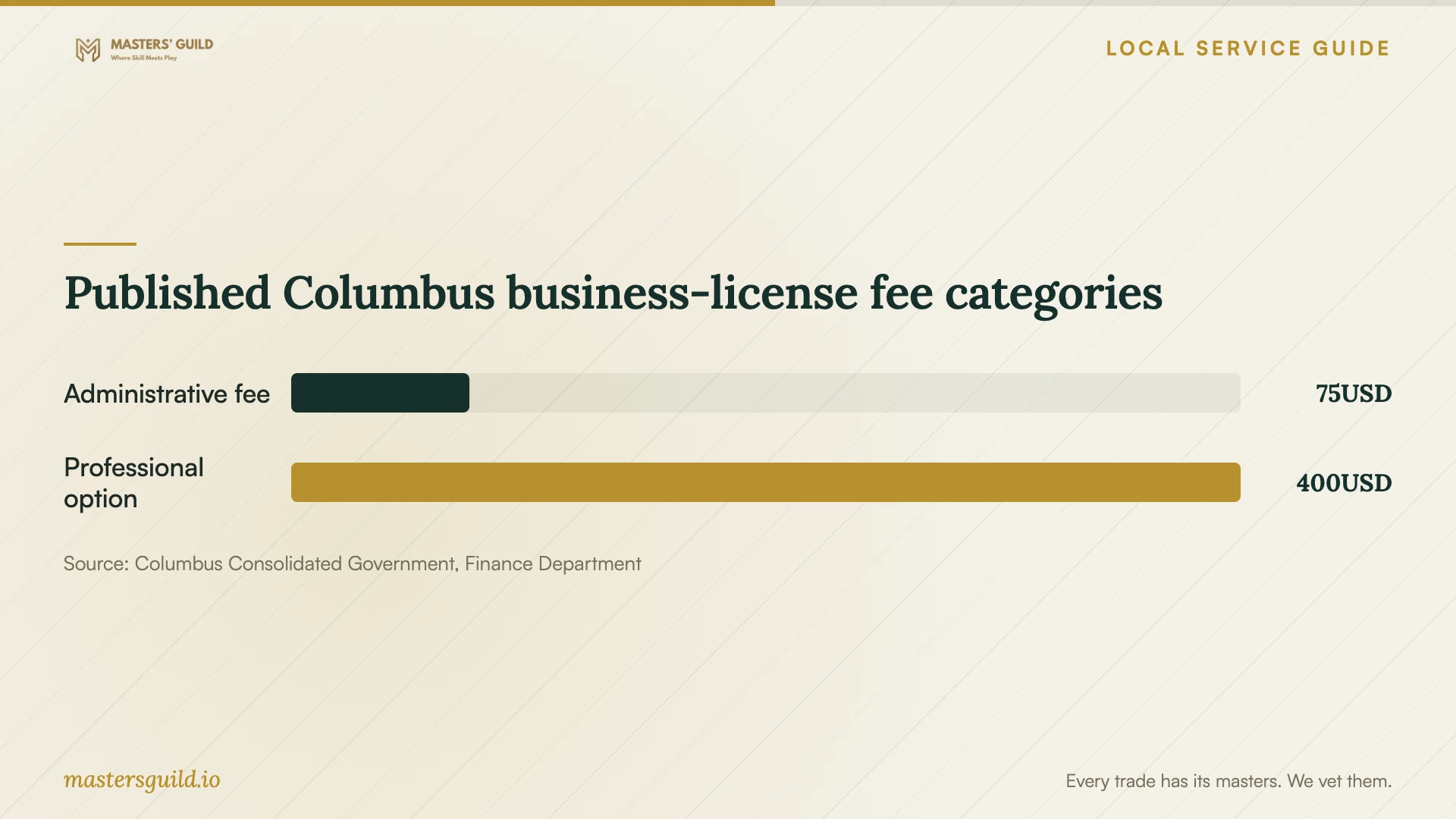
Published Columbus business-license fee categories
Local details that affect your job
Arrange a Columbus SBDC appointment
The UGA SBDC in Columbus operates by appointment at 3100 Gentian Boulevard, Suite 119, in the Cunningham Conference Center on Columbus State University’s campus. Call (706) 569-2651 to discuss intake and scheduling. The office cannot accommodate walk-in visits, so confirm a meeting before making the trip. [1]
Resolve occupancy before the license step
The city describes the Certificate of Occupancy as a prerequisite to obtaining the Business License or Occupational Tax Certificate. It also requires approval of residential business operations before they begin. Inspections and Code Enforcement lists (706) 225-4126 for these matters. Confirm your proposed premises and activity before finalizing the opening assumptions in your plan. [3]
Confirm the fee category for your startup budget
The city lists a $75 license administrative fee, with a $400 fee per licensed professional when the Section 19-44 professional option applies. It lists occupation tax charges apart from those fees. Ask the Occupation Tax Section which category applies to your business before using a licensing allowance in your projections. [3]
Choose a planning route
| Your situation | Suggested route | Clarify before proceeding |
|---|---|---|
| You need help developing or updating a plan | Explore the UGA SBDC’s no-cost consulting | Intake steps, appointments and your responsibilities |
| You are preparing a loan package | Discuss financing options and lender readiness with the Columbus SBDC | The lender’s requirements; the SBDC does not provide funding |
| You want someone to produce defined deliverables | Request paid proposals against a written scope | Research, model, editable files, revisions and delivery dates |
| You plan to operate from home | Confirm residential business approval with Inspections and Code Enforcement | Approval before operation and the subsequent licensing steps |
Your hiring checklist
- Identify the plan’s reader, purpose and submission deadline.
- Obtain the funding recipient’s requested documents before commissioning a plan.
- Ask the Columbus SBDC about intake, appointment availability and the assistance you need.
- Gather financial records and label startup estimates with their supporting assumptions.
- Confirm premises approval, licensing steps and business-specific requirements with the city.
- Request a written fee, deliverable list, revision allowance and editable-file handover.
- Review slower sales and opening delays with the consultant before accepting the model.
Frequently Asked Questions
Can I get business-plan help without paying a consultant?
The UGA SBDC offers confidential, no-cost consulting for Georgia small business owners, including help developing and updating business plans. Ask about the assistance available for your project and what you will need to prepare. [2]
Does the Columbus SBDC provide startup funding?
The Columbus office states that it does not provide funding. Its consultants help prepare loan packages, evaluate financing options and improve lender readiness. [1]
How much should I budget for a paid business plan?
The cited sources do not establish a paid consulting price range. Request a written quote tied to your research needs, financial model, document requirements and revision scope. Keep consultant fees separate from licensing and other startup costs.
Does a home-based business need local approval?
Columbus says Inspections and Code Enforcement must approve businesses operating from a residence in Muscogee County before operation. Confirm your activity and address with that division, and ask how to complete the occupancy and business-license process. [3]
Sources and scope
This guide combines the sources below with practical planning guidance. Figures apply to the stated geography and period; request a written quote for your property.