
Local service guide
Tree cutting in Columbia, SC: Hiring and Permit Guide
Tree cutting in Columbia starts with choosing pruning, an assessment or removal and checking whether the work affects public property. Columbia requires a Forestry Permit for work within the drip line or plant bed of public right-of-way or City-owned property, including maintenance pruning and removal. Before hiring, request a written scope that identifies each tree, the proposed work, permit responsibility, equipment access, hauling and stump treatment. [1]
Choose the work before comparing quotes
Describe the problem you want to solve: branches touching the roof, damaged limbs, blocked access or concern about a tree's condition. If you are unsure whether removal is necessary, request an assessment before approving cutting. Ask the arborist to explain the options, identify trees worth retaining and describe any follow-up care.
For pruning, ask which branches the contractor intends to remove and how those cuts address your concern. Clemson recommends removing dead, diseased, rubbing and crossing branches and generally prefers thinning over heading back. It describes further crown thinning as specialized work best performed by a professional arborist. [3]
Separate pruning, removal and stump work in the proposal. Specify whether the crew will leave the stump, grind it or provide a separate stump-work quote. Ask who will remove logs and chips and what ground surface you should expect at completion.
Confirm public-tree and construction requirements
Contact Columbia Forestry before arranging work around a possible street tree. The City's ordinance page lists Forestry at 545-3860. Columbia requires a Forestry Permit for work within the drip line or plant bed of public right-of-way or City-owned property, including maintenance pruning and removal. Ask the City to clarify ownership and the work boundary. [1]
Columbia provides a separate Tree Removal Permit application for private property, excluding single-family residential lots. The City labels this application as having no fee and states that it does not cover street trees. Confirm which process applies to your address, then name the person responsible for the application in your agreement. [1]
Mention any related construction when you contact Planning and Development. Columbia lists construction, filling, demolition, grading, timber harvesting, paving, trenching and boring for installation as activities requiring a tree protection plan or permit for tree work. For a project involving a driveway or utility trench, ask the City to clarify tree-protection requirements before arranging the crews. [1]
Review the pruning method and season
Ask the arborist to explain the proposed cuts rather than accepting a vague promise to shorten the tree. Clemson warns that cutting all branches back to an arbitrary length, sometimes called hat-racking, can kill a landscape tree. It also advises against flush cuts close to the trunk because the larger wounds can develop decay. [3]
Choose elective pruning dates by species and purpose. Clemson advises pruning spring-flowering trees such as dogwood and redbud after flowering because fall or winter pruning removes flower buds. Summer-flowering trees such as crape myrtle form buds on new growth and can receive winter pruning without affecting flowering. For ornamental plants not grown for showy flowers, Clemson recommends late winter or early spring. [3]
Before approving elective work in October, discuss frost timing with the arborist. Clemson advises avoiding pruning within ten weeks of the area's first hard frost because late pruning can produce growth vulnerable to frost damage. Ask the arborist to distinguish corrective work for damaged branches from pruning intended to change appearance. [3]
Agree on access, hauling and the budget
Send photographs and describe gates, fences, nearby structures and the route from the street to the tree. Have the contractor inspect access before confirming the proposal. Agree on where equipment may travel, which surfaces need protection and who will move vehicles or outdoor furniture. Contact the utility about branches near electrical lines before arranging cutting.
Specify disposal before signing. Columbia accepts routine yard-maintenance waste and branches less than six feet long, but lists tree removal and lot clearing as subject to a charge. Ask the contractor to include hauling, or call Solid Waste at 803-545-3800 to clarify the collection arrangement and charge before accepting a proposal that leaves debris behind. [2]
Compare proposals for the same trees, cuts, access plan and cleanup. Request evidence of liability coverage and applicable worker coverage, and ask who will supervise the work. Set written terms for additional work, payment and weather delays. Request site-specific quotes for your budget.
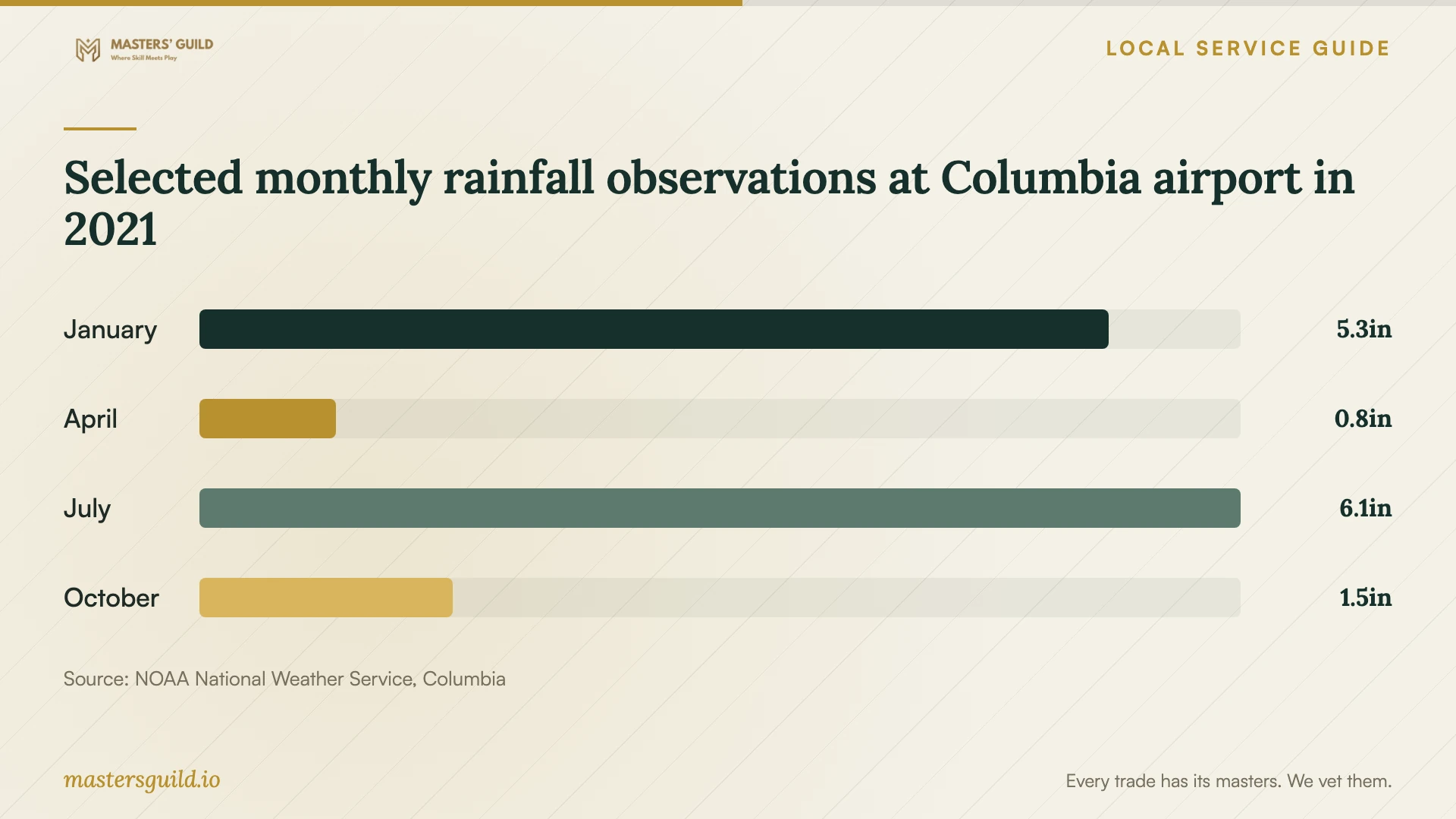
The rainfall chart shows selected monthly observations from 2021 at Columbia Metropolitan Airport. Use it to prompt a discussion about weather delays and equipment access. Ask the contractor how they will assess ground conditions before bringing equipment onto your property. [4]
Selected monthly rainfall observations at Columbia airport in 2021
Local details that affect your job
Maintenance pruning can require a Forestry Permit
Columbia requires a Forestry Permit for work within the drip line or plant bed of public right-of-way or City-owned property, including maintenance pruning and removal. The City lists Forestry at 545-3860 for street-tree questions. Resolve the boundary and permit responsibility before approving the scope. [1]
Single-family lots have an application distinction
The City's private-property Tree Removal Permit application excludes single-family residential lots and does not cover street trees. For a single-family home, confirm the work location and any associated construction requirements instead of treating that exclusion as blanket permission. [1]
Tree-removal debris needs a disposal plan
Columbia lists tree removal and lot clearing as subject to a charge. Its accepted yard-trimmings list includes branches less than six feet long. Include contractor hauling or confirm a City collection arrangement with Solid Waste at 803-545-3800 before work begins. [2]
Choose the next step for your project
| Situation | Next step | Include in the agreement |
|---|---|---|
| Work around a possible street tree | Ask Columbia Forestry about ownership and the Forestry Permit | Permit responsibility and approved work boundaries |
| Private-property removal | Confirm how the single-family application exclusion applies to your project | Address-specific permit confirmation |
| Elective pruning of a flowering tree | Ask the arborist to explain species-specific timing | Pruning purpose, named branches and proposed date |
| Tree work alongside trenching or paving | Ask Planning and Development about tree protection | Coordination between the tree and construction crews |
| Removal proposal leaves debris on site | Confirm City collection arrangements and charges or request hauling | Responsibility for logs, branches and chips |
Your hiring checklist
- Photograph each tree and describe the problem you want to solve.
- Confirm boundaries and ask the City about possible street trees.
- Request an assessment if you are unsure whether removal is necessary.
- Get a written scope identifying each tree and the proposed work.
- Assign responsibility for permit checks and applications.
- Agree on equipment access, surface protection and weather delays.
- Specify hauling, stump treatment, chip disposal and final cleanup.
- Review insurance evidence, payment terms and approval of additional work.
Frequently Asked Questions
Do I need a permit to remove a tree at my home?
Columbia's private-property Tree Removal Permit application excludes single-family residential lots. The City requires a Forestry Permit for work within the drip line or plant bed of public right-of-way or City-owned property. Confirm the work location and related construction requirements with the City before proceeding. [1]
Can the contractor leave branches for City pickup?
Confirm the arrangement before signing. Columbia accepts branches less than six feet long as yard trimmings but lists tree removal and lot clearing as subject to a charge. Ask Solid Waste about your proposed debris or include hauling in the quote. [2]
Should I arrange pruning in fall?
Discuss the species and purpose with the arborist. Clemson advises pruning spring-flowering trees after bloom and avoiding pruning within ten weeks of the area's first hard frost. Ask the arborist to explain the timing before scheduling elective work in October. [3]
What should a tree-service quote include?
Request identification of each tree, the pruning or removal scope, permit responsibility, equipment access, hauling and stump treatment. Ask for insurance evidence and written terms for payment, weather delays and additional work. Compare offers using the same scope.
Sources and scope
This guide combines the sources below with practical planning guidance. Figures apply to the stated geography and period; request a written quote for your property.